Overview
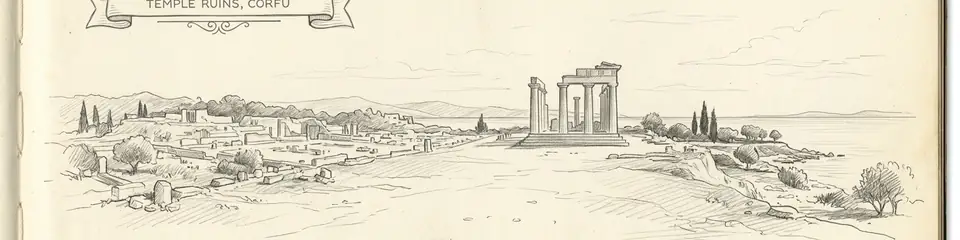
Palaeopolis occupies the Kanoni peninsula south of modern Corfu Town, in the woods around Mon Repos. This was the urban core of classical Corcyra (Korkyra), a Corinthian colony that became one of the great naval powers of fifth-century BCE Greece. Thucydides ranks it with Athens and Corinth. The Battle of Sybota (433 BCE) between Corcyra and Corinth helped spark the Peloponnesian War.
Surviving monuments include the Archaic Temple of Artemis (early sixth century BCE), famous for its monumental Gorgon pediment now in the Archaeological Museum of Corfu; the Kardaki temple; stretches of fortification; and harbour works facing the lagoon. The Museum of Palaiopolis–Mon Repos displays finds from the park inside the nineteenth-century villa.
Local and tourist tradition calls Corfu the “island of the Phaeacians,” tying Kerkyra’s foundation myths to Homer’s Scheria, where Odysseus washes ashore before Nausicaa. That identification is literary geography, not a stratigraphic proof. Still, Palaeopolis is the place to walk if you want Ionian Greek urban archaeology beside the Odyssey’s homecoming arc. Compare with Ithaca for the disputed homeland and Corinth for the mother-city that planted Corcyra.