Overview
Ancient Corinth controlled the narrow Isthmus connecting the Peloponnese to central Greece. Ships could avoid the long sail around the cape by hauling across the diolkos, a paved track engineers still debate in detail. Two harbours, Lechaion on the Gulf of Corinth and Kenchreai on the Saronic, fed trade east and west. No wonder the city appears in Homer's catalogue of ships and in nearly every later historian of Greece.
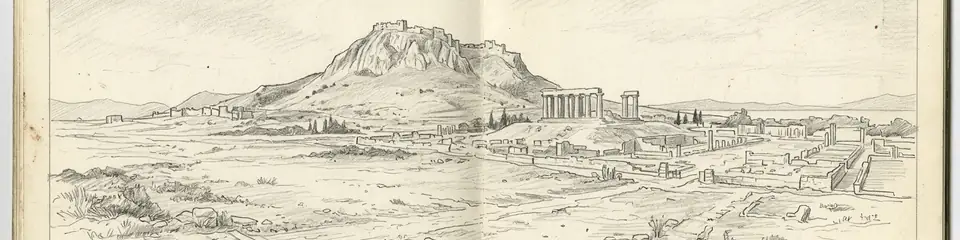
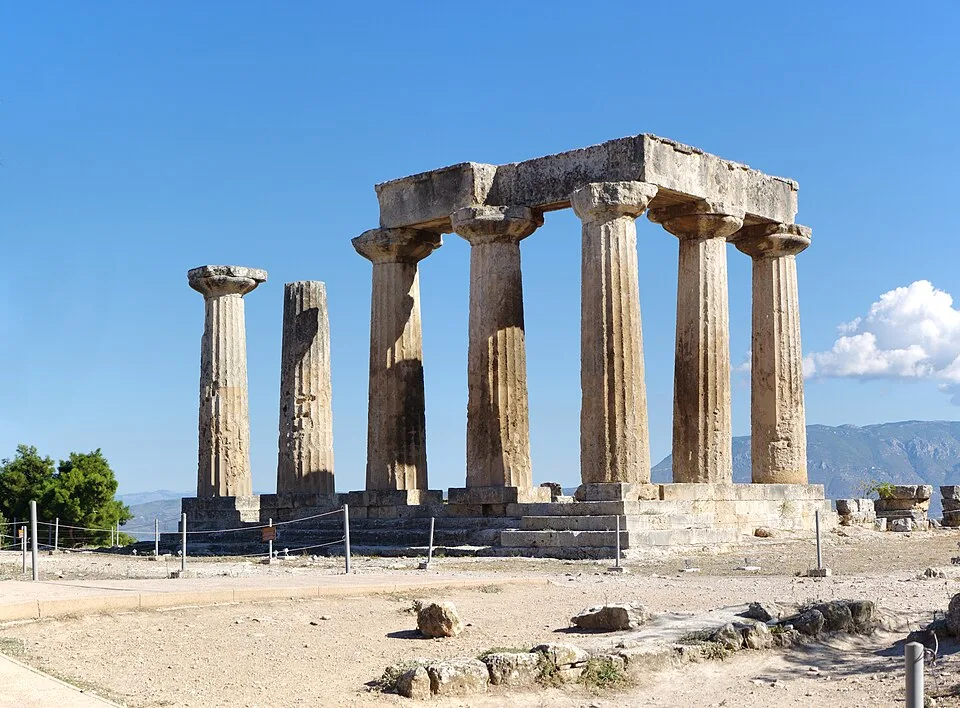
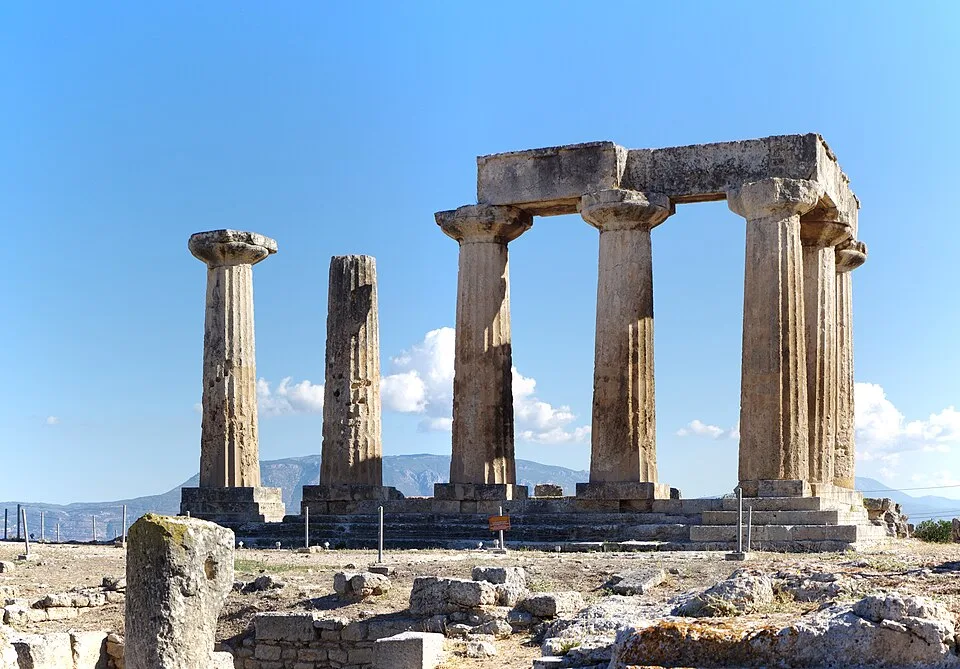
The American School of Classical Studies at Athens has excavated the site since 1896. Visitors enter at the Temple of Apollo, seven Doric columns standing on a terrace above the Roman forum. Shops, fountains, the Bema where Paul spoke, and a theatre spread below Acrocorinth, the fortress hill that guarded the same pass.
"Corinth, the city of two harbours, sits at the navel of Greece, and all the traffic of the north passes beneath her rock."
— Strabo, Geography VIII.6 (paraphrase)
Corinth's wealth attracted myth and scandal: Pegasus, Jason, Medea, and Sisyphus belong to Corinthian legend. In the Odyssey, the broader Argolid world includes neighbours who knew Odysseus and Nestor. Strategically, anyone sailing from Ithaca toward Troy or Pylos might reckon with Corinthian waters.
Modern productions filming Greek epic often pair isthmus landscapes with fortresses like Acrocorinth. The archaeological park is an easy day trip from Athens; allow time for the museum's Roman mosaics and the view uphill toward the medieval walls.