Skip to content
Atlas Anatolia
NewsLalibela at the Heart of Cultural Diplomacy and World Heritage ConservationStudy Tracks Origins of 19th-Century Africans Left on Atlantic Island
Lipari Castle citadel above the harbour, Aeolian Islands

Wikimedia Commons (CC BY-SA 3.0)

Continent Record

Oldest Complex in Europe

ComplexUNESCO

Lipari Castle

Castello di Lipari4000 BCE – 1600 CE

The lava acropolis of Lipari, capital of the Aeolian Islands, with Neolithic to classical stratigraphy and a Greek bothros of Aeolus inside the Spanish citadel.

111
Interest 58

Location

Italy

38.47°N · 14.95°E · Europe

Greek foundation

c. 580–576 BCE (Knidos / Rhodes)

Museum

Luigi Bernabò Brea Regional Museum

Mythic link

Aeolus bothros / Aeolia tradition

UNESCO

Aeolian Islands (volcanic, 2000)

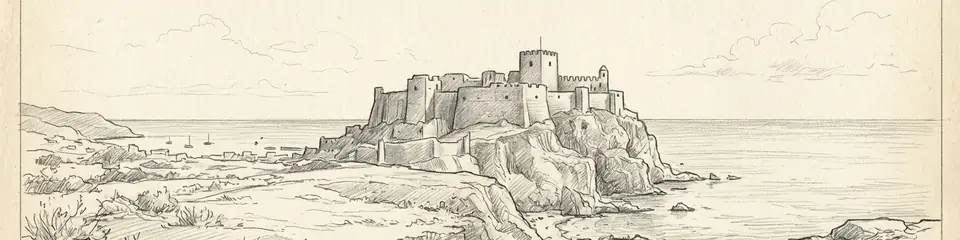
Graphite pencil sketch banner of Lipari Castle

Lipari joins obsidian trade, Bronze Age villages, and a Greek wind-god cult on one rock.”

Location

Overview

Lipari Castle crowns a steep lava dome above the harbour of Lipari, largest of the Aeolian (Lipari) Islands north of Sicily. Continuous settlement from the Neolithic used the rock as a natural fortress. Bronze Age villages stack on the acropolis; Greek Lipàra was founded by Knidian and Rhodian colonists in the early sixth century BCE (Diodorus places it in the fiftieth Olympiad, 580–576 BCE). Excavations by Luigi Bernabò Brea and Madeleine Cavalier exposed prehistoric huts, Greek and Roman layers, and the Contrada Diana necropolis on the plain below.

Inside the sixteenth-century Spanish fortifications (rebuilt after Barbarossa’s 1544 raid) stands the Regional Archaeological Museum Luigi Bernabò Brea. One celebrated deposit is a bothros associated with the cult of Aeolus, the wind-keeper of Odyssey Book 10. Homer’s floating island of Aeolia is poetry; Lipari’s museum and acropolis are the best archaeological doorway into the Aeolian world that later Greeks mapped onto that myth.

Christopher Nolan’s Odyssey filmed among the Aeolian and Aegadian islands (including Favignana for Ithaca-adjacent sea work and volcanic neighbours such as Vulcano). Lipari itself is the heritage hub of the UNESCO volcanic archipelago. Pair with Agrigento for Sicilian Greek temples and Akrotiri for another island buried by volcano.
Why It Matters

Lipari joins obsidian trade, Bronze Age villages, and a Greek wind-god cult on one rock. It also anchors the film geography of Nolan’s Aeolian shoot to a real excavated citadel rather than a beach alone.

Evidence & Interpretation

Distinguishing what is well-established from what remains debated.

Well-Established Facts

1
  • Stratified excavation documents Neolithic through classical occupation of the Lipari acropolis.

Scholarly Inferences

1
  • The Aeolus bothros supports a local classical cult of the wind god later readers connect to Odyssey Book 10.

Debated Interpretations

1
  • Homer’s floating Aeolia cannot be equated with any single excavated island without circular literary reasoning.

More Photos

Community Photos

Share your experience

Have you visited this site? Upload your photos to help others discover it.

Related Stories

How to cite this page

Atlas Anatolia. (4000). Lipari Castle. Atlas Anatolia. https://atlasanatolia.com/site/lipari

Content licensed CC BY-SA 4.0 — attribution required when reusing.

Graph

Connections to related sites and stories.

Sources

  • Meligunìs LipáraBernabò Brea, Luigi; Cavalier, Madeleine (1960)
  • Library of History (Loeb)Diodorus Siculus (1939)

Frequently Asked Questions

Where is Lipari Castle located?

Lipari Castle is located in Italy.

How old is Lipari Castle?

Lipari Castle dates to approximately 4000 BCE – 1600 CE.

Which civilizations are associated with Lipari Castle?

Lipari Castle is associated with the Greek, Roman.

Why is Lipari Castle important?

Lipari joins obsidian trade, Bronze Age villages, and a Greek wind-god cult on one rock.

Is Lipari Castle a UNESCO World Heritage Site?

Yes — Lipari Castle is inscribed as a UNESCO World Heritage Site.