Skip to content
Atlas AnatoliaAtlas Anatolia
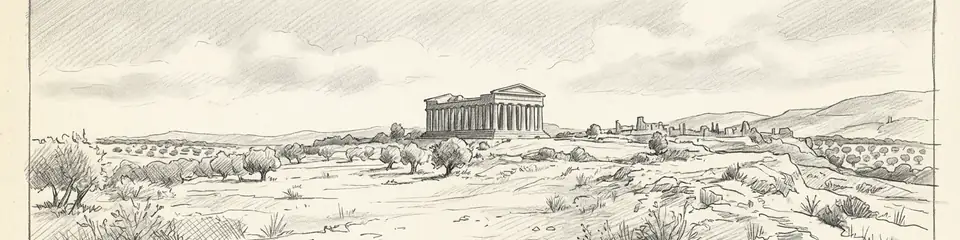
Temple of Concordia in the Valley of the Temples, Agrigento

Wikimedia Commons (CC BY-SA 3.0)

SanctuaryUNESCOFeatured

Valley of the Temples

Valle dei Templi580 BCE – 200 BCE

The Doric ridge of ancient Akragas — Concordia, Juno, Heracles, and Zeus among the best-preserved Greek temples outside the Aegean — is Sicily’s premier classical archaeological landscape.

21

Location

Italy

37.29°N · 13.59°E · Europe

Founded

c. 580 BCE (Geloan colony)

Signature temple

Concordia — among best-preserved Doric

Olympieion

Unfinished temple of Zeus with atlases

UNESCO

Inscribed 1997

Agrigento concentrates western Greek monumental religion at a scale unmatched elsewhere in Sicily and rare even in mainland Greece.”

Location

Overview

The Valley of the Temples occupies a sandstone ridge south of modern Agrigento (ancient Akragas / Agrigentum) on Sicily’s southern coast. Founded by Geloan colonists c. 580 BCE, Akragas became one of the richest Greek cities of the west. In the 5th century BCE its tyrants and citizens raised a line of monumental Doric temples along the city’s southern wall — today named for Concordia, Juno Lacinia, Heracles, Olympian Zeus (the unfinished Olympieion with giant atlas figures), Castor and Pollux, and Vulcan.

The Temple of Concordia is among the best-preserved Doric temples anywhere, owing to its medieval conversion into a church. Excavation and anastylosis from the 18th century onward, and the modern archaeological park, make the ridge a continuous outdoor museum. UNESCO inscribed the area in 1997. Pair with Paestum and the Acropolis of Athens for complementary Doric sacred landscapes.
Why It Matters

Agrigento concentrates western Greek monumental religion at a scale unmatched elsewhere in Sicily and rare even in mainland Greece. Concordia’s survival and the Olympieion’s atlases are textbook cases of Doric design, patronage, and later Christian reuse.

Evidence & Interpretation

Distinguishing what is well-established from what remains debated.

Well-Established Facts

2
  • Standing Doric temples, dated architectural sculpture, and city-wall archaeology document the 5th-century BCE monumental programme of Akragas.
  • Medieval conversion of Concordia into a church explains its exceptional column-and-entablature survival.

Scholarly Inferences

1
  • The Olympieion’s giant atlas figures advertised tyrannical and civic ambition after victories over Carthage.

More Photos

Community Photos

Share your experience

Have you visited this site? Upload your photos to help others discover it.

How to cite this page

Atlas Anatolia. (580). Valley of the Temples. Atlas Anatolia. https://atlasanatolia.com/site/agrigento

Content licensed CC BY-SA 4.0 — attribution required when reusing.

Sources

  • AgrigentoDe Miro, Ernesto (2000)
  • UNESCO — Archaeological Area of AgrigentoLink

Frequently Asked Questions

Where is Valley of the Temples located?

Valley of the Temples is located in Italy.

How old is Valley of the Temples?

Valley of the Temples dates to approximately 580 BCE – 200 BCE.

Which civilizations are associated with Valley of the Temples?

Valley of the Temples is associated with the Greek.

Why is Valley of the Temples important?

Agrigento concentrates western Greek monumental religion at a scale unmatched elsewhere in Sicily and rare even in mainland Greece.

Is Valley of the Temples a UNESCO World Heritage Site?

Yes — Valley of the Temples is inscribed as a UNESCO World Heritage Site.

Stay in the loop

One email a month: 1 featured story + 3 archaeological sites. Unsubscribe anytime. We never sell your email.

Atlas AnatoliaAtlas Anatolia

An interactive atlas of the ancient world. Explore archaeological sites, civilizations, monuments, and stories from every continent.

© 2026 Atlas Anatolia. Educational content under CC BY-SA 4.0. Photos credited to their authors (Wikimedia Commons and other open licenses).

Map data © OpenStreetMap contributors