Overview
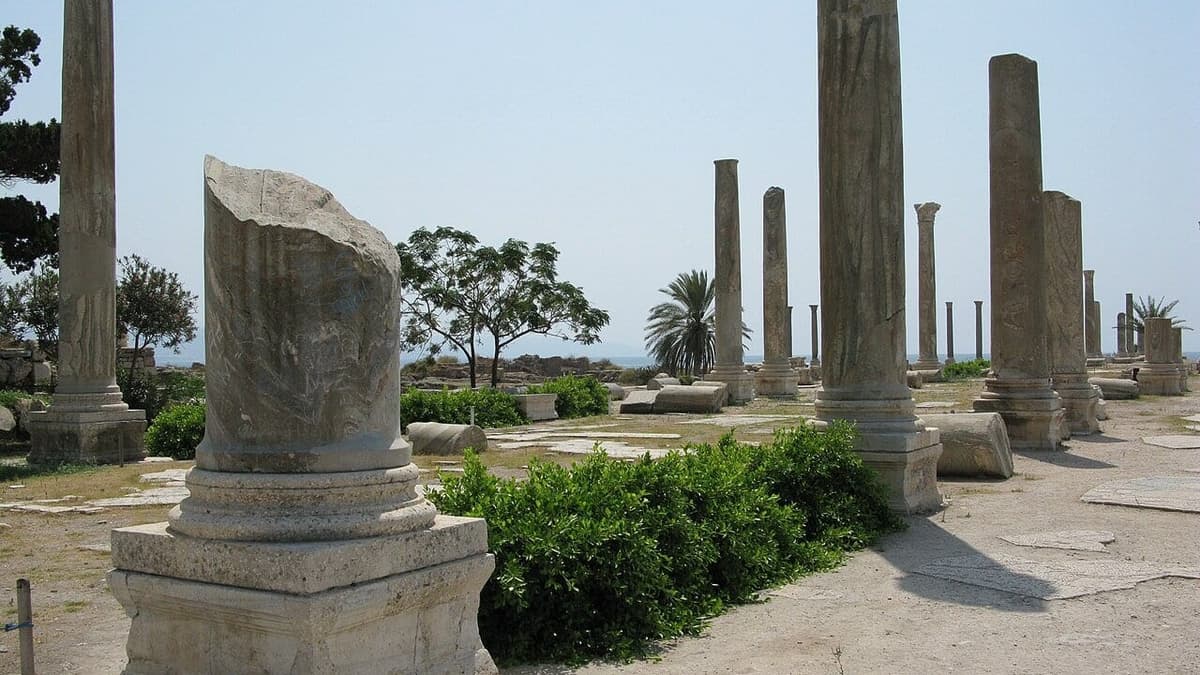
Tyre (modern Sour, Lebanon) was one of the foremost maritime powers of antiquity, perched on the Mediterranean coast of the Levant. Founded around 2750 BCE according to Herodotus and confirmed by early Bronze Age archaeological strata, Tyre was originally an offshore rocky island citadel situated approximately 800 meters from the mainland, paired with an agricultural and necropolis settlement on the shore known as Ushu (Palaetyrus). Through its naturally sheltered northern (Sidonian) and southern (Egyptian) harbours, Tyre commanded trans-Mediterranean shipping routes and established a vast network of trading posts and colonies extending to Cyprus, Sicily, North Africa (most notably founding Carthage in 814 BCE), and the Atlantic coast of Spain at Gadir (Cádiz).
Tyre’s economic supremacy was anchored in its industrial monopoly on Tyrian purple (imperial purple), a dye prized by ancient royalty and extracted from the hypobranchial glands of millions of predatory sea snails (Bolinus brandaris and Hexaplex trunculus). Under King Hiram I in the 10th century BCE, Tyre expanded dramatically: Hiram joined two small islands through massive stone embankments, constructed monumental temples to Melqart and Astarte, and supplied skilled Phoenician architects, cedar timber from Mount Lebanon, and gold to King Solomon for the construction of the First Temple in Jerusalem.
"O Tyre, thou hast said: I am of perfect beauty. Thy borders are in the heart of the seas, thy builders have perfected thy beauty... All the ships of the sea with their mariners were in thee to occupy thy merchandise."
— Book of Ezekiel 27:3–9, on the maritime trade and glory of Tyre (6th century BCE)
Because of its formidable island fortifications and naval prowess, Tyre resisted successive empires for centuries: it survived a five-year siege by Shalmaneser V of Assyria and a grueling thirteen-year siege by Nebuchadnezzar II of Babylon (586–573 BCE) without ever succumbing. Its most legendary historical turning point occurred in 332 BCE, when Alexander the Great besieged the island for seven months. To overcome the city’s 45-meter-high sea walls, Alexander demolished mainland Palaetyrus and used stone and timber to construct a massive artificial causeway (mole) nearly a kilometer long across the open sea. Supported by naval warships from Cyprus and Sidon, Alexander breached the walls, slaughtering thousands and selling thirty thousand citizens into slavery. Alexander’s artificial mole permanently altered ocean currents, trapping sediment and forever transforming Tyre from an island into a permanent peninsula.
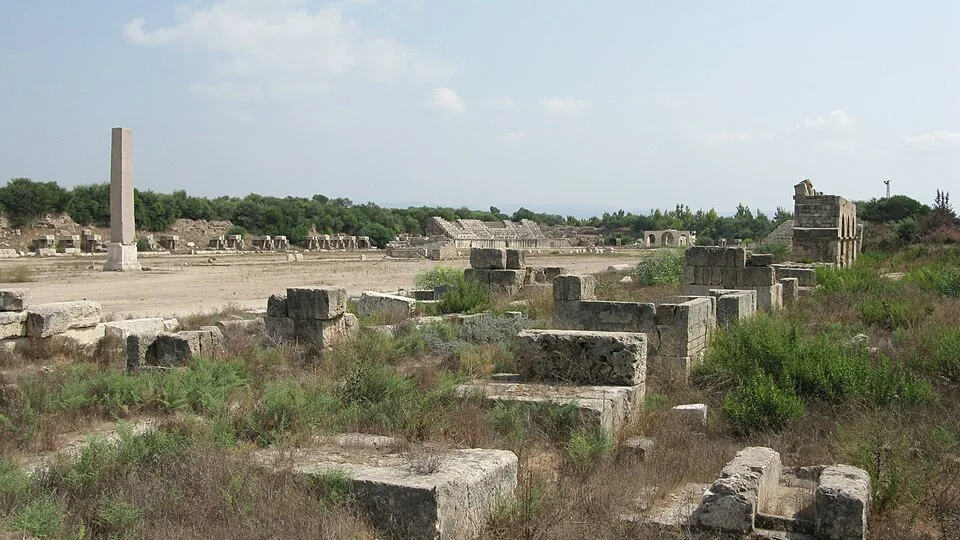
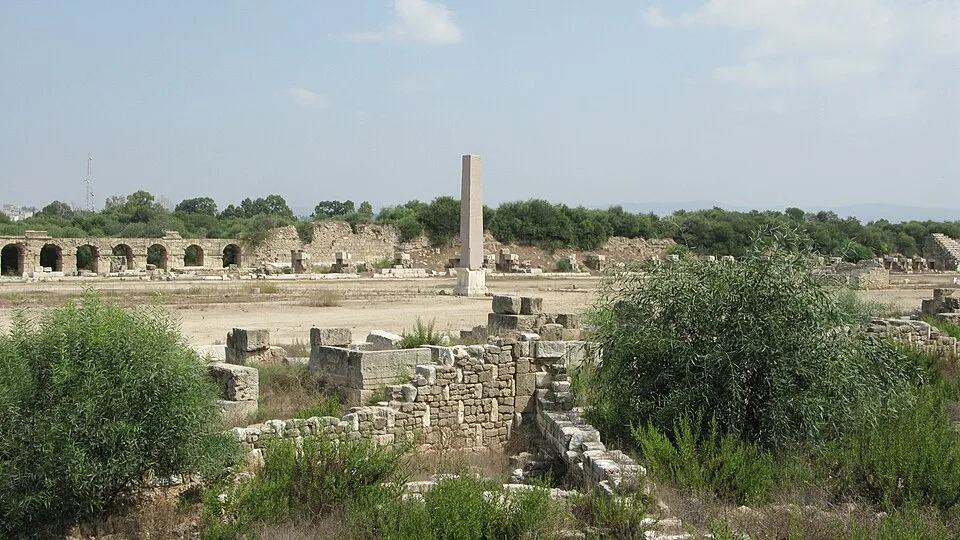
Under the Roman Empire, Tyre was re-established as a prosperous provincial capital with extensive privileges as a civitas foederata. Today, the archaeological ruins of Tyre—inscribed on the UNESCO World Heritage List in 1984—are divided into two magnificent excavation zones: the Al-Mina sector on the former island, featuring sweeping seaside colonnaded avenues, an expansive public bathhouse, and a unique rectangular theatre; and the Al-Bass sector on the mainland, preserving a monumental Roman triumphal archway, a Byzantine paved necropolis with hundreds of carved marble sarcophagi, and the extraordinary Roman Hippodrome. Measuring over 480 meters in length and capable of seating 30,000 spectators, Tyre’s hippodrome is the largest, best-preserved, and most complete Roman chariot racing arena in the ancient world outside the Circus Maximus of Rome.