
The Mediterranean Sea has never been a barrier; for millennia, it has functioned as a maritime superhighway, connecting continents, ideas, religions, and empires. From the earliest Neolithic seafarers who braved open waters to trade obsidian and erect colossal stone temples, to the Phoenician traders who founded colonies from the Levant to the Atlantic, and the Roman senators whose agricultural estates flourished on island granaries, the Mediterranean shaped the foundations of world civilization.
Atlas Anatolia connects three extraordinary Mediterranean milestones across four thousand years of human ingenuity: Neolithic Malta, Phoenician Lebanon, and Roman Sicily. Explore their locations, dates, and evidence ratings in our three-site compare set.
1. Ġgantija: Prehistoric Megaliths on the Island of Gozo
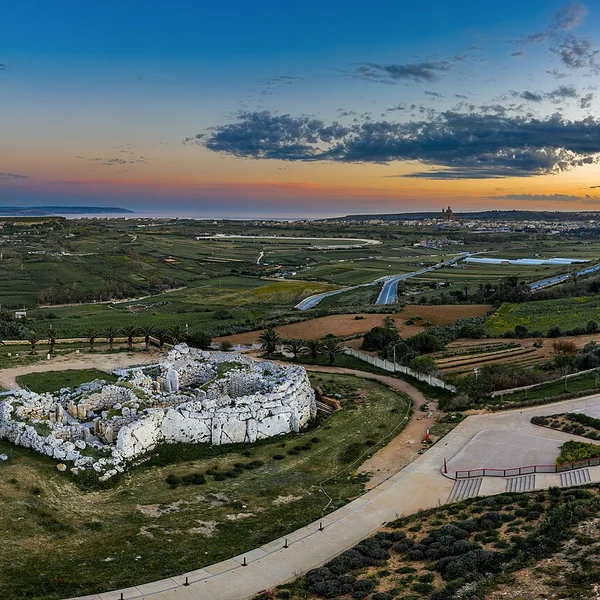
Around 3600 BCE—more than a millennium before the construction of Stonehenge or the Great Pyramid of Giza—Neolithic communities on the Maltese island of Gozo achieved an unprecedented engineering triumph. At Ġgantija, they constructed two adjacent temple sanctuaries enclosed within a colossal D-shaped boundary wall.
Using only stone, bone, and wooden tools, these prehistoric builders quarried hard coralline limestone megaliths weighing upwards of fifty tonnes and dragged them across the landscape on spherical limestone balls. The temples feature characteristic clover-leaf (trefoil) apse layouts, with stone altars, libation holes, and spiral-carved thresholds dedicated to ancestral and fertility rituals.
Long before modern archaeology deciphered their true antiquity, local Maltese folklore attributed these superhuman walls to the mythical giantess Sunsuna, who was said to have built the towers in a single night while nursing a child. Today, Ġgantija stands recognized by UNESCO as one of the world's oldest free-standing stone monuments.
2. Tyre: The Phoenician Queen of the Seas
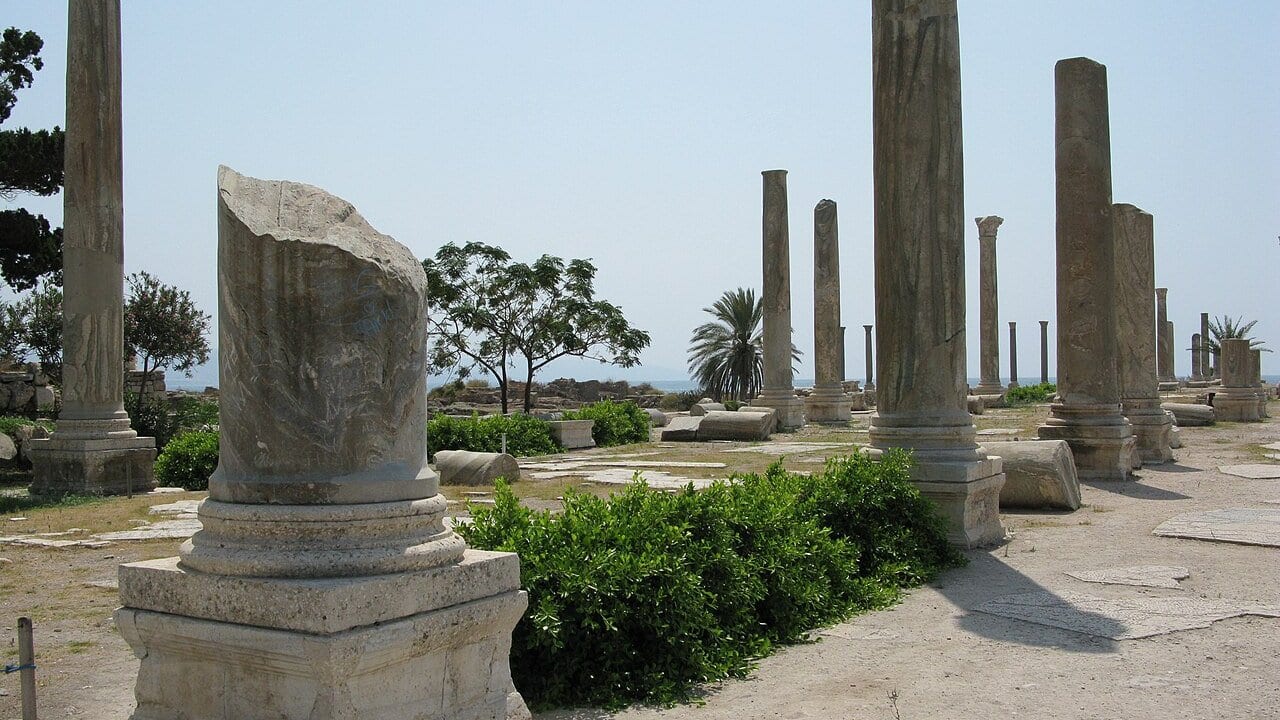
Three millennia after the rise of Ġgantija, on the eastern shores of the Mediterranean, the city-state of Tyre (Ṣūr) established itself as the undisputed master of maritime commerce. Originally an impregnable rocky island fortress situated 800 meters off the coast of modern Lebanon, Tyre commanded two natural harbours and built a thalassocracy that spanned the Mediterranean basin.
Tyre was the industrial epicenter of Tyrian purple, a vibrant, light-fast dye extracted from the glands of predatory Murex sea snails. Because it required tens of thousands of snails to dye a single imperial garment, Tyrian purple became the ultimate luxury commodity, restricted to royalty and priesthoods across the ancient world.
Tyrian navigators established colonies across North Africa—most famously founding Carthage in 814 BCE—as well as Gadir (Cádiz) in Spain. Tyre's defensive fortifications were legendary: it resisted a thirteen-year siege by King Nebuchadnezzar II of Babylon without falling.
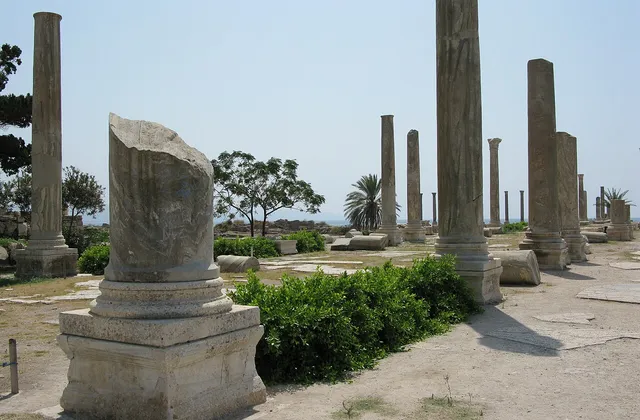
It took the military genius of Alexander the Great in 332 BCE to breach Tyre. Demolishing mainland settlements, Alexander constructed an artificial stone and timber mole nearly a kilometer long across the open channel. Alexander’s siege permanently altered the geography of the Levant, trapping coastal sediment and turning Tyre into a permanent peninsula. In the Roman period, Tyre flourished anew, constructing the Al-Bass Hippodrome—the largest and best-preserved Roman chariot-racing stadium in the world.
3. Villa Romana del Casale: The Pinnacle of Roman Aristocratic Luxury
In the heart of Sicily, near Piazza Armerina, lies the Villa Romana del Casale, a sprawling 4th-century CE palace complex that captures the twilight luxury of the Late Roman aristocracy.
Constructed for a wealthy senator or imperial official who controlled vast agricultural estates (latifundia), the villa contains over 3,500 square meters of in situ polychrome floor mosaics—the largest and most varied collection in the Roman world.
Its most celebrated masterworks include:
- The Great Hunt (Ambulatory of the Scena Venatoria): A 66-meter-long continuous corridor illustrating the capture and overseas transport of exotic African and Asian beasts—tigers, rhinos, lions, and elephants—bound for gladiatorial games (venationes) in Rome's Colosseum.
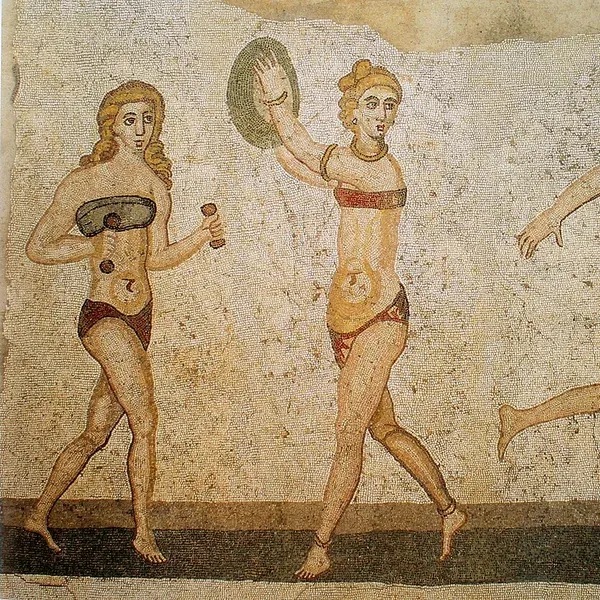
- The "Bikini Girls" (Coronation of the Athletes): Ten athletic young women competing in weightlifting, discus throwing, running, and ball games, dressed in two-piece linen athletic garments.
- The Small Hunt and Mythological Rooms: Scenes of falconry, boar hunting, and the labours of Hercules, executed with extraordinary vibrancy and psychological depth.
Preserved for centuries under protective mudslides from the Gela River, the villa provides a vivid, firsthand window into trans-Mediterranean wealth, trade, and cultural patronage at the end of antiquity.
From Megaliths to Mosaics
The story of the Mediterranean is a journey from island isolation to global connectivity:
- At Ġgantija, Neolithic humans mastered stone to create the sacred architecture of community.
- At Tyre, Phoenician mariners mastered the waves to create trade routes and the phonetic alphabet.
- At Villa Romana del Casale, Roman grandees harvested the wealth of these maritime routes to construct an earthly paradise of mosaic art.
Explore all three archaeological dossiers on the interactive map or view them side-by-side in our compare tool.


