Overview
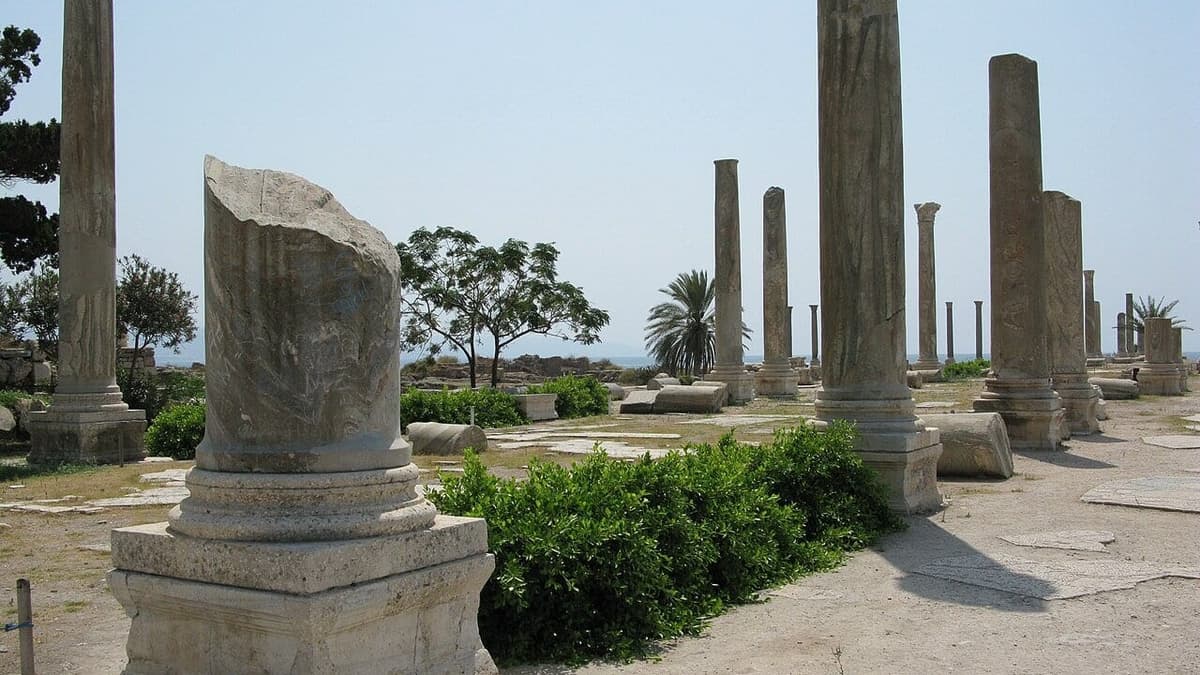
Set within a fertile forested valley at the foot of Mount Mangone, approximately 3 km southwest of Piazza Armerina in central Sicily, the Villa Romana del Casale is one of the supreme surviving architectural and artistic monuments of the Late Roman Empire. Erected in the first decades of the 4th century CE (c. 310–330 CE) above the remains of an earlier 2nd-century rustic villa, the palatial rural residence extends across more than 4,000 square meters over four terraced levels conforming to the natural slope of the Gela River basin.
The villa’s unparalleled preservation is the direct result of a catastrophic natural disaster in the 12th century. Around 1161 CE, massive landslides and torrents of alluvial mud cascaded down from Mount Mangone, completely burying the buildings under one to four meters of protective sediment. This silt matrix sealed the polychrome floor mosaics from moisture, weathering, and stone looting for nearly eight centuries. Initial soundings by Paolo Orsi in 1929 and Giuseppe Cultrera in the 1930s confirmed the presence of mosaics, but it was the monumental campaigns of Gino Vinicio Gentili between 1950 and 1954 that cleared the complex, bringing to light over 3,500 square meters of intact figurative mosaics created by master mosaic workshops imported from Roman North Africa (most likely Carthage).
"The mosaics of Piazza Armerina represent the greatest, most varied, and best-preserved collection of Roman pavement art in the Mediterranean world, witnessing the supreme luxury of late antique aristocratic estate life."
— UNESCO World Heritage Citation, Villa Romana del Casale (1997)
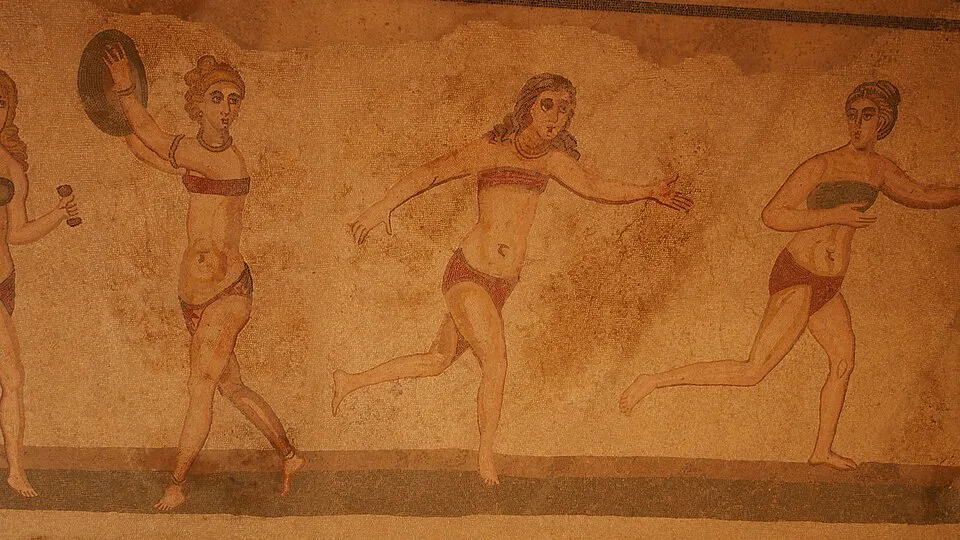
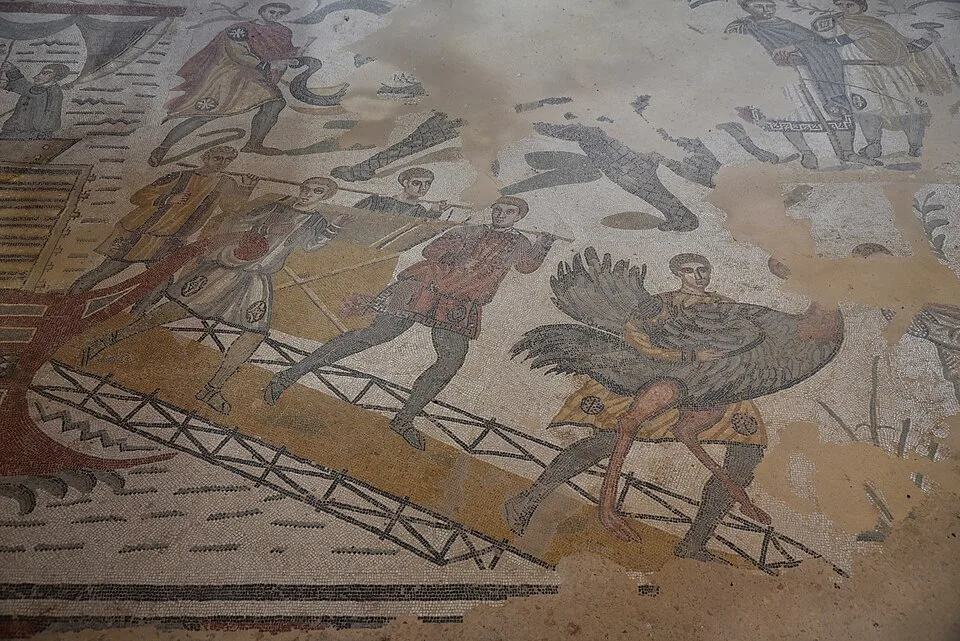
The artistic centerpiece of the estate is the Ambulatory of the Great Hunt (Corridor of the Great Hunt), an astonishing 66-meter-long colonnaded corridor spanning the central axis of the villa. Its vivid tesserae depict the capture, crating, overland cartage, and maritime embarkation of wild beasts from Africa and Asia — lions, leopards, elephants, tigers, rhinoceroses, ostriches, and wild boars — destined for the gladiatorial arena spectacles (venationes) in Rome's Colosseum. In the private apartments, the famous Chamber of the Ten Maidens (Sala delle Dieci Ragazze, widely known as the "Bikini Girls") portrays ten young noblewomen in two-piece subligaculum and strophium athletic garments engaged in weightlifting, discus throwing, track running, and ball play, with the victor awarded a palm frond and laurel crown.
The patron and owner of this palatial residence remains a celebrated enigma. Gentili originally attributed the villa to Western Roman Emperor Maximian (Herculius), citing the recurrent Herculean iconography in the grand tri-apsidal dining hall (Triclinium). Later scholars have proposed Maximian’s son Maxentius, or a powerful Roman senator and landowning governor such as Lucius Aradius Valerius Proculus, prefect of Rome (340–352 CE), who staged lavish games requiring vast animal imports. Inscribed on the UNESCO World Heritage list in 1997 (ref. 832), the villa connects with the trading quays of Ostia Antica, the games arena of the Colosseum, the domestic preservation of Pompeii and Herculaneum, and the mosaic traditions of Carthage.