Overview
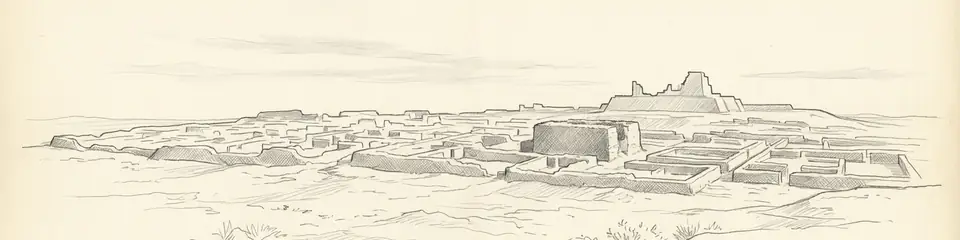
Ugarit lies at modern Ras Shamra just north of Latakia on the Syrian coast. Chance discovery of a tomb in 1928 led Claude Schaeffer and successive French and Syrian missions to uncover a royal palace, temples of Baal and Dagan, residential quarters, and harbour installations of Minet el-Beida. Occupation peaked in the Late Bronze Age (c. 1450–1185 BCE) under a dynasty that wrote Akkadian diplomatic letters and local Ugaritic cuneiform.
The tablets — gods Baal, Anat, El; rituals; treaties; and the earliest fully attested Northwest Semitic alphabet — reshaped understanding of Canaanite religion and biblical parallel literature. House archives of merchants and scribes show a cosmopolitan trading city linked to Cyprus, Egypt, and Hatti. Around 1185 BCE the city burned in the coastal destructions associated with the Late Bronze Age collapse; it was never fully revived.
Architectural levels include the Palace courtyard complexes, the acropolis temples, and residences with corner cisterns. Pair with Hattusha and Troy for eastern Mediterranean collapse horizons, and with Jericho for Levantine city traditions.