Overview
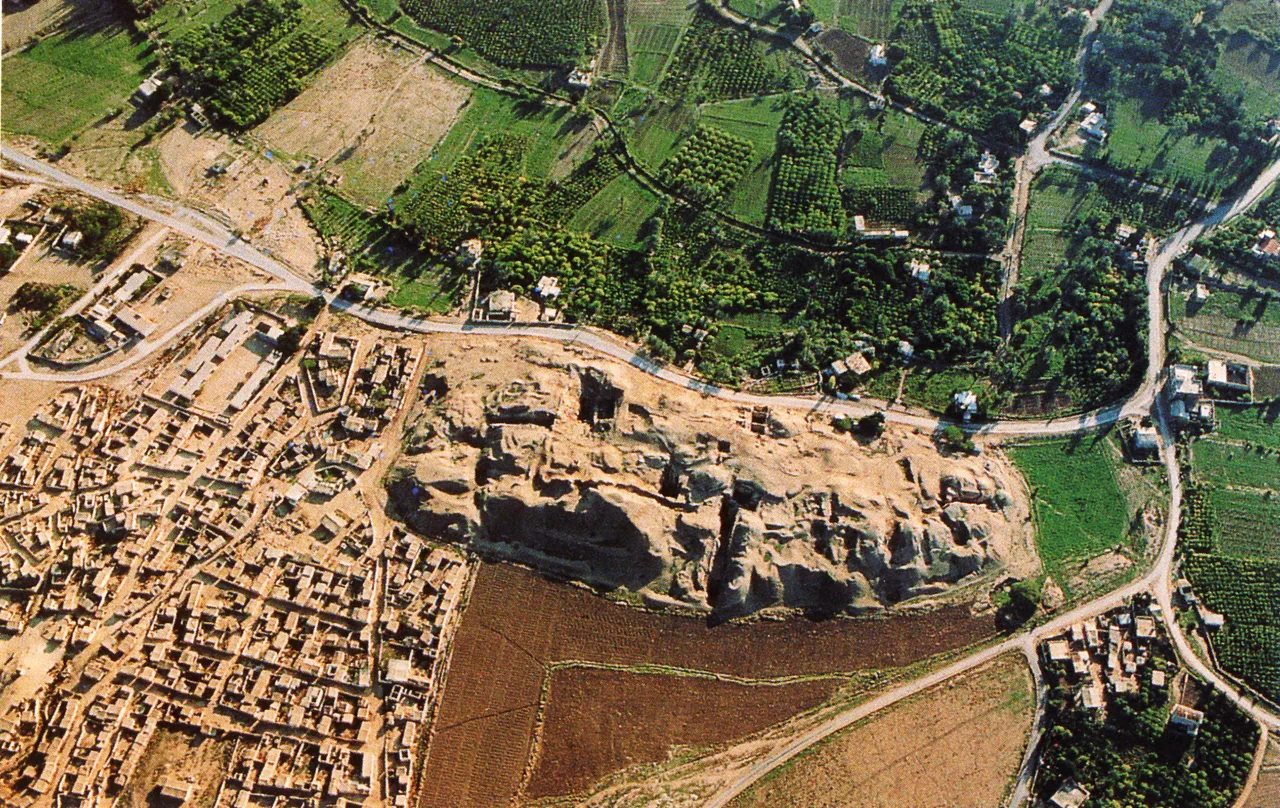
Jericho (Tell es-Sultan) stands at the edge of the Jordan Valley, about 258 metres below sea level — the lowest city on Earth — in a desert landscape fed by the perennial Ein es-Sultan spring. The tell (occupation mound) records more than 10,000 years of nearly continuous human habitation, making it one of the most chronologically deep archaeological sites in the world.
The earliest substantial remains date to the Natufian period (c. 10,000 BCE), when hunter-gatherers established a seasonal camp around the spring. By approximately 9600 BCE, at the dawn of the Pre-Pottery Neolithic A (PPNA) period, communities here transitioned to year-round settlement and early cultivation of emmer wheat and einkorn. They built a remarkable circular stone tower about 8.5 metres in diameter and 8.2 metres tall, with an interior staircase of 22 stone steps — the Tower of Jericho, arguably the world's first monumental stone construction. Radiocarbon dates place its construction around 8500–8000 BCE.
British archaeologist Kathleen Kenyon's systematic excavations from 1952 to 1958 revealed the stratigraphic sequence that established Jericho's extraordinary antiquity and rewrote the chronology of early civilisation. She identified Pre-Pottery Neolithic settlements, later Bronze Age occupation, and evidence that Jericho was a walled city long before writing was invented.
The city features extensively in the Hebrew Bible: the Book of Joshua describes the conquest of Jericho, whose walls fell miraculously at the blast of trumpets. Archaeologically, the timing of this event remains controversial — most scholars find no destruction layer matching the biblical account at the expected date (c. 1400 BCE), and some question whether the city was inhabited at all during that period.
Jericho continued to be occupied through the Hellenistic, Roman, and Byzantine periods. Herod the Great built a winter palace nearby. The city today is administered by the Palestinian Authority and Tel es-Sultan is a Palestinian Heritage Site. The site was nominated for UNESCO World Heritage status in 2012.