Overview
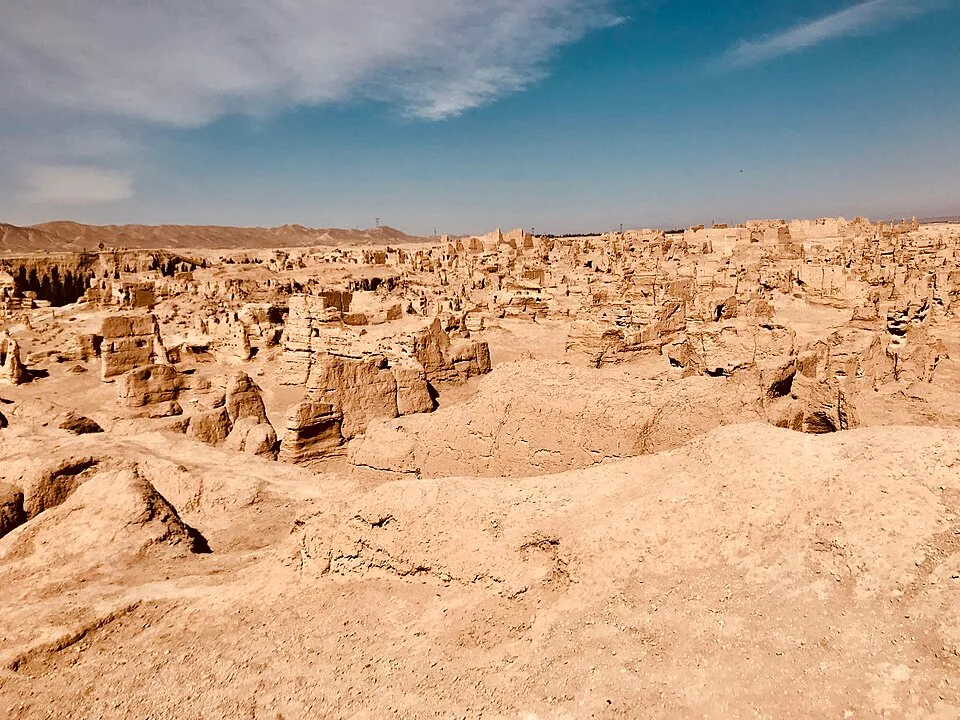
Jiaohe (Chinese: "Meeting Rivers") occupies a slender loess mesa about 10 kilometres west of Turpan in eastern Xinjiang, China. Two deep river ravines isolate the plateau on three sides, creating a natural fortress. From at least the Western Han period (2nd–1st centuries BCE) it served as the capital of the Nearer Jushi (Cheshi) kingdom; later it became a Tang Chinese military–administrative seat and continued under successive oasis regimes until abandonment around the 14th century after Mongol-era disruptions.
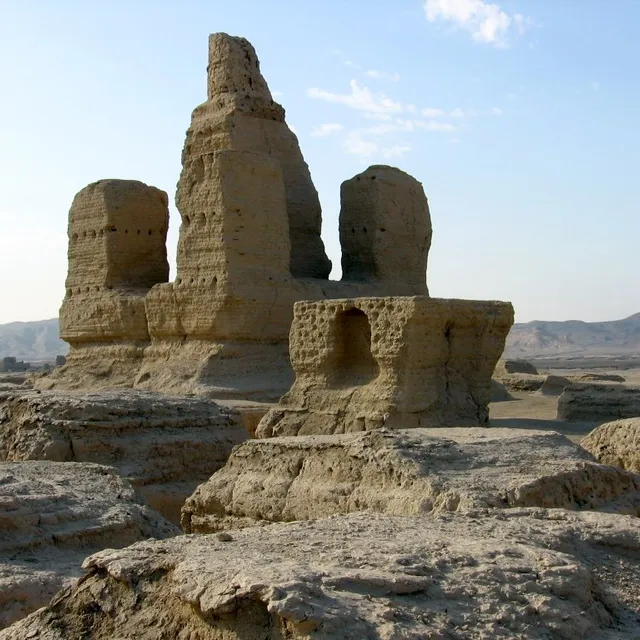
Unlike many Central Asian cities built of fired brick on open plains, much of Jiaohe was excavated downward into loess — subterranean and semi-subterranean houses, temples, and storage spaces — supplemented by surface mud-brick structures. The city plan retains a clear axial street, Buddhist monasteries, a large stupa complex, and defensive walls at the plateau edge. Wind erosion has sculpted the ruins into a lunar yellow landscape often photographed from the air.
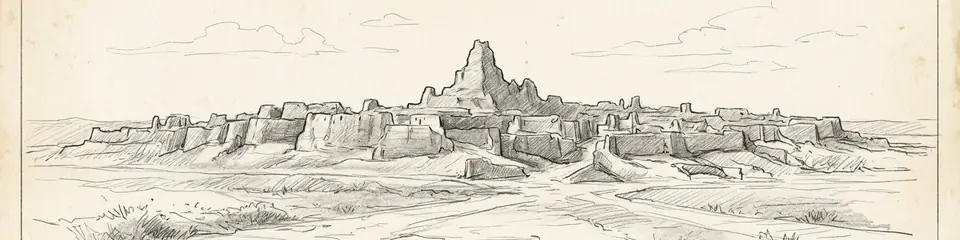
"The city of Jiaohe stands upon a river terrace like a ship between two streams; its people carved dwellings in yellow earth so that the precipice itself became their wall."
— Paraphrase of Chinese geographical notices of the Nearer Jushi capital (Han–Tang tradition)
Japanese, Chinese, and Western explorers documented the site from the early 20th century; systematic conservation continues under China’s Cultural Heritage system. Jiaohe is part of the broader UNESCO Silk Roads: the Routes Network of Chang’an–Tianshan Corridor World Heritage listing.