
コンテンツへスキップ
Atlas Anatolia
ニュースIce Age teeth in Sulawesi push betel-nut use back as far as 25,000 yearsRoman mosaic and Eros head uncovered in the basilica at Pompeiopolis, Kastamonu
Early Chalukya temples at Pattadakal on the Malaprabha River, Karnataka

Wikimedia Commons (CC BY-SA 4.0)

神殿UNESCO注目

Pattadakal

Seyfi Cem Baskin

ಪಟ್ಟದಕಲ್650 西暦 – 760 西暦

An Early Chalukya coronation and temple ensemble on the Malaprabha River in Karnataka, mixing northern nagara and southern dravida towers, inscribed by UNESCO in 1987.

21
関心 58

所在地

インド

15.95°N · 75.81°E · アジア

Dynasty

Early Chalukyas of Badami, 7th–8th centuries CE

Virupaksha

Queen Lokamahadevi, c. 740 CE

UNESCO

World Heritage Site (1987), ref. 239

Forms

Nagara and dravida towers in one compound

“Pattadakal is the textbook Early Chalukya laboratory for north and south Indian temple forms on one river terrace.”

所在地

概要

Pattadakal (Pattadakallu) sits on the Malaprabha in Bagalkot district, Karnataka, downstream from the Early Chalukya centres at Aihole and Badami. The main group — Virupaksha, Mallikarjuna, Sangameshwara, Galaganatha, and neighbours — was a royal commemorative landscape in the 7th–8th centuries CE. Queen Lokamahadevi’s Virupaksha temple (c. 740) celebrates Vikramaditya II’s victories; its inscriptions name architects from the southern tradition.

The site is famous for placing nagara (curvilinear northern) and dravida (pyramidal southern) shikharas in one compound, so students can walk the two languages of Indian temple elevation in a single morning. A Jaina temple stands slightly apart. George Michell and the ASI published plans and conservation notes; UNESCO listed the Group of Monuments at Pattadakal in 1987 (ref. 239).
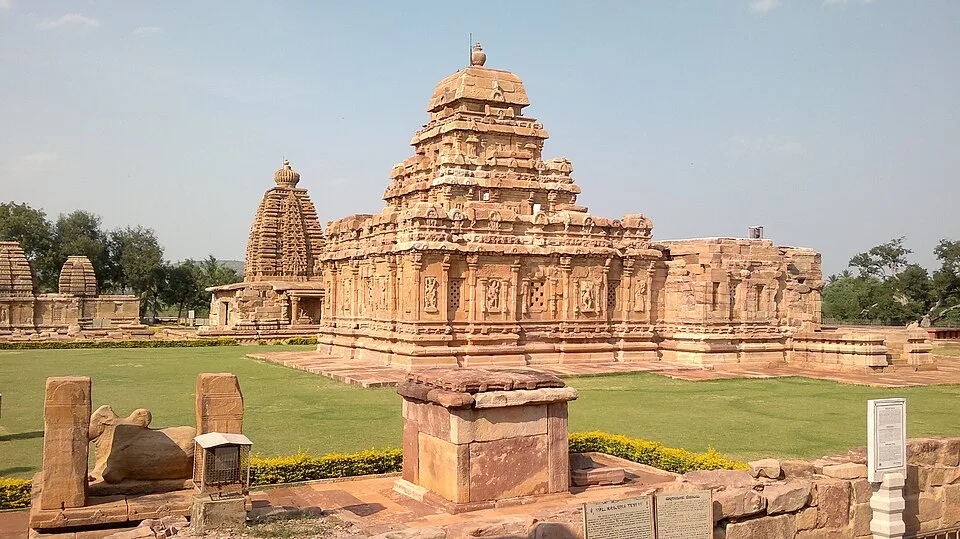
A-temple-at-pattadakal-badami
A-temple-at-pattadakal-badami | rajeshodayanchal (CC BY 3.0)
"Pattadakal represents the high point of an eclectic art which, in the 7th and 8th centuries under the Chalukya dynasty, achieved a harmonious blend of architectural forms from northern and southern India."
— UNESCO, Group of Monuments at Pattadakal (World Heritage List, 1987)

Read with Aihole and the Badami Cave Temples for the rest of the Early Chalukya river circuit, and with Hampi for a later Vijayanagara sacred landscape in the same state.
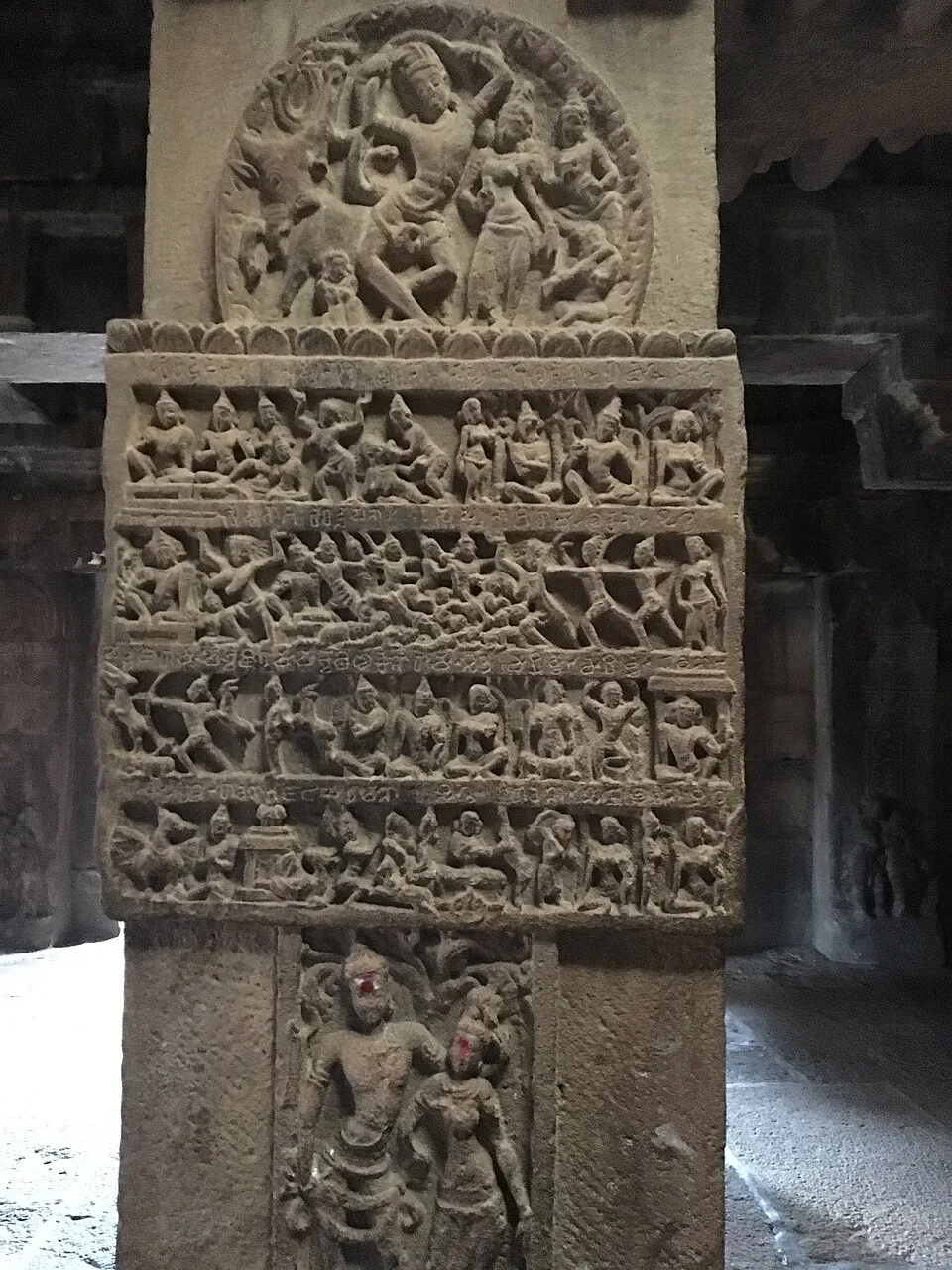
Virupaksha Temple-Pattadakal-Karnataka-05
Virupaksha Temple-Pattadakal-Karnataka-05 | Sachin Ravikumar (CC BY-SA 4.0)

Aihole and Badami complete the Early Chalukya circuit; Pattadakal is the commemorative middle term, not an isolated “style museum.”

重要性

Pattadakal is the textbook Early Chalukya laboratory for north and south Indian temple forms on one river terrace. It is also a coronation landscape: inscriptions make patronage, victory, and architects visible in a way most Deccan ruins do not.

証拠と解釈

確立された事実と議論が続く事柄を区別する。

確立された事実

2
  • Inscriptions name Chalukya patrons, architects, and the Virupaksha temple’s commemorative function after Vikramaditya II’s campaigns.
  • Standing temples preserve both nagara and dravida superstructures on measured ASI plans.

学術的推論

1
  • The riverside group functioned as a coronation and commemorative landscape tied to Aihole and Badami.

コミュニティ写真

あなたの体験を共有する

この遺跡を訪れたことがありますか?写真をアップロードして魅力を共有しましょう。

このページの引用方法

Atlas Anatolia. (650). Pattadakal. Atlas Anatolia. https://atlasanatolia.com/ja/site/pattadakal

コンテンツはCC BY-SA 4.0ライセンスの下で提供されています — 再利用の際は出典表示が必要です。

出典

  • Temple Architecture and Art of the Early Chalukyas — Michell, George (2014)
  • UNESCO — Group of Monuments at Pattadakalリンク

よくある質問

Pattadakalはどこにありますか?

PattadakalはIndiaに位置しています。

Pattadakalの年代はいつ頃ですか?

Pattadakalはおよそ650 西暦 – 760 西暦のものとされています。

Pattadakalはどの文明に関連していますか?

PattadakalはChalukya文明に関連しています。

Pattadakalが重要な理由は何ですか?

Pattadakal is the textbook Early Chalukya laboratory for north and south Indian temple forms on one river terrace.

Pattadakalはユネスコ世界遺産ですか?

はい — Pattadakalはユネスコ世界遺産に登録されています。