
コンテンツへスキップ
Atlas Anatolia
ニュースIce Age teeth in Sulawesi push betel-nut use back as far as 25,000 yearsRoman mosaic and Eros head uncovered in the basilica at Pompeiopolis, Kastamonu
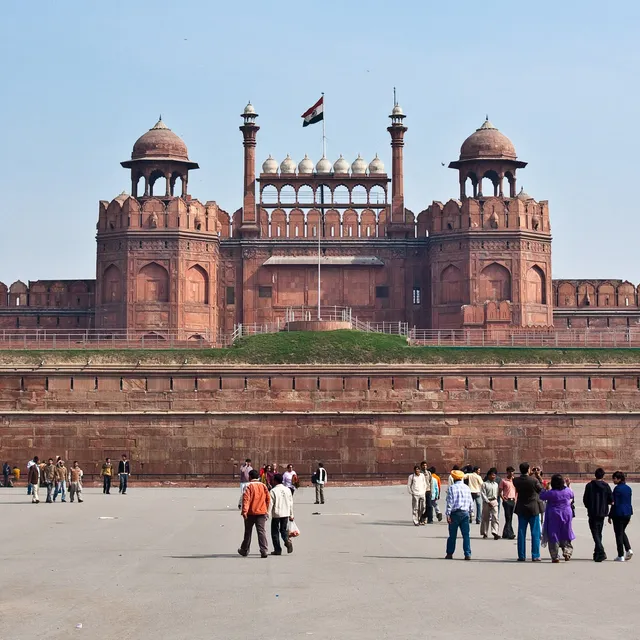
The Lahore Gate of the Red Fort, Delhi

Wikimedia Commons

遺産要塞UNESCO注目

Red Fort

Seyfi Cem Baskin

लाल किला1639 西暦 – 1857 西暦

Shah Jahan's red-sandstone palace-fortress in Delhi — the seat of Mughal power from 1648 until 1857 — whose Lahore Gate, Diwan-i-Am, and Nahr-i-Behisht apartments define the zenith of Mughal court architecture and host India's Independence Day ceremonies each year.

21
関心 81

所在地

インド

28.66°N · 77.24°E · アジア

Built

1639–1648 CE for Shah Jahan's new capital Shahjahanabad

Architects

Traditionally Ustad Ahmad and Ustad Hamid

Ceremony

Indian Independence Day address from Lahore Gate since 1947

UNESCO

Red Fort Complex (2007)

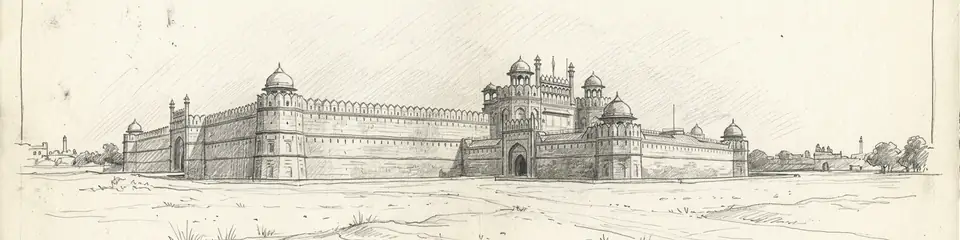
Graphite pencil sketch banner of Red Fort

“The Red Fort is the definitive Mughal imperial residence of the late period and the architectural culmination of Shah Jahan's building programme.”

所在地

概要

The Red Fort (Lal Qila) stands on the west bank of the Yamuna in Old Delhi (Shahjahanabad), the walled capital Shah Jahan founded in 1639. Construction of the fort-palace proceeded from about 1639 to 1648 under architects Ustad Ahmad and Ustad Hamid, employing the same red sandstone and white marble vocabulary as Agra. The complex covers roughly 254 acres within 2.5 km of crenellated walls; the Lahore Gate and Delhi Gate pierce the ramparts.

Inside, the Nahr-i-Behisht (Stream of Paradise) canal fed a row of pavilions — Rang Mahal, Mumtaz Mahal, Khas Mahal — linking public audience halls to private imperial quarters. The Diwan-i-Am (Hall of Public Audience) and Diwan-i-Khas (Hall of Private Audience) staged Mughal ceremonial until the empire fragmented. The adjacent Salimgarh Fort (1546) forms the UNESCO-listed Red Fort Complex.

After the Indian Rebellion of 1857 the British occupied and altered the fort; post-1947 it became a national symbol, with the Prime Minister hoisting the flag from the Lahore Gate ramparts on 15 August. Archaeological Survey of India conservation continues on damaged pavilions and gardens.

重要性

The Red Fort is the definitive Mughal imperial residence of the late period and the architectural culmination of Shah Jahan's building programme. Its survival as both UNESCO heritage and living national monument makes it one of the most visited historic sites in South Asia.

証拠と解釈

確立された事実と議論が続く事柄を区別する。

確立された事実

2
  • Mughal textual sources and foundation inscriptions document Shah Jahan's commission and completion dates for the palace-fort.
  • Standing fabric preserves Nahr-i-Behisht canal layout, Diwan-i-Am/Khas plans, and red sandstone–marble craft of the 17th century.

議論のある解釈

1
  • The original appearance of lost silver-ceiling Diwan-i-Khas and stripped gem inlays is reconstructed from descriptions and fragments with varying confidence.

コミュニティ写真

あなたの体験を共有する

この遺跡を訪れたことがありますか?写真をアップロードして魅力を共有しましょう。

このページの引用方法

Atlas Anatolia. (1639). Red Fort. Atlas Anatolia. https://atlasanatolia.com/ja/site/red-fort

コンテンツはCC BY-SA 4.0ライセンスの下で提供されています — 再利用の際は出典表示が必要です。

出典

  • The Complete Taj Mahal and the Riverfront Gardens of Agra — Koch, Ebba (2006)
  • UNESCO — Red Fort Complexリンク

よくある質問

Red Fortはどこにありますか?

Red FortはIndiaに位置しています。

Red Fortの年代はいつ頃ですか?

Red Fortはおよそ1639 西暦 – 1857 西暦のものとされています。

Red Fortはどの文明に関連していますか?

Red FortはMughal文明に関連しています。

Red Fortが重要な理由は何ですか?

The Red Fort is the definitive Mughal imperial residence of the late period and the architectural culmination of Shah Jahan's building programme.

Red Fortはユネスコ世界遺産ですか?

はい — Red Fortはユネスコ世界遺産に登録されています。