
コンテンツへスキップ
Atlas Anatolia
ニュースIce Age teeth in Sulawesi push betel-nut use back as far as 25,000 yearsRoman mosaic and Eros head uncovered in the basilica at Pompeiopolis, Kastamonu
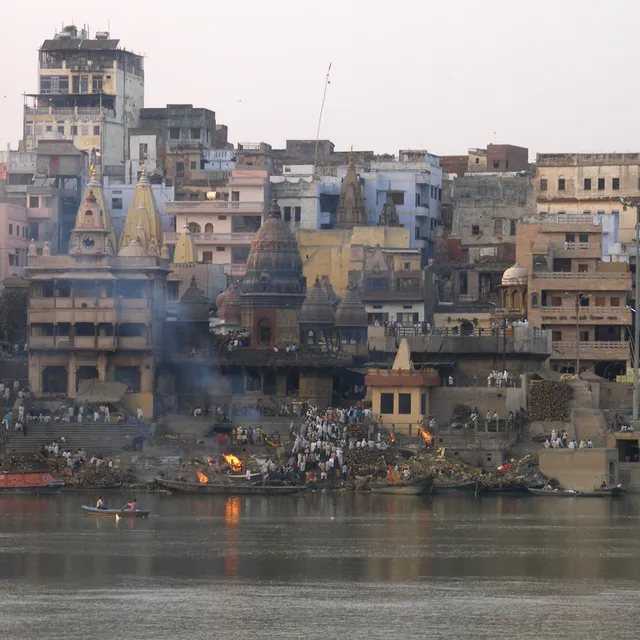
The stone ghats and Ganges riverfront at Varanasi at dawn

Wikimedia Commons

Country Record

Longest Continuously Occupied Site in India

遺産都市注目

Varanasi

Seyfi Cem Baskin

वाराणसी1200 紀元前 – 1900 西暦

One of the world's oldest continuously inhabited cities — on the Ganges in Uttar Pradesh — whose ghats, Kashi Vishwanath Temple, and cremation grounds at Manikarnika Ghat have drawn Hindu pilgrims, scholars, and travellers for millennia.

211
関心 80

所在地

インド

25.31°N · 83.01°E · アジア

Ancient names

Kashi, Banaras — "oldest living city" tradition

Ghats

~80 stone steps along the Ganges riverfront

Sarnath

Buddha's first sermon preached ~8 km northeast

Kashi Vishwanath

Major Shiva temple; current shrine largely 18th century

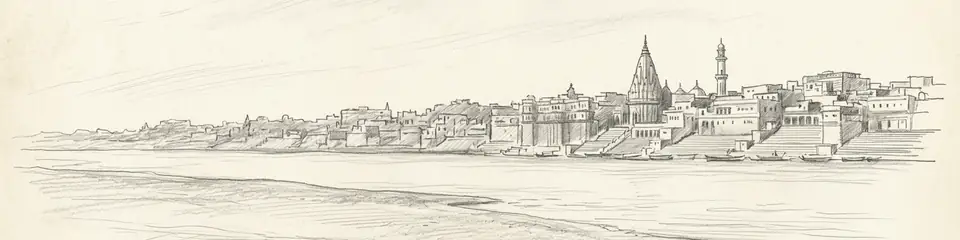
Graphite pencil sketch banner of Varanasi

“Varanasi is the living heart of Hindu sacred geography — a city where ancient ritual, death, and river worship continue uninterrupted in urban form.”

所在地

概要

Varanasi (Kashi, "City of Light") lies on the left bank of the Ganges River in Uttar Pradesh, northern India. Textual and archaeological evidence suggests settlement from the Iron Age onward; the city is central to Hindu cosmology as a tirtha where bathing in the Ganges grants spiritual merit and death within the city offers moksha (liberation). Buddha preached his first sermon at nearby Sarnath, linking Varanasi to Buddhist origins as well.

The riverfront ghats — stone steps and platforms numbering around 80 — structure urban life: Dashashwamedh Ghat for daily Ganga Aarti, Assi Ghat at the southern end, Manikarnika and Harishchandra Ghats for cremation. The Kashi Vishwanath Temple (rebuilt repeatedly, current shrine largely 18th century under the Maratha queen Ahilyabai Holkar) honours Shiva as Vishwanath, "Lord of the Universe." Narrow lanes (galis) behind the ghats preserve dense temple and residential fabric.

Varanasi has been a centre of Sanskrit learning, music (Benares gharana), and silk weaving. While not a single UNESCO monument, the living city is inscribed in intangible and cultural heritage discussions and ranks among the most visited destinations in India for both pilgrims and international travellers.
重要性

Varanasi is the living heart of Hindu sacred geography — a city where ancient ritual, death, and river worship continue uninterrupted in urban form. Its ghats and proximity to Sarnath link the origins of Buddhism to the oldest traditions of the Ganges plain.

証拠と解釈

確立された事実と議論が続く事柄を区別する。

確立された事実

2
  • Archaeological excavations at Rajghat and nearby sites recover Iron Age and early historic pottery and structures.
  • Sarnath Ashokan pillar and Buddhist monuments document the city's role in early Buddhism from the 3rd century BCE.

学術的推論

1
  • Continuous urban occupation since the 1st millennium BCE is widely argued but difficult to prove uninterrupted across the entire ghats zone.

議論のある解釈

1
  • Claims of Varanasi as the "oldest continuously inhabited city" depend on definition of continuity and comparison with Jericho, Damascus, and other candidates.

コミュニティ写真

あなたの体験を共有する

この遺跡を訪れたことがありますか?写真をアップロードして魅力を共有しましょう。

関連記事

このページの引用方法

Atlas Anatolia. (1200). Varanasi. Atlas Anatolia. https://atlasanatolia.com/ja/site/varanasi

コンテンツはCC BY-SA 4.0ライセンスの下で提供されています — 再利用の際は出典表示が必要です。

グラフ

関連する遺跡やストーリーへのつながり。

出典

  • Banaras: City of Light — Eck, Diana L. (1982)
  • Banaras: Making of India's Heritage City — Singh, Rana P. B. (2009)

よくある質問

Varanasiはどこにありますか?

VaranasiはIndiaに位置しています。

Varanasiの年代はいつ頃ですか?

Varanasiはおよそ1200 紀元前 – 1900 西暦のものとされています。

Varanasiはどの文明に関連していますか?

VaranasiはVedic Indian, Mauryan, Gupta, Mughal文明に関連しています。

Varanasiが重要な理由は何ですか?

Varanasi is the living heart of Hindu sacred geography — a city where ancient ritual, death, and river worship continue uninterrupted in urban form.

Varanasiはユネスコ世界遺産ですか?

Varanasiは現在ユネスコ世界遺産には登録されていません。