
コンテンツへスキップ
Atlas Anatolia
ニュースIce Age teeth in Sulawesi push betel-nut use back as far as 25,000 yearsRoman mosaic and Eros head uncovered in the basilica at Pompeiopolis, Kastamonu
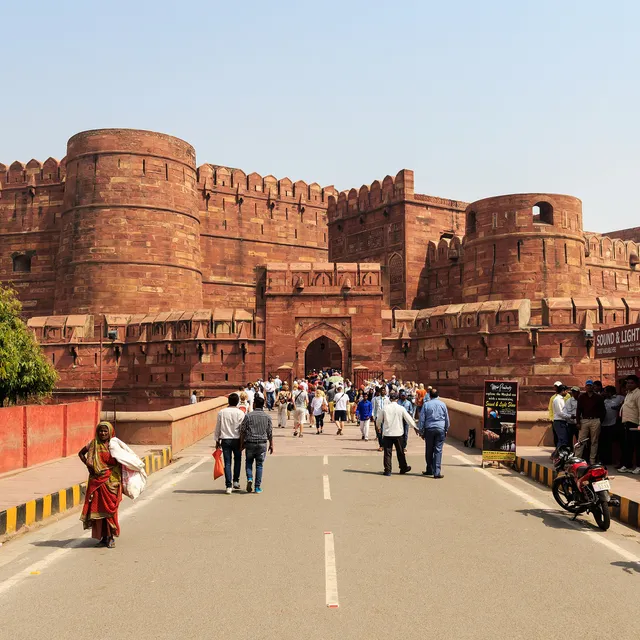
Red sandstone walls and gates of Agra Fort, India

Wikimedia Commons

Country Record

Oldest Fortress in India

遺産要塞UNESCO注目

Agra Fort

Seyfi Cem Baskin

आगरा किला1565 西暦 – 1857 西暦

The massive red-sandstone fortress on the Yamuna at Agra — seat of Akbar, Jahangir, and Shah Jahan before the Mughal court moved to Delhi — whose palaces and mosques face the Taj Mahal across the river and draw millions of visitors on India's Golden Triangle circuit.

21
関心 75

所在地

インド

27.18°N · 78.02°E · アジア

Built

Major phase c. 1565–1573 CE under Akbar; later marble works by Shah Jahan

Material

Red sandstone with white marble imperial apartments

View

Musamman Burj overlooks the Taj Mahal across the Yamuna

UNESCO

World Heritage Site (1983)

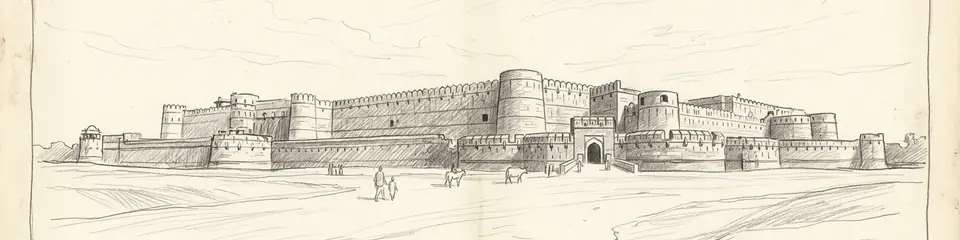
Graphite pencil sketch banner of Agra Fort

“Agra Fort is the military and residential counterpart to the Taj Mahal — together they document Mughal power, aesthetics, and riverine urban planning at its peak.”

所在地

概要

Agra Fort (Lal Qila) rises on the right bank of the Yamuna River in Agra, Uttar Pradesh, forming a crescent-shaped walled complex roughly 2.5 kilometres in circumference. Akbar the Great ordered its reconstruction in red sandstone beginning about 1565 on the site of an earlier fort; successive emperors added marble palaces, audience halls, and gardens. Shah Jahan's white-marble Musamman Burj tower — where he was imprisoned by Aurangzeb — offers the famous view toward the Taj Mahal.

The fort combines military architecture (double ramparts, moat, angled bastions) with refined residential courts: the Jahangir Mahal, Khas Mahal, Diwan-i-Am, and Diwan-i-Khas. Pietra dura, carved brackets, and inlaid marble reflect the same workshops that later built the Taj. After the Mughal decline the fort passed through Maratha and British control; much of the interior was adapted for barracks and administration.

The Archaeological Survey of India now manages the monument. UNESCO listed Agra Fort in 1983 alongside the Taj Mahal as a defining Mughal ensemble of the Yamuna corridor.

重要性

Agra Fort is the military and residential counterpart to the Taj Mahal — together they document Mughal power, aesthetics, and riverine urban planning at its peak. Its continuous occupation from the 16th century preserves one of the largest and best-studied Islamic fort-palaces in South Asia.

証拠と解釈

確立された事実と議論が続く事柄を区別する。

確立された事実

2
  • Mughal court chronicles and inscriptions attribute the Akbar-period rebuilding and Shah Jahan marble additions to documented imperial workshops.
  • Architectural analysis confirms Timurid–Mughal vaulting, jali screens, and pietra dura consistent with 16th–17th-century imperial ateliers.

学術的推論

1
  • The fort's riverfront orientation was intended to integrate Yamuna transport and garden-tomb axes linking Agra's palatial and funerary landscapes.

コミュニティ写真

あなたの体験を共有する

この遺跡を訪れたことがありますか?写真をアップロードして魅力を共有しましょう。

このページの引用方法

Atlas Anatolia. (1565). Agra Fort. Atlas Anatolia. https://atlasanatolia.com/ja/site/agra-fort

コンテンツはCC BY-SA 4.0ライセンスの下で提供されています — 再利用の際は出典表示が必要です。

出典

  • Mughal Architecture — Koch, Ebba (1991)
  • UNESCO — Agra Fortリンク

よくある質問

Agra Fortはどこにありますか?

Agra FortはIndiaに位置しています。

Agra Fortの年代はいつ頃ですか?

Agra Fortはおよそ1565 西暦 – 1857 西暦のものとされています。

Agra Fortはどの文明に関連していますか?

Agra FortはMughal文明に関連しています。

Agra Fortが重要な理由は何ですか?

Agra Fort is the military and residential counterpart to the Taj Mahal — together they document Mughal power, aesthetics, and riverine urban planning at its peak.

Agra Fortはユネスコ世界遺産ですか?

はい — Agra Fortはユネスコ世界遺産に登録されています。