For more than three thousand years, ancient Egyptian religion was an ever-evolving dialogue between mortal pharaohs and the cosmic order (Ma'at). While popular imagination often views Egyptian culture as static and unchanging, the archaeological landscape of the Nile Valley tells a story of profound theological ruptures, ancestral piety, and bold cosmic reinventions.
Atlas Anatolia brings together three of Egypt’s most consequential sacred sites, spanning from the predynastic dawn of writing to the sunset of the Ptolemaic dynasty. You can place their timelines, coordinates, and archaeological evidence side by side using our compare tool.
1. Abydos: The Primordial Realm of Osiris
Long before the pyramids rose at Giza, Abydos (Abdju) anchored the royal afterlife. In the desert bay of Umm el-Qa'ab ("Mother of Pots"), German and British excavations uncovered the subterranean mudbrick tombs of Egypt’s First Dynasty rulers (c. 3100 BCE), alongside Tomb U-j, where bone and ivory labels preserve the world’s earliest proto-hieroglyphic writing.
By the Middle Kingdom, Abydos had transformed into the primary national pilgrimage center of Osiris, the god of resurrection and sovereign of the underworld. Hundreds of thousands of devotees traveled here to participate in the annual Osiris Mysteries, depositing millions of ceramic votive vessels that created the towering mounds seen today.
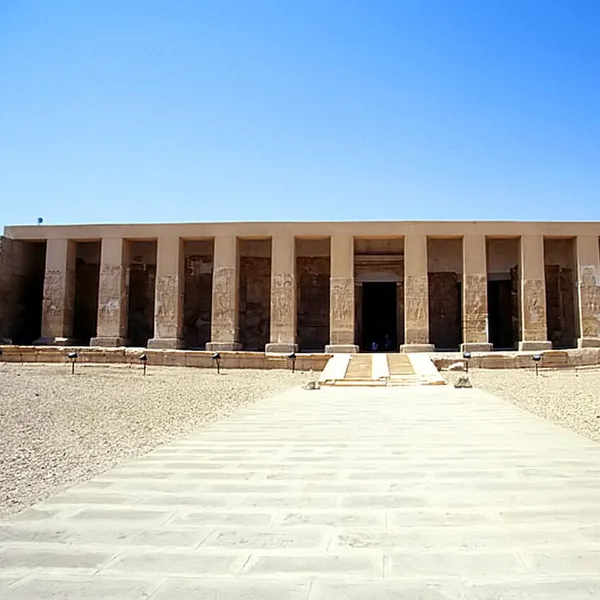
In the 19th Dynasty, Pharaoh Seti I and his son Ramesses II erected the Great Temple of Osiris, an architectural triumph carved from pristine white limestone. Its rear chambers lead directly into the Osireion—a subterranean megalithic cenotaph surrounded by a subterranean water channel representing the primeval waters of Nun. Crucially for historians, Seti I inscribed the celebrated Abydos King List in a corridor wall, naming seventy-six ancestral pharaohs from Menes onward, deliberately omitting the rulers of the Amarna heresy.
2. Amarna: The Sun City of the Rebel Pharaoh
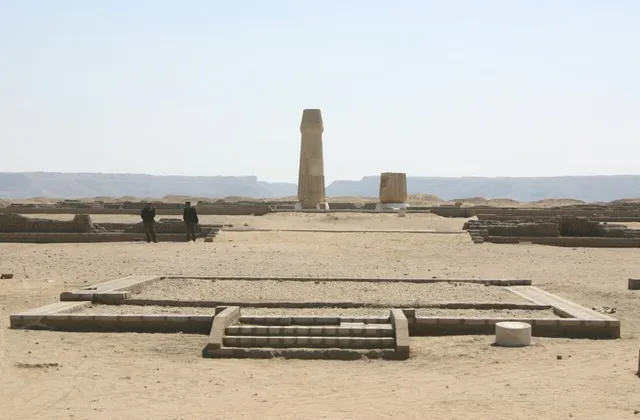
Three centuries after the peak of Abydos, Pharaoh Amenhotep IV launched the most radical theological and artistic upheaval in Egyptian history. Rejecting the powerful priesthood of Amun-Ra at Thebes and the ancient cult of Osiris, the king changed his name to Akhenaten ("Effective for the Aten") and founded a brand-new capital on virgin desert ground in Middle Egypt: Amarna (Akhetaten, the "Horizon of the Aten").
At Amarna, traditional dark, roofed sanctuaries were replaced by the colossal Great Aten Temple, spanning 760 meters of unroofed open courtyards filled with hundreds of offering tables illuminated directly by the sun disk. Akhenaten proclaimed the Aten to be the sole creator deity, whose life-giving rays ended in blessing hands extending ankh symbols to the king and Queen Nefertiti.
In the southern quarters of the city, the courtyard workshop of Chief Sculptor Thutmose yielded extraordinary master portraits in 1912, including the world-famous painted bust of Nefertiti. Meanwhile, the discovery of the Amarna Letters in 1887—nearly 400 cuneiform clay tablets—revealed intense diplomatic maneuvering between Egypt, Babylon, Assyria, and the Hittites.
Yet the revolution did not outlive its architect. Within years of Akhenaten's death around 1334 BCE, the court returned to Thebes, Akhetaten was abandoned, and subsequent pharaohs dismantled its temples for rubble fill.
3. Dendera: Celestial Cosmos and the Last Pharaoh
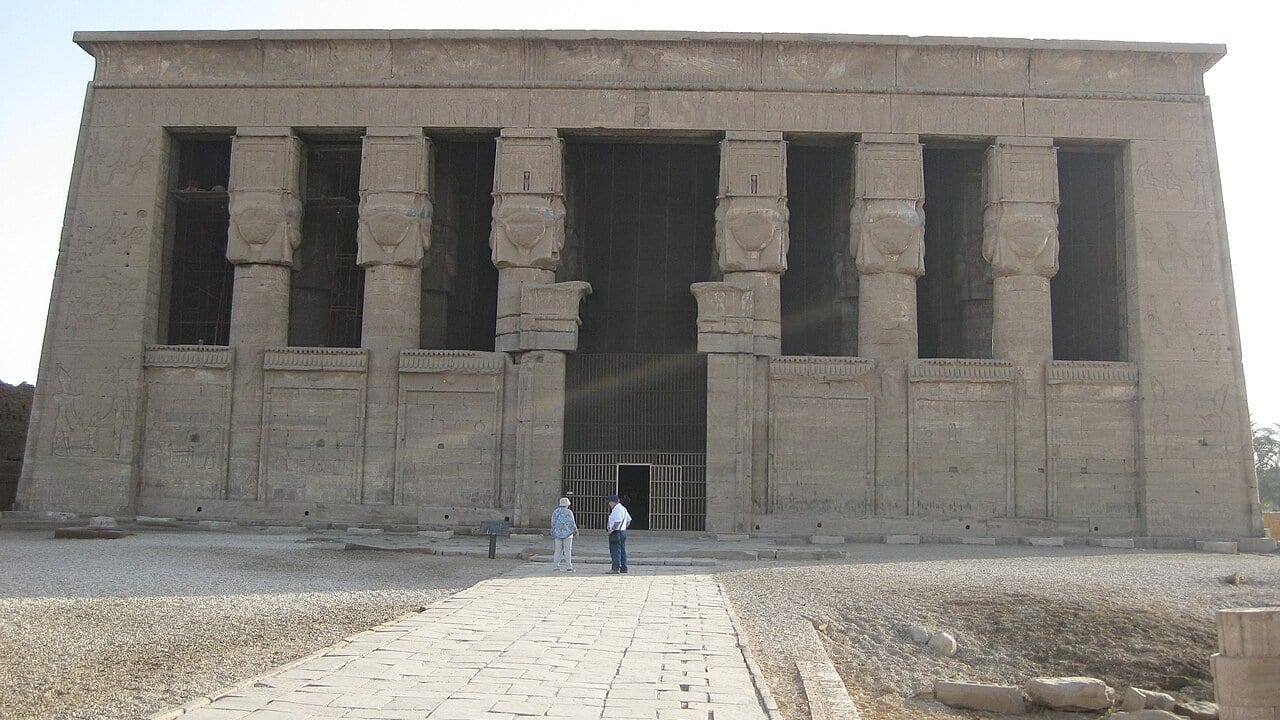
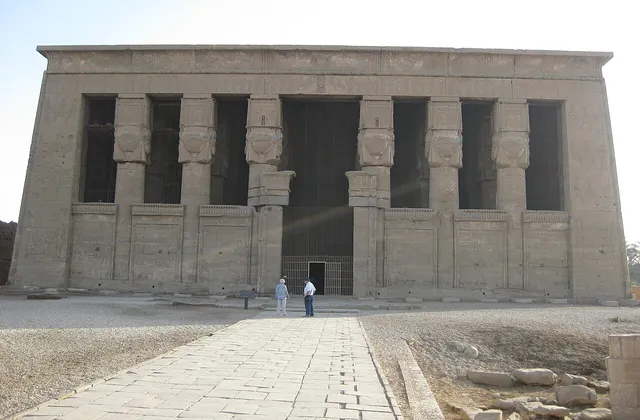
Further south along the Nile bend, the Dendera Temple complex (Iunet) showcases the magnificent climax of Egyptian religious architecture under the Ptolemaic dynasty and early Roman emperors. Dedicated to Hathor—goddess of motherhood, music, joy, and the sky—the Great Temple standing today was largely constructed between 380 BCE and the 2nd century CE.
Entering the hypostyle hall reveals twenty-four colossal columns capped with the four-faced head of Hathor. Because the hall was preserved under desert silt until the 19th century, its ceiling retains brilliant original blue and turquoise polychrome pigments, displaying astronomical registers of decans, planets, and constellations crossing the heavens.
On the roof, chapels built for the "Union with the Sun Disk" festival once housed the Dendera Zodiac, the earliest known circular map of the heavens combining traditional Egyptian constellations with Babylonian and Hellenistic astrological signs. On the southern exterior wall, a towering bas-relief captures Queen Cleopatra VII Philopator and her son Ptolemy XV Caesarion presenting offerings to Hathor—the final monumental portrait of the Ptolemaic kingdom before its annexation by Rome.
The Thread of Egyptian Continuity
Across three millennia, Abydos, Amarna, and Dendera embody the dramatic shifts of Egyptian kingship:
- Ancestral piety and the underworld at Abydos, where the roots of dynastic legitimacy were forged.
- Revolutionary monotheism and solar radiance at Amarna, an ephemeral dream of light erased by restoration.
- Cosmic synthesis and royal survival at Dendera, where Greco-Roman rulers wrapped their authority in the eternal myth of Hathor and Isis.
Compare their architectural blueprints, key finds, and verified evidence ratings directly in the compare set, or track their development through our interactive deep time map.