The easiest sentence about Göbekli Tepe on the internet is still this: hunter-gatherers built the world's first temple, then walked away, and nobody lived on the hill. In mid-August 2026, Prof. Necmi Karul, who directs the excavation and coordinates the Taş Tepeler ("Stone Hills") project, told Anadolu Agency something more ordinary and more useful. A newly opened sector north of the main excavation zone had produced rectangular buildings from the site's second phase. His first impression: they look like dwellings. His next sentence: it is not enough to say that from the walls alone.
That is the Atlas habit. Treat the trench as news. Treat the function as a test.
Turkey
Göbekli Tepe
The world's oldest known monumental sanctuary, predating Stonehenge by roughly 6,000 years. Massive carved T-s
Turkey
Karahan Tepe
Karahan Tepe is a Pre-Pottery Neolithic settlement in southeastern Türkiye, contemporaneous with Göbekli Tepe,
Türkiye
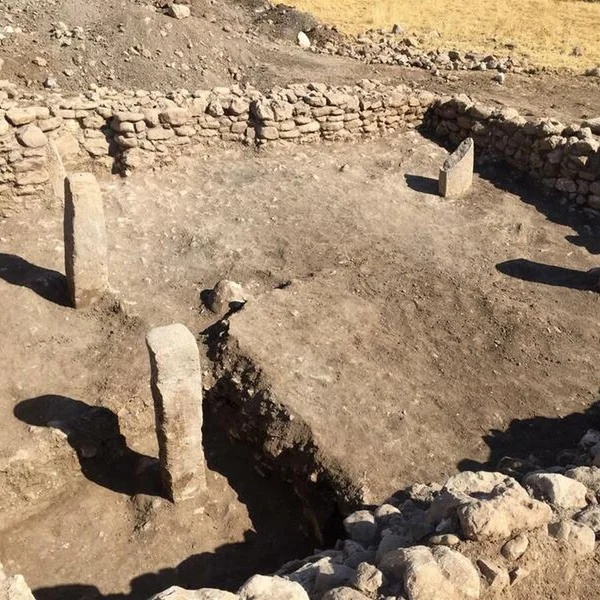
Boncuklu Tarla
A Pre-Pottery Neolithic settlement in Batman province whose earliest layers may predate Göbekli Tepe, featurin
What opened this season
Karul's team began work in the north under the Culture and Tourism Ministry's Legacy for the Future Project. Olive trees that had stood there were relocated, which opened about 1,500 square metres. The trees, he said, had not done significant damage to the remains; without moving them, the sector would probably have stayed closed to archaeology.
The buildings appeared immediately beneath the surface as the trench moved north. Erosion had already eaten the upper wall courses, so floors of some rooms were reached quickly. That is why the team could sketch plan and layout so early in the season. It is also why photographs of neat standing walls should not be expected yet.
Karul compared the new rooms with rectangular buildings previously excavated in an area labelled GT1. They look like counterparts: the standing-stone tradition is weaker here, with fewer pillars than in the famous round enclosures. Interior arrangement, on first look, fits residential use better than a T-pillar sanctuary.
A walking path was laid so visitors can watch the new trench without standing in it. Conservation did not stop for the headline. Reinforcement work has shifted from Structure C (largely finished last year) to Structure D, with completion hoped for by the end of 2026.
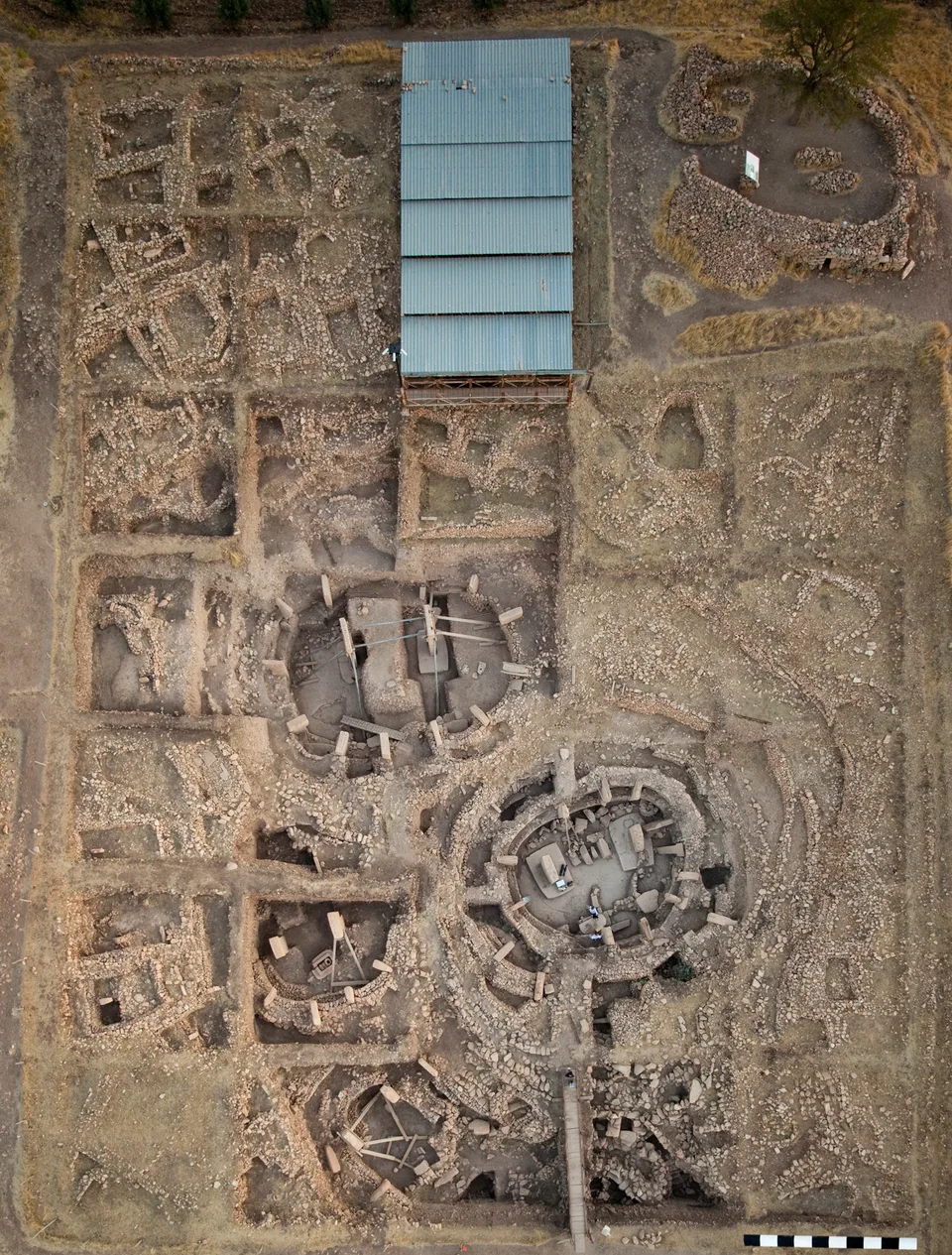
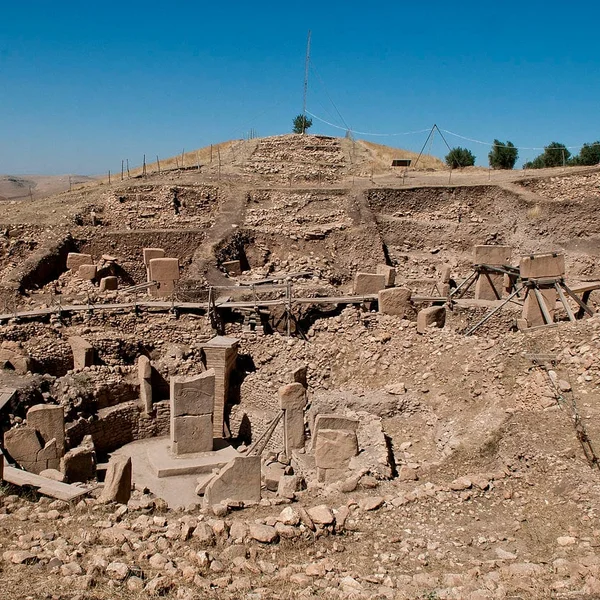
!Main excavation area at Göbekli Tepe, not the 2026 northern trench
Main excavation area at Göbekli Tepe, not the 2026 northern trench | Wikimedia Commons (CC BY 4.0)
The image above is the main, long-excavated zone, not the 2026 northern sector. No verified Commons photograph of the new rooms exists yet. Use it as a map of what most visitors already know, then keep the north in your head as a strip still coming out of the soil.
Why "houses" is still an inference
Popular write-ups jumped from rectangular plan to "Göbekli Tepe was a village." Karul did not. Soil samples from inside the rooms, especially from floor levels, are the next evidence, not another press conference.
What a domestic reading would need, in ordinary archaeological terms:
- Activity residues on floors (ash, phytoliths, micro-refuse, starch, and the rest of the unglamorous list)
- Installations that belong to living (hearths, bins, grinding furniture) rather than only benches around pillars
- A settlement layout: rooms in groups, alleys, repeated house plans, not a single odd rectangle
- Dates that sit in the later Pre-Pottery Neolithic (the 9th millennium BCE for this phase), not a collapse of the whole site chronology into one slogan
Until those tests land, the honest rating is inferred, not confirmed.
Rectangular buildings were opened in 2026 north of the main excavation zone
They belong to Göbekli Tepe's later, second building phase
Their plan resembles earlier GT1 rectangular buildings
Fewer standing stones than in the famous round enclosures
The new buildings were houses
Function can be read from wall lines alone
Göbekli Tepe was only a pilgrimage temple with no residents
This is not the first time the hill looks lived-in
The 2026 trench matters because it extends architecture into a sector visitors have not been able to see excavated. It does not invent the residential question.
Klaus Schmidt's long campaign already distinguished an early phase of round, T-pillar enclosures from a later phase of more rectangular buildings with smaller stones (often discussed as Layer III vs Layer II). Karul himself reminded reporters that previous seasons had already produced public buildings and contemporary dwellings. The simultaneous use of both, he said, is why Göbekli Tepe should be read as a settlement where people lived, not only as a ritual stage. Similar mixed layouts appear at other Taş Tepeler excavations.
So the news is a new window, not a first sighting. If you only remember one correction from this page: "people may have lived here" is an old argument getting new floor plans, not a 2026 conversion narrative.
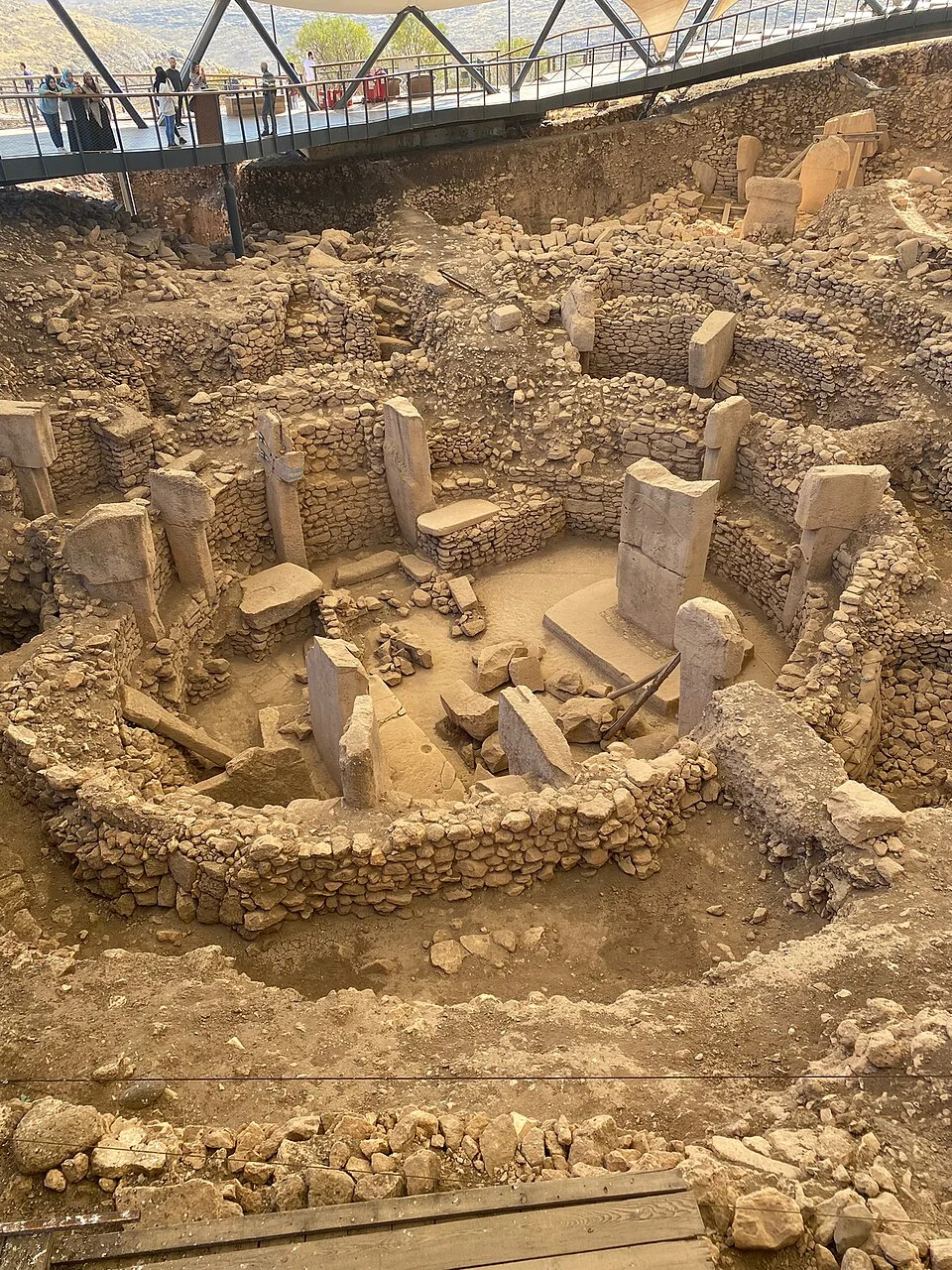
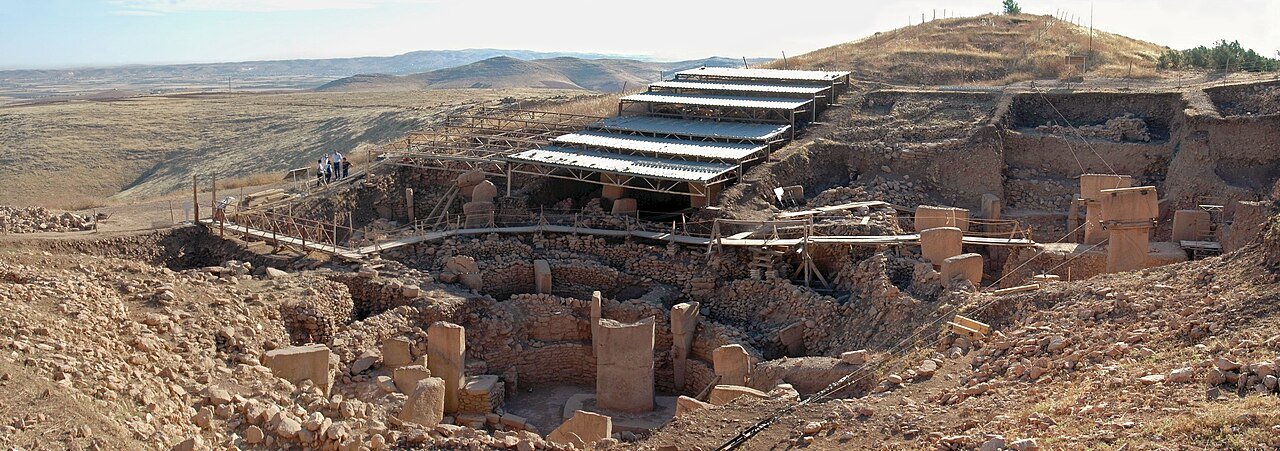
!Visitor canopy over the main T-pillar enclosures at Göbekli Tepe
Visitor canopy over the main T-pillar enclosures at Göbekli Tepe | TaylanOzgurUksal via Wikimedia Commons (CC BY-SA 4.0)
The modern canopy and walkways over the main enclosures are conservation, not the 2026 north trench. Karul's point about a path around the new area is practical: the site is a working excavation and a UNESCO visit at the same time.
Taş Tepeler: the hill is not alone
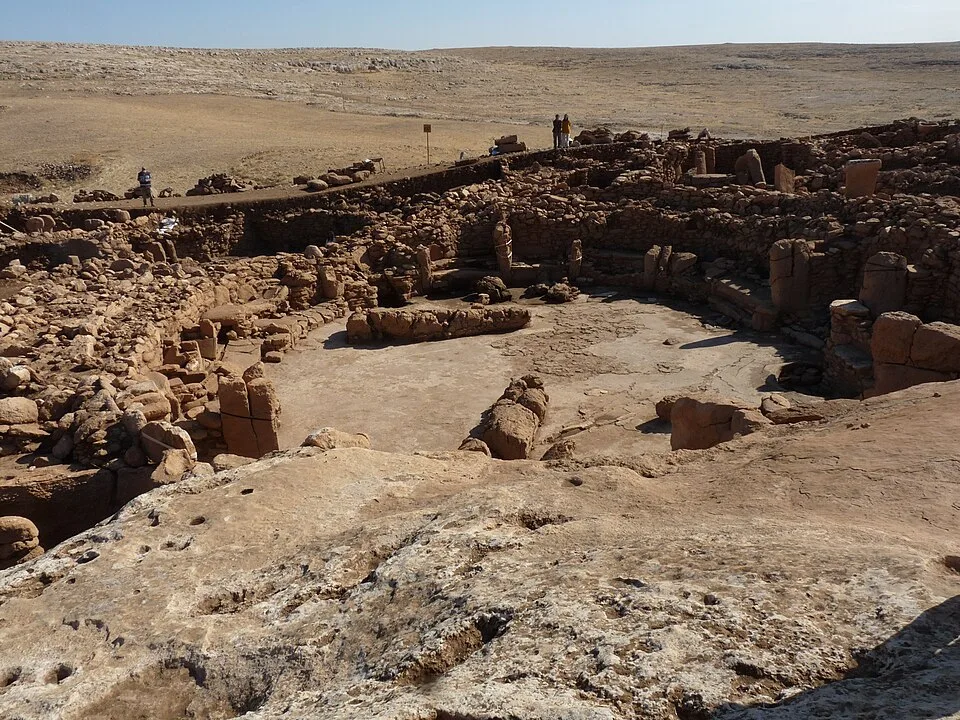
Göbekli Tepe sits in a cluster of Pre-Pottery Neolithic sites around Şanlıurfa. Karahan Tepe is the closest Atlas neighbour in that Taş Tepeler group: roughly contemporary, with its own carved pillars and special buildings. Boncuklu Tarla, farther east in Batman province, is not a Stone Hills site, but it is the right Upper Mesopotamian comparison on this atlas: deep Pre-Pottery Neolithic layers, communal buildings, and bead workshops. Ritual architecture in this world grew inside settlement economies, not on empty hills.
Karul's 2026 comments placed the new rectangular buildings in that regional pattern, not in a one-site miracle.
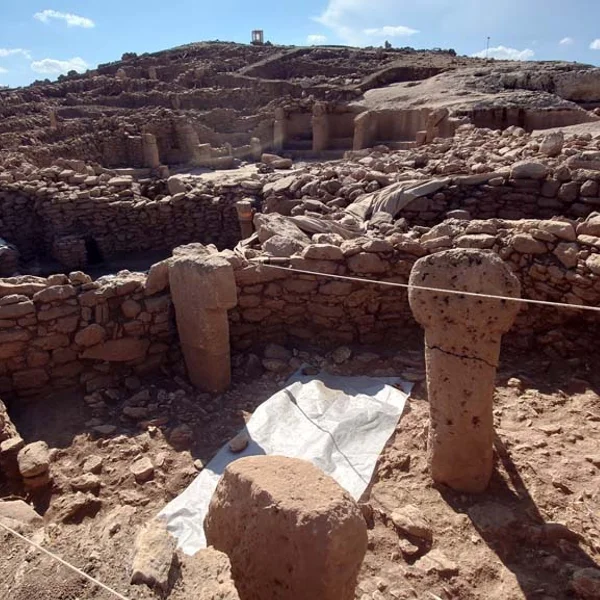
!Karahan Tepe, a Taş Tepeler neighbour of Göbekli Tepe
Karahan Tepe, a Taş Tepeler neighbour of Göbekli Tepe | Frantisek Trampota via Wikimedia Commons (CC BY-SA 4.0)
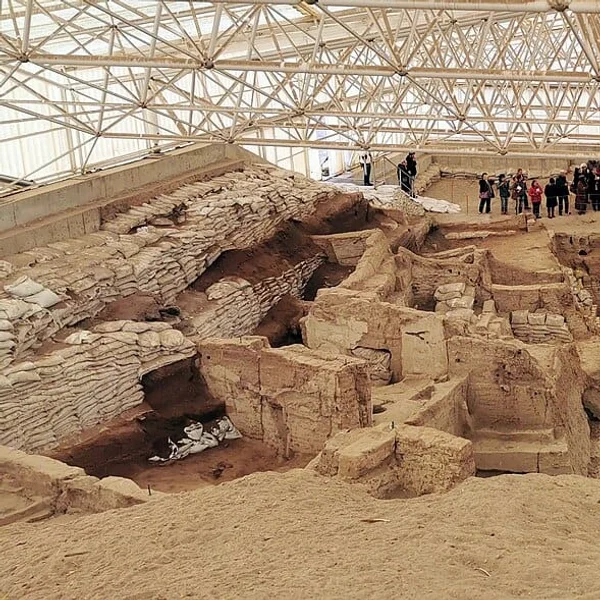
A later, different world of packed rectangular houses is Çatalhöyük on the Konya plain (7th millennium BCE). It is the wrong analogy if you treat it as the same culture. It is the right analogy if you need a picture of what a dense Neolithic house-block looks like once the domestic case is actually strong.
How to read Göbekli Tepe without the slogan
Atlas keeps two older Göbekli stories on purpose, and this page is not a remake of either.
- The World's First Temple? is the long argument about monumentality before farming. Keep its Debated lines. "First temple" is a category fight, not a radiocarbon result.
- Göbekli Tepe vs Stonehenge is the age-gap explainer. The 6,000-year headline is true and incomplete. This 2026 trench does not change the Stonehenge comparison.
Open the Göbekli Tepe site page for dates (c. 9600-8000 BCE), UNESCO notes, and evidence ratings. Use compare Göbekli Tepe and Karahan Tepe when you want the regional pair, not a British one.
Sources for the 2026 season
The August reports are journalism, not a final excavation monograph. They rest on Karul's statements to Anadolu Agency, carried by:
Treat "10,000-year-old homes" headlines as rounding. Karul dated the rooms to the site's second phase, in the later Pre-Pottery Neolithic / 9th millennium BCE, not to a single calendar year.
UNESCO inscription: Göbekli Tepe, 2018.
Keep exploring
- Göbekli Tepe dossier
- Karahan Tepe and Boncuklu Tarla
- Göbekli Tepe vs Stonehenge
- Ancient Anatolia archaeological guide
- Explore map
The T-pillars are still why people come. The northern rectangles are why the pilgrimage-only slogan should wait for the floor samples.
Last updated: August 2026