Skip to content
Atlas Anatolia
Dig
NewsNeolithic malachite and copper workshop exposed at Çayönü Tepesi, ErganiNature lidar survey estimates tens of thousands of earthworks in southwest Amazonia
Monumental adobe architecture at Vichama, Végueta, Peru

Wikimedia Commons (CC BY-SA 4.0)

Continent Record

Oldest Complex in South America

Complex

Vichama

1800 BCE – 1500 BCE

A Late Archaic and Formative coastal centre of the Caral-Supe world at Végueta, north of Lima. Reliefs of famine, fish, and serpents, including 2026 antler and clay snake objects, record drought, water, and recovery.

111
Interest 13

Location

Peru

11.03°S · 77.64°W · South America

Setting

Végueta, Huaura, Lima Region

Main architecture

Early Formative, c. 1800-1500 BCE

Director

Ruth Shady Solís, Zona Arqueológica Caral

2026 finds

Antler and clay serpent artifacts, c. 1800 BCE

Vichama is where Caral archaeology argues that coastal communities turned drought into public art rather than vanishing quietly.”

Location

Overview

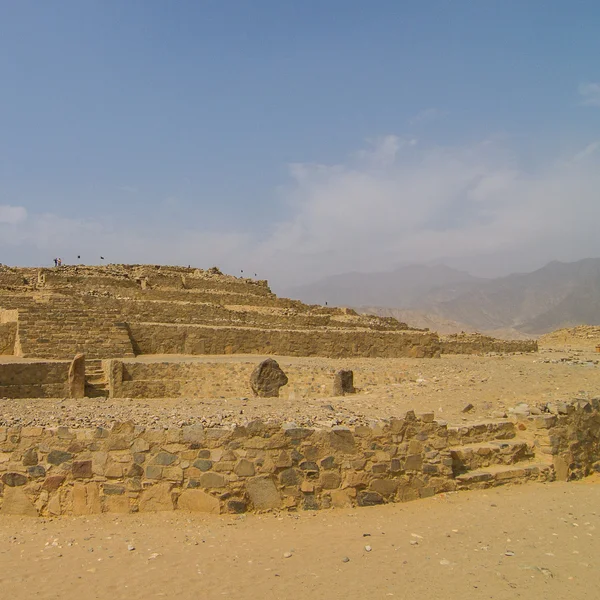
Vichama occupies about 136 ha on the right bank of the Huaura River at Végueta, Lima Region, 75 m above sea level and close to the Pacific. Ruth Shady Solís and the Zona Arqueológica Caral have excavated since 2007. The public architecture belongs mainly to the Early Formative (about 1800-1500 BCE), with earlier Late Archaic roots in the same Caral interaction sphere as Caral.

The main public building carries the "Mural of the Dance of Life and Death" (human and fish-like figures) and a fertility mural of two snakes meeting a seed. Other reliefs show emaciated people with visible ribs, read as a memory of drought. In 2026, marking 19 years of work, the project presented serpent artifacts of deer antler and clay, about 3,800 years old, from public and residential contexts and foundation offerings. Shady's team treats the snakes as water, fertility, and rebirth symbols after climate stress.

Vichama is the coastal counterpart to inland Caral: fishing, farming, and climate narrative in clay and stone. It is not a substitute for the UNESCO Sacred City of Caral-Supe; it is the site that currently carries the climate-memory story.
Why It Matters

Vichama is where Caral archaeology argues that coastal communities turned drought into public art rather than vanishing quietly. The 2026 serpent objects keep that argument in the news without inventing a new civilisation name.

Evidence & Interpretation

Distinguishing what is well-established from what remains debated.

Well-Established Facts

1
  • Caral project excavations document public mounds, reliefs, and a Formative occupation at Végueta.

Scholarly Inferences

1
  • Ribbed human figures and serpent-water imagery commemorate drought and recovery.

Debated Interpretations

1
  • How directly the 2026 objects "warn" about climate versus encoding a local fertility cult is an interpretive claim.

More Photos

Community Photos

Share your experience

Have you visited this site? Upload your photos to help others discover it.

How to cite this page

Atlas Anatolia. (1800). Vichama. Atlas Anatolia. https://atlasanatolia.com/site/vichama

Content licensed CC BY-SA 4.0 — attribution required when reusing.

Sources

  • Caral, la civilización más antigua de las AméricasShady Solís, Ruth (2009)
  • Vichama serpent artifacts announcementZona Arqueológica Caral (2026)

Frequently Asked Questions

Where is Vichama located?

Vichama is located in Peru.

How old is Vichama?

Vichama dates to approximately 1800 BCE – 1500 BCE.

Which civilizations are associated with Vichama?

Vichama is associated with the Caral-Supe.

Why is Vichama important?

Vichama is where Caral archaeology argues that coastal communities turned drought into public art rather than vanishing quietly.

Is Vichama a UNESCO World Heritage Site?

Vichama is not currently inscribed on the UNESCO World Heritage List.