
Overview
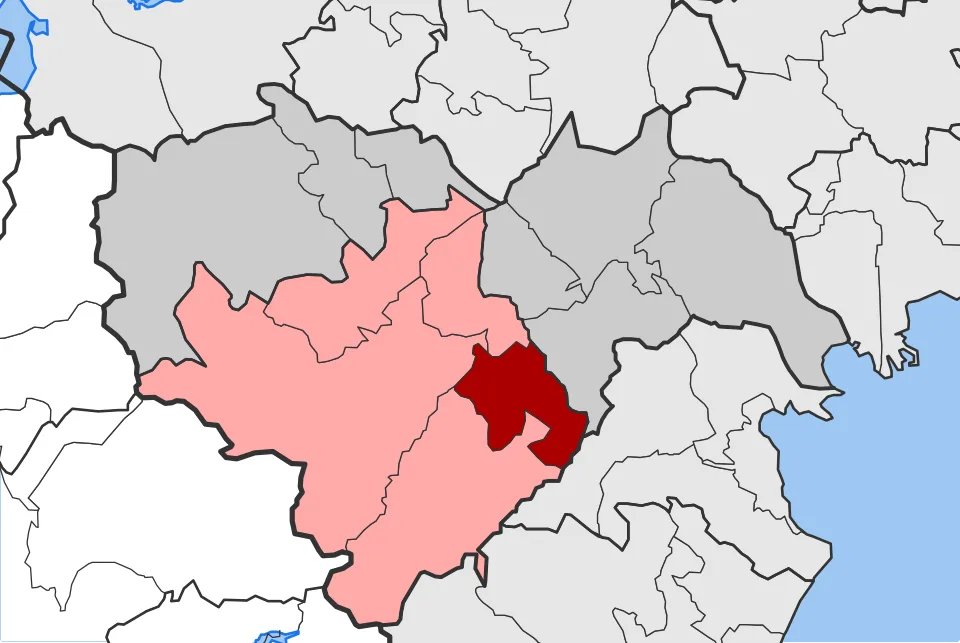
Vergina occupies the site of ancient Aigai, in Greek Macedonia near the modern city of Veria. Founded by the Argead dynasty as the first capital of the kingdom of Macedon, probably in the 7th century BCE, Aigai retained deep religious and ceremonial significance even after the Macedonian royal court relocated its main political seat to Pella in the 5th–4th century BCE — Macedonian kings continued to be crowned, and buried, at Aigai for generations afterward, making the site the kingdom's dynastic and spiritual centre even when it was no longer the seat of government.
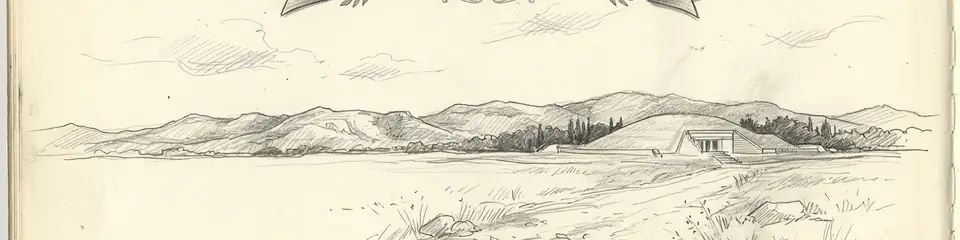
The location of ancient Aigai was uncertain for centuries, associated with the modern village of Vergina only through the sustained fieldwork of French archaeologist Léon Heuzey in the 1850s and, decisively, Greek archaeologist Manolis Andronikos beginning in the 1930s and continuing across four decades. Andronikos's persistence culminated in November 1977, when his team excavating beneath the Great Tumulus — a large earthen burial mound long assumed to cover only minor or already-looted graves — uncovered a cluster of intact royal tombs that had remained sealed and undisturbed since antiquity, an exceptionally rare survival given that virtually every other known Macedonian royal tomb had been looted, in many cases in antiquity itself.
Tomb II, the most celebrated of the group, contained the cremated remains of an adult male alongside spectacular grave goods: gold and silver vessels, weapons and armour including an iron cuirass and a gilded ceremonial shield, and — most famously — a solid gold larnax (a small chest used to hold cremated bones) embossed with the sixteen-point Macedonian sunburst or star emblem, a symbol closely associated with the royal Argead dynasty. Andronikos identified the occupant as Philip II of Macedon, assassinated in 336 BCE at Aigai during his daughter's wedding celebrations, based on the tomb's date, its lavish royal-grade contents, and skeletal evidence of a healed eye injury consistent with historical accounts of a wound Philip suffered in battle.
This identification, while widely accepted and hugely influential in popular and scholarly understanding of Vergina's significance, has not gone unchallenged. Some researchers, re-examining the skeletal remains and the specific combination of grave goods, have proposed the tomb instead belongs to Philip III Arrhidaeus, Alexander the Great's intellectually disabled half-brother who briefly and turbulently held the Macedonian throne after Alexander's death in 323 BCE before being murdered in 317 BCE — a debate that continues to generate active scholarly research and re-analysis of the skeletal and material evidence decades after the original discovery.
Regardless of the identity dispute over Tomb II specifically, the broader royal necropolis at Vergina — encompassing multiple tombs, a large palace complex, and a theatre traditionally identified as the site of Philip II's assassination — provides an unparalleled, largely unlooted window into Macedonian royal culture at precisely the historical moment when Macedon, under Philip II and then Alexander, transformed from a regional Greek kingdom into the foundation of an empire stretching to India. Vergina was inscribed as a UNESCO World Heritage Site in 1996.