Overview
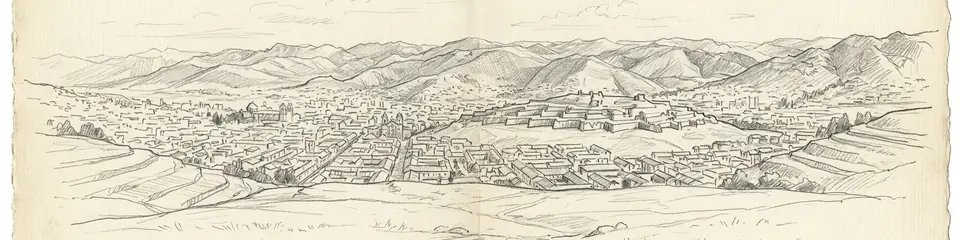
Cusco (Qosqo, "navel" in Quechua) lies at about 3,400 metres elevation in a basin of the Peruvian Andes. Killke culture peoples occupied the valley from c. 900 CE; according to Inca oral tradition recorded by Spanish chroniclers, the first emperor Manco Cápac founded Cusco as the imperial centre. Under Pachacuti Inca Yupanqui (mid-15th century) and his successors, the city was rebuilt as the capital of Tawantinsuyu — the Inca Empire — with a planned urban form likened to a puma: Sacsayhuamán as the head, the main canals as the spine, and the Plaza Huacaypata (now Plaza de Armas) as the belly.
Inca builders used ashlar and polygonal masonry in andesite and diorite; master walls survive in the Coricancha (Temple of the Sun), the Qorikancha cloister of Santo Domingo, and numerous street foundations. The Coricancha was the empire's richest temple, reportedly walled with gold sheets before Spanish looting. The Spanish founded their colonial capital atop Inca layouts, erecting the Cathedral and La Compañía on the plaza and stripping stone from Sacsayhuamán and other shrines.
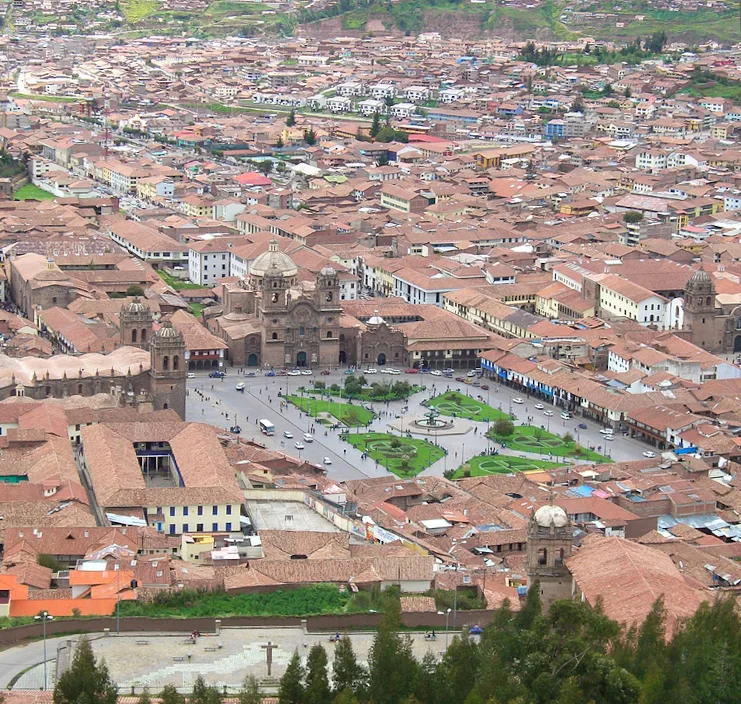
*Plaza de Armas - Cusco | Joachim Pietsch
derivative work: MrPanyGoff (CC BY-SA 2.0)*
"This was the navel of the world, where the Inca held the empire together — the House of the Sun blazed with gold, and the stones of the city were fitted so tightly that a knife could not pass between them."
— Composite from Spanish chronicles on Cusco and Coricancha (16th century)
Modern Cusco is a living city of roughly 400,000 people; the historic centre is a UNESCO World Heritage Site (inscribed 1983, extended 2013) encompassing Inca and colonial layers. Archaeological work continues on Killke and Inca phases beneath streets. Cusco is the rail and road hub for the Sacred Valley and Machu Picchu, making it one of South America's primary heritage tourism nodes.