Overview
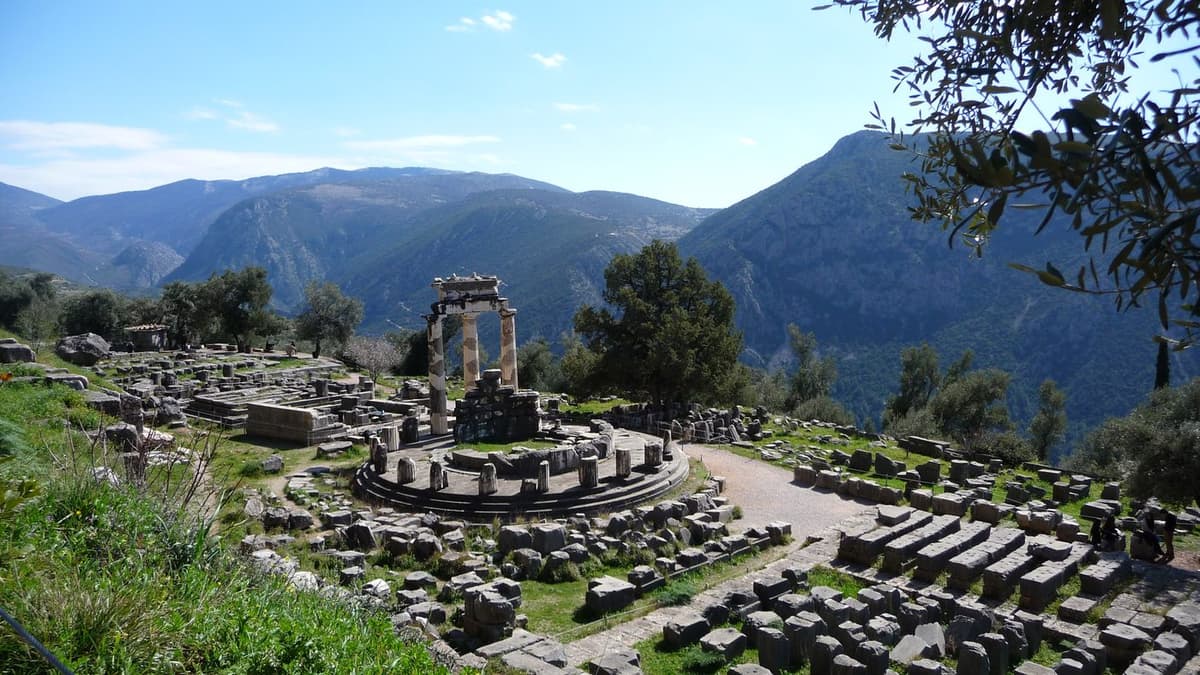
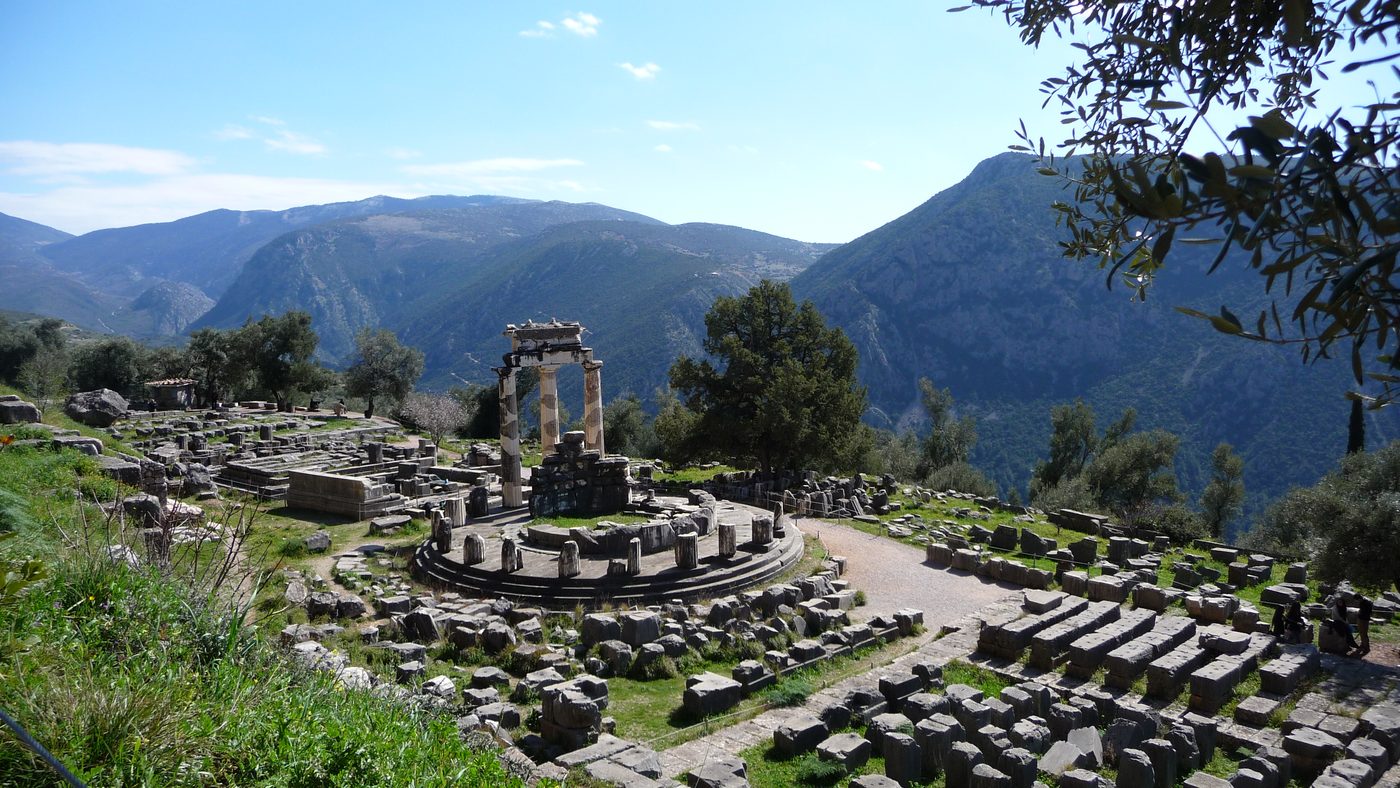
Delphi clings to the south-facing cliffs of Mount Parnassus above the Gulf of Corinth, halfway between the Gulf and the Phocian plain. Springs, especially the Castalian spring, made the spot sacred before the first stone temples. By the Archaic period Delphi had become the shared sanctuary where Greeks consulted Apollo through a priestess called the Pythia.
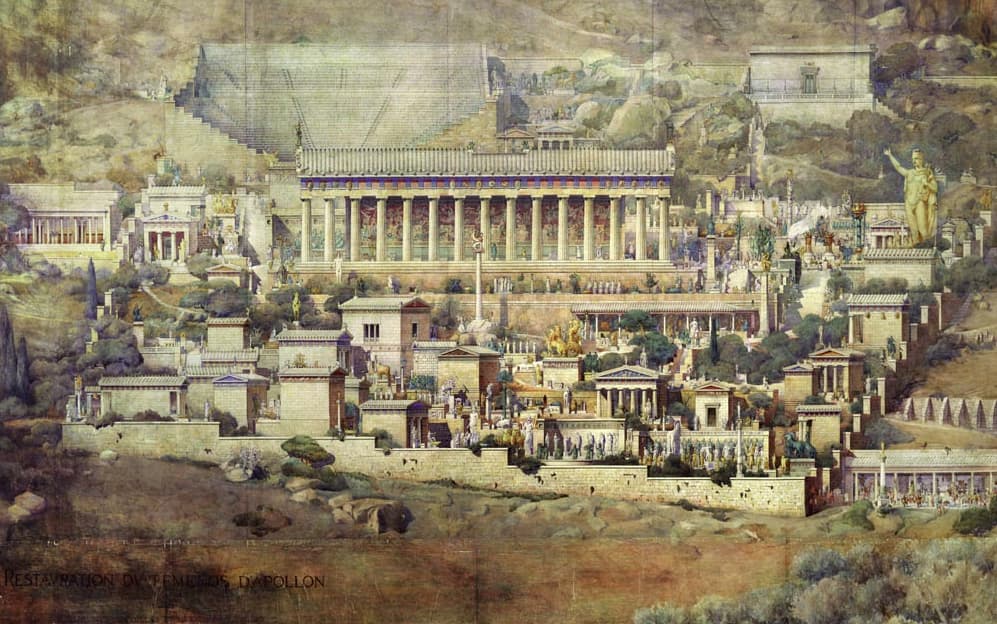
Consultants presented questions, offered sacrifices, and received responses that attendants rendered into hexameter verse. States built treasuries along the Sacred Way to display captured booty and express gratitude. The Athenian treasury survives as a marble jewel box; the Siphnian treasury survives in fragments that still teach Archaic sculpture. Above the temple terrace sit a theatre and a stadium used for the Pythian Games.
"Know thyself."
— Inscription at the Temple of Apollo, Delphi (attributed to the Seven Sages of Greece)
The omphalos stone, a rounded boulder in the temple precinct, marked Delphi as the world's centre in Greek geography. Myth said Zeus released eagles from the ends of the earth and they met here. Odysseus does not consult Delphi in Homer's poems, which predate the sanctuary's greatest fame, but later Greeks read epic heroes through oracular tradition. Any modern retelling of Greek myth, including large-scale films, inherits Delphi as the place where fate speaks in riddles.
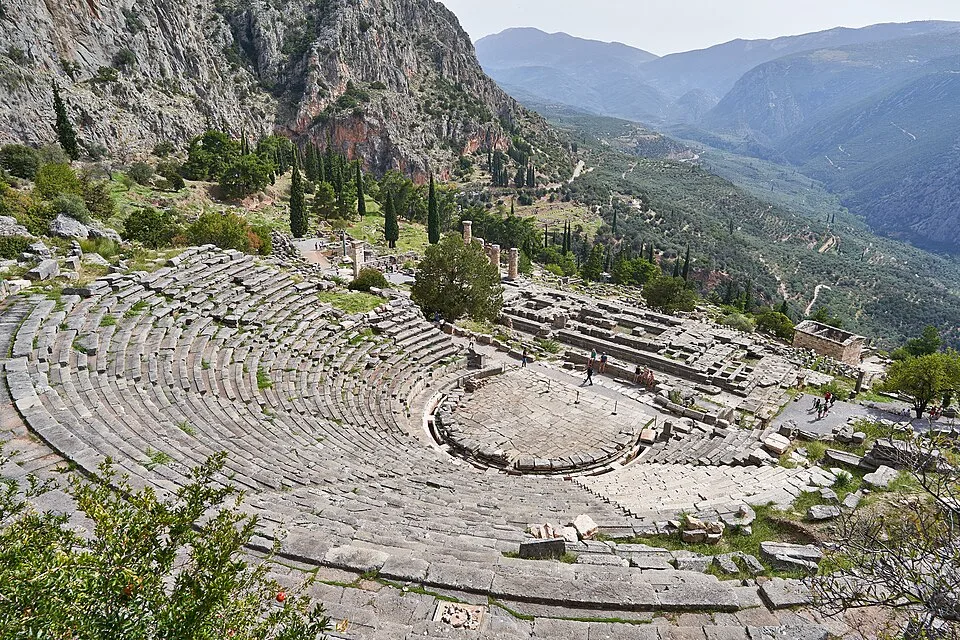
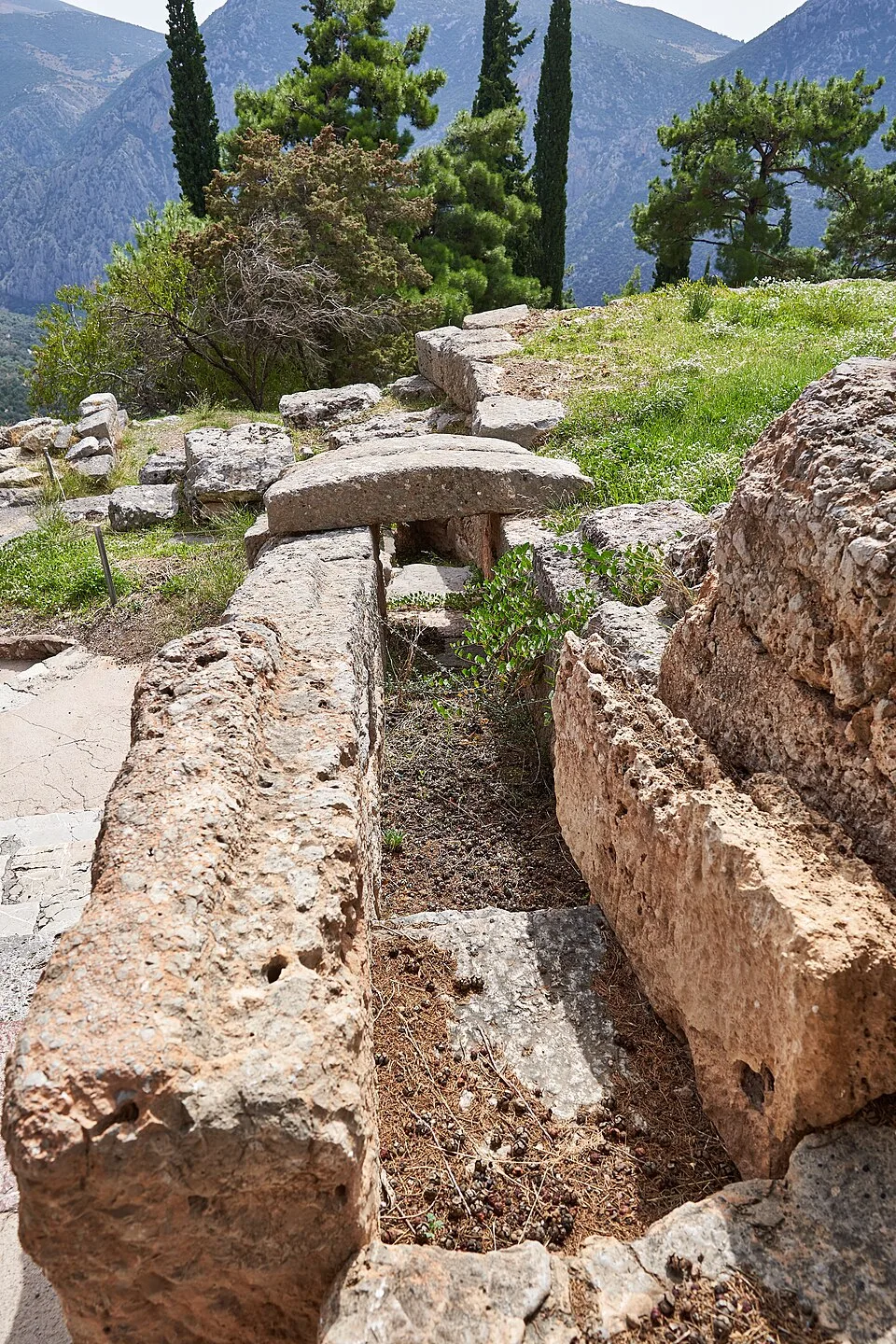
Excavations by French archaeologists since 1892 uncovered the temple of Apollo, a earlier chthonic cult area, and thousands of inscriptions recording manumissions, treaties, and honors. The site is UNESCO listed with the wider Delphi landscape.
Visit in the morning before tour buses fill the Sacred Way. The view into the Pleistos valley explains why pilgrims felt they stood at the hinge of Greece.