Skip to content
Atlas Anatolia
Dig
NewsNeolithic malachite and copper workshop exposed at Çayönü Tepesi, ErganiNature lidar survey estimates tens of thousands of earthworks in southwest Amazonia
Lion Temple of Apedemak at Naqa with royal reliefs, Sudan

Wikimedia Commons (CC BY-SA 3.0)

Country Record

Known by the Most Names in Sudan

TempleUNESCO

Naqa

النقعة200 BCE – 300 CE

A Meroitic temple city in the Butana steppe of Sudan, with the Lion Temple of Apedemak, a Roman-inspired kiosk, and a large Amun temple. Part of the UNESCO Island of Meroë serial property with Musawwarat es-Sufra.

111
Interest 41

Location

Sudan

16.27°N · 33.27°E · Africa

UNESCO

Island of Meroë serial site (2011)

Signature temple

Lion Temple of Apedemak (Natakamani & Amanitore)

Hybrid building

So-called Roman kiosk beside the Lion Temple

Setting

Butana steppe south of Meroë

Naqa proves Meroitic culture was not only pyramid cemeteries but living temple cities with a distinctive African–Mediterranean visual language.”

Location

Overview

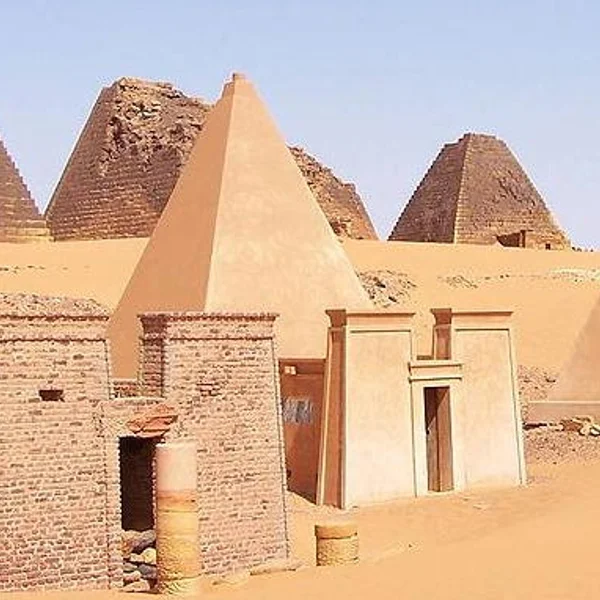
Naqa lies south of Meroë in a rain-fed steppe, away from the Nile channel. Its Lion Temple (Apedemak), built under Natakamani and Amanitore (1st century CE), shows the royal couple smiting enemies in classic Meroitic relief. Beside it stands a small pavilion often called the “Roman kiosk” for its hybrid columns—evidence of Mediterranean architectural dialogue at the Kushite court. The Amun temple and reservoirs (hafirs) supported seasonal pilgrimage and cattle economies.

German Archaeological Institute and Sudanese missions have excavated and conserved the temples since the 1990s, clarifying Meroitic religion beyond the royal cemeteries of Meroë. Naqa and nearby Musawwarat es-Sufra form a ritual hinterland where lion gods, Amun, and royal ideology met African and Hellenistic forms.

Pair with Meroe and Jebel Barkal for the full Kushite sacred geography from Napata to the Butana.
Why It Matters

Naqa proves Meroitic culture was not only pyramid cemeteries but living temple cities with a distinctive African–Mediterranean visual language. Apedemak’s lion temple is among the clearest monuments of a Kushite god who is not simply an Egyptian import.

Evidence & Interpretation

Distinguishing what is well-established from what remains debated.

Well-Established Facts

1
  • Reliefs name Natakamani and Amanitore and dedicate the Lion Temple to Apedemak in the early first century CE.

Scholarly Inferences

1
  • Hafir reservoirs imply seasonal congregation and cattle wealth supporting the temple economy.

Debated Interpretations

1
  • How “Roman” the kiosk’s design is versus a local Meroitic reading of Mediterranean forms remains a stylistic argument.

More Photos

Community Photos

Share your experience

Have you visited this site? Upload your photos to help others discover it.

How to cite this page

Atlas Anatolia. (200). Naqa. Atlas Anatolia. https://atlasanatolia.com/site/naqa

Content licensed CC BY-SA 4.0 — attribution required when reusing.

Sources

  • Sudan: Ancient Kingdoms of the NileWildung, Dietrich (1997)
  • Archaeological Sites of the Island of MeroeUNESCO (2011)Link

Frequently Asked Questions

Where is Naqa located?

Naqa is located in Sudan.

How old is Naqa?

Naqa dates to approximately 200 BCE – 300 CE.

Which civilizations are associated with Naqa?

Naqa is associated with the Nubian / Kushite, Meroitic.

Why is Naqa important?

Naqa proves Meroitic culture was not only pyramid cemeteries but living temple cities with a distinctive African–Mediterranean visual language.

Is Naqa a UNESCO World Heritage Site?

Yes — Naqa is inscribed as a UNESCO World Heritage Site.