Overview
Kerma lies on the east bank of the Nile in northern Sudan, just above the Third Cataract, in the region ancient Egyptians called Kush. From around 2500 BCE it grew into the capital of the Kerma culture — the first large-scale, centralised state to emerge in Nubia and one of the earliest urbanised kingdoms anywhere in sub-Saharan Africa. For roughly a thousand years, the Kingdom of Kerma controlled the trade in gold, ivory, ebony, and other prized goods flowing north from the African interior into Egypt, and grew powerful enough to become a serious rival — during Egypt's fragmented Second Intermediate Period, Kerma even allied with the Hyksos rulers of northern Egypt and raided deep into Egyptian territory.
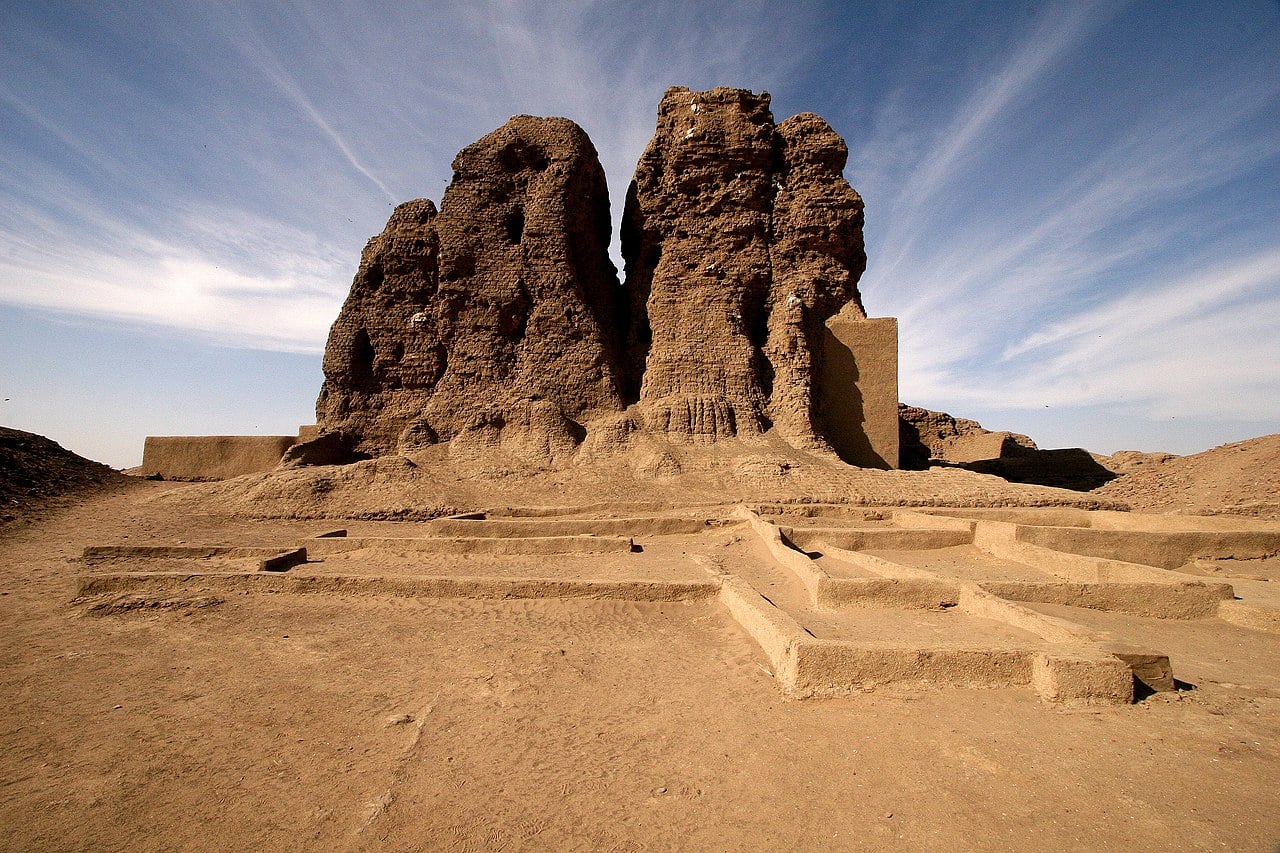
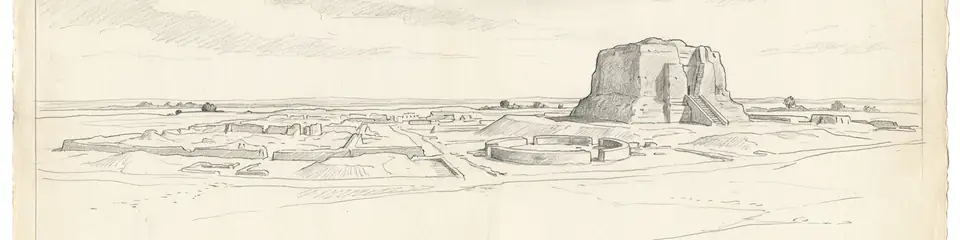
The city is dominated by the Western Deffufa, an immense solid mudbrick structure roughly 18 metres high and covering some 1,500 square metres, interpreted as a monumental temple and the ceremonial heart of the city. Along with a second large mudbrick structure, the Eastern Deffufa (associated with the funerary quarter), it represents monumental architecture on a scale then unmatched in Africa south of Egypt, built entirely from mudbrick rather than stone yet surviving in substantial part for over three and a half thousand years.
Kerma's vast cemetery, excavated in the early 20th century by the American archaeologist George Reisner and later re-examined and greatly expanded upon by the Swiss archaeologist Charles Bonnet from the 1970s onward, has yielded some of the richest and most revealing burials in Nile Valley archaeology. The largest royal tombs took the form of enormous tumuli up to 90 metres in diameter, beneath which kings were interred with lavish grave goods — fine Kerma ware pottery renowned for its distinctive lustrous black-topped red beakers, inlaid furniture, weapons, and jewellery — and, strikingly, accompanied by hundreds of sacrificed retainers buried alongside the ruler, evidence of a powerful centralised authority commanding both wealth and human life on a large scale.
Charles Bonnet's decades of excavation also uncovered the remarkable nearby site of Doukki Gel, where in 2003 a cache of seven monumental granite statues of the later "Black Pharaohs" of the 25th Dynasty — Nubian kings who conquered and ruled all of Egypt in the 8th–7th centuries BCE — was discovered, deliberately buried, dramatically extending the known history of Nubian royal power at the site well beyond the Kerma period itself.
The Kingdom of Kerma was eventually conquered around 1500 BCE by the resurgent Egyptian New Kingdom under pharaohs including Thutmose I, who incorporated Nubia into the Egyptian empire — but the Nubian tradition of powerful Nile kingdoms that Kerma began would continue through the later Kingdom of Kush centred at Napata and Meroë, including the era when Nubian kings ruled Egypt itself. Kerma is part of Sudan's rich archaeological heritage, though it is not individually a UNESCO World Heritage Site.