Skip to content
Atlas Anatolia
Dig
NewsNeolithic malachite and copper workshop exposed at Çayönü Tepesi, ErganiNature lidar survey estimates tens of thousands of earthworks in southwest Amazonia
Medieval ruins on the Dmanisi promontory, Kvemo Kartli, Georgia

Wikimedia Commons (CC BY-SA 4.0)

World Record

Oldest Complex in the World

Complex

Dmanisi

დმანისი1850000 BCE – 1770000 BCE

A medieval town and paleoanthropological site in Kvemo Kartli, Georgia, where 1.8-million-year-old Homo erectus fossils (including skull 5) are the earliest well-dated humans outside Africa.

111
Interest 56

Location

Georgia

41.33°N · 44.20°E · Europe

Hominin dates

c. 1.85-1.77 million years ago

Skull 5

D4500/D2600, published 2013

Industry

Oldowan-style Mode 1 tools

Director

David Lordkipanidze and Georgian National Museum

Dmanisi is the first solid date for Homo outside Africa, and the skulls argue against splitting every African fossil into a new species.”

Location

Overview

Dmanisi sits on a promontory above the Mashavera and Pinezauri confluence in southern Georgia. The visible ruins are a medieval fortress-town and bishop's seat. Beneath and beside them, a Pleistocene pipe of ash and alluvium trapped hominin bones, stone tools, and fauna. Georgian and international teams led by David Lordkipanidze have excavated since the 1990s.

Five skulls and associated postcrania date to about 1.85-1.77 million years ago. Skull 5 (D4500/D2600) combines a small braincase with a massive face; the series as a whole is often classified as early Homo erectus (or Homo erectus georgicus). The fossils show that a single dispersing African-derived population could look more variable than older textbooks allowed. Oldowan-style tools accompany the bones.

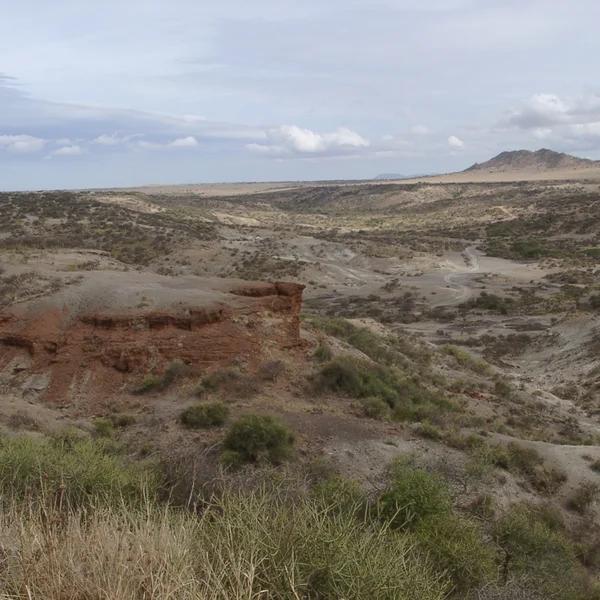
Compare Olduvai Gorge for the East African source landscape and Atapuerca for later European hominins. Dmanisi is not a UNESCO World Heritage site (nearby Mtskheta is a different inscription).

Why It Matters

Dmanisi is the first solid date for Homo outside Africa, and the skulls argue against splitting every African fossil into a new species. It also reminds the atlas that "Europe" in human evolution begins in the Caucasus, not in France.

Evidence & Interpretation

Distinguishing what is well-established from what remains debated.

Well-Established Facts

1
  • Multiple hominin crania and postcrania are dated to the late Pliocene / early Pleistocene at Dmanisi.

Scholarly Inferences

1
  • Morphological variation among the five skulls is population variation within early Homo erectus, not several coexisting species.

Debated Interpretations

1
  • Some specialists still prefer Homo georgicus or a broader Homo habilis-grade label for the smallest specimens.

More Photos

Community Photos

Share your experience

Have you visited this site? Upload your photos to help others discover it.

How to cite this page

Atlas Anatolia. (1850000). Dmanisi. Atlas Anatolia. https://atlasanatolia.com/site/dmanisi

Content licensed CC BY-SA 4.0 — attribution required when reusing.

Sources

  • A Complete Skull from Dmanisi, Georgia, and the Evolutionary Biology of Early HomoLordkipanidze, David et al. (2013)
  • Earliest Pleistocene hominid cranial remains from Dmanisi, Republic of GeorgiaGabunia, Leo et al. (2000)

Frequently Asked Questions

Where is Dmanisi located?

Dmanisi is located in Georgia.

How old is Dmanisi?

Dmanisi dates to approximately 1850000 BCE – 1770000 BCE.

Why is Dmanisi important?

Dmanisi is the first solid date for Homo outside Africa, and the skulls argue against splitting every African fossil into a new species.

Is Dmanisi a UNESCO World Heritage Site?

Dmanisi is not currently inscribed on the UNESCO World Heritage List.