
Overview
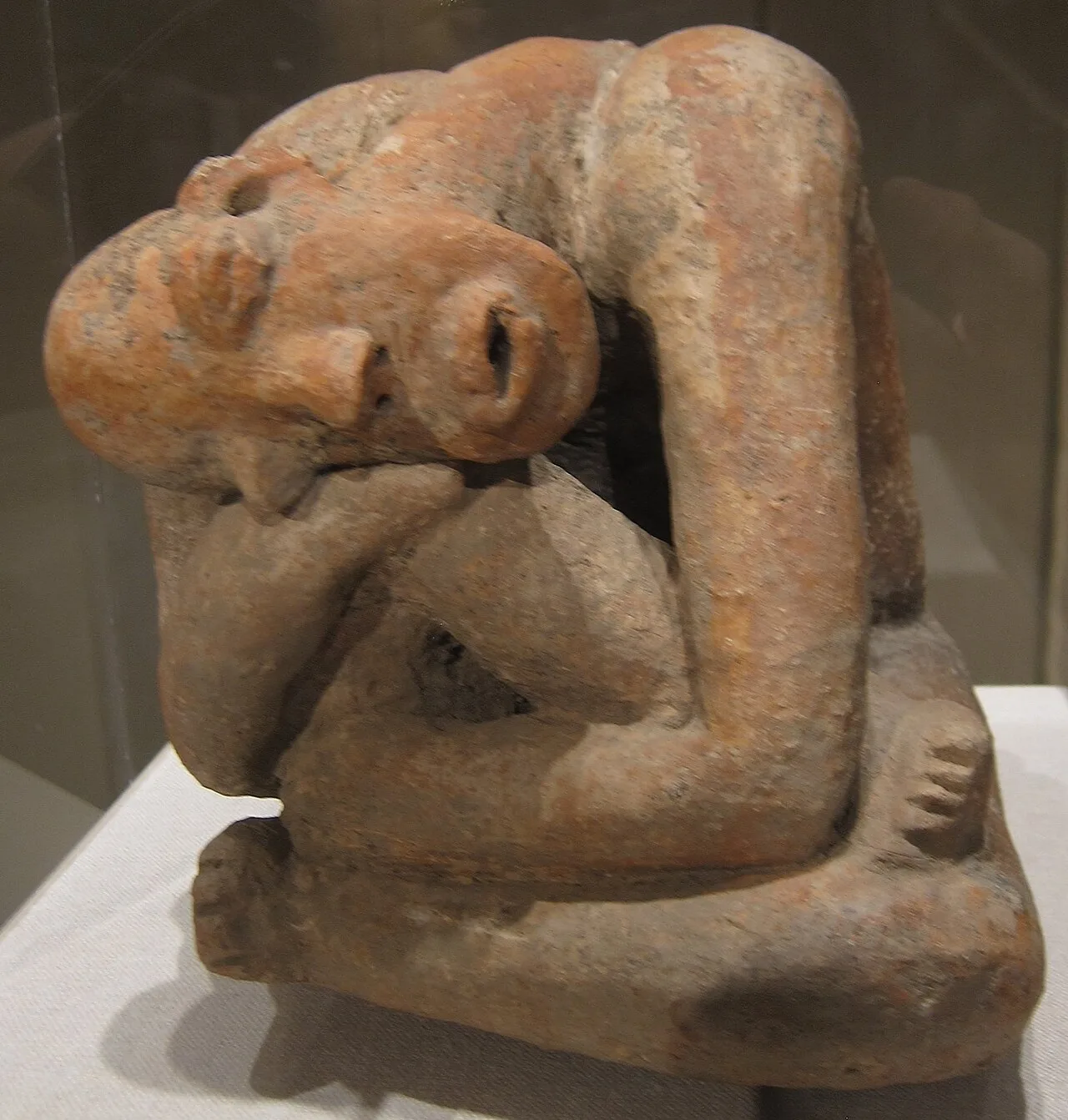
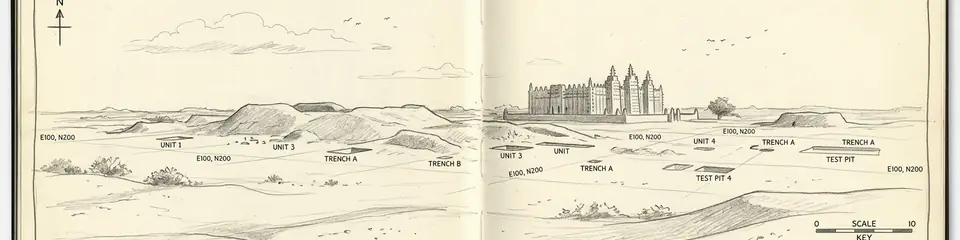
Djenné-Djeno ("ancient Djenné" in the Bozo language) sits on the inland Niger Delta floodplain in central Mali, roughly three kilometres from the modern town of Djenné, famous for its Great Mosque. The archaeological mound, or tell, covers approximately 33 hectares and rises up to several metres above the surrounding floodplain, the accumulated result of well over a thousand years of continuous mudbrick construction, collapse, and rebuilding on the same urban footprint.
Settlement began around 250 BCE, when small groups established fishing and rice-farming communities on the seasonally flooded plain. Over the following centuries the settlement grew steadily, and by roughly 300–400 CE Djenné-Djeno had developed into a substantial, densely populated town engaged in iron production, copper and gold working, and long-distance trade — evidenced by the presence of copper (which does not occur naturally anywhere near the site) and glass beads sourced from as far away as the Mediterranean and possibly India, arriving via trans-Saharan trade networks centuries before the trans-Saharan gold trade became famous under the later Ghana, Mali, and Songhai empires.
At its peak, around 800–1000 CE, Djenné-Djeno and a cluster of dozens of smaller satellite mounds in its immediate vicinity may have supported a combined population estimated in the tens of thousands, organised without evidence of the centralised royal palaces, monumental temples, or hierarchical elite residences typically associated with early urbanism elsewhere in the world. This distinctive pattern — dense, long-term urban settlement apparently without a strong centralised political hierarchy — has made Djenné-Djeno a key case study in debates about alternative pathways to urban complexity that do not follow the state-formation model developed from Mesopotamian, Egyptian, or Mesoamerican evidence.
Djenné-Djeno began a gradual decline after approximately 1200 CE and was fully abandoned by around 1400 CE, roughly coinciding with the establishment and growth of the neighbouring town of modern Djenné, to which the population appears to have relocated — possibly linked to the spread of Islam in the region, since the old site shows no evidence of Islamic burial practice while the new town became a significant centre of Islamic scholarship. The site was first excavated in 1977 by Roderick and Susan Keech McIntosh, whose work fundamentally revised scholarly understanding of the antiquity and indigenous origins of West African urbanism, directly challenging earlier colonial-era historiography that had attributed urban development in the region to North African or Middle Eastern influence.