


Overview
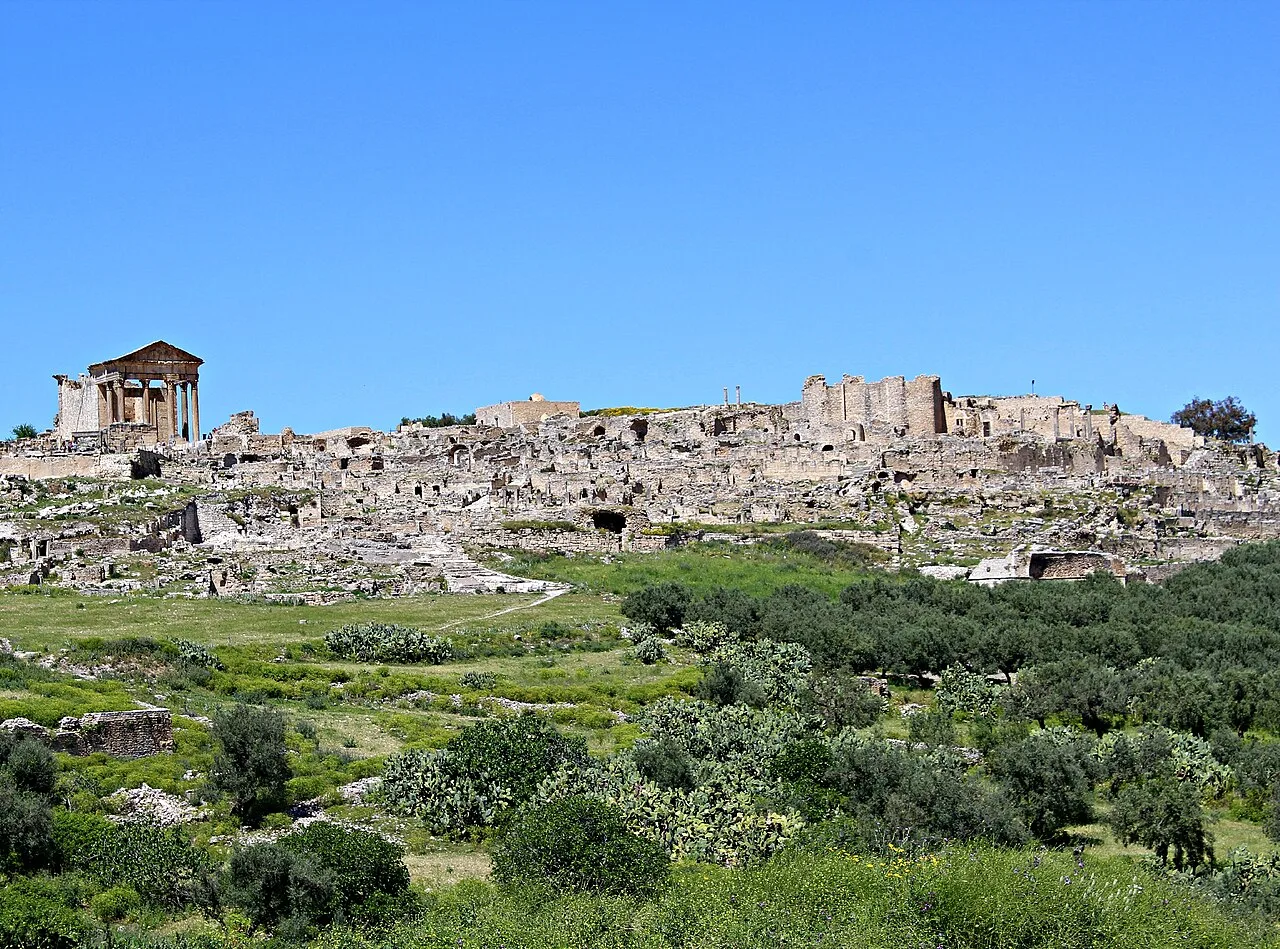
Dougga, ancient Thugga, occupies a hilltop site about 100 kilometres southwest of Tunis in northern Tunisia, commanding wide views over the fertile valley of the Oued Khalled. It is the most complete and best-preserved Roman town in North Africa, spread over some 65 hectares, and uniquely it preserves not only its Roman monuments but also substantial traces of the Numidian (Berber) and Punic settlement that preceded Roman rule.
The town existed as a Numidian settlement well before the Romans, and was for a time a royal seat of the Numidian kingdom. Its most important pre-Roman monument is the Libyco-Punic Mausoleum, a tall tower-tomb of the 2nd century BCE that once bore a bilingual inscription in Punic and the Libyan (Numidian) language. That inscription, removed in the 19th century and now in the British Museum, was a key to the decipherment of the Libyan script — making Dougga important far beyond its size.
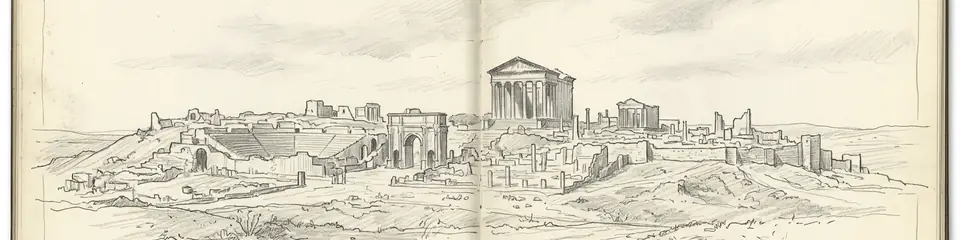
Under Roman rule, especially in the 2nd and 3rd centuries CE, Thugga was monumentalised by wealthy local benefactors. Because it grew on a hill from an older irregular street plan rather than being laid out on a fresh Roman grid, its streets wind and its public buildings are fitted to the terrain, giving it an unusually organic, intimate character. Its theatre, built in 168–169 CE and seating around 3,500, is remarkably well preserved and still used for performances. The Capitol, dedicated to the triad of Jupiter, Juno, and Minerva, is one of the finest in Africa, its tall Corinthian portico still standing. The site also preserves a forum, the Square of the Winds (with a compass rose naming the twelve winds inscribed in the pavement), temples to numerous gods, public baths with underground service passages, latrines, cisterns, markets, and private houses with mosaics.
The town continued into the Byzantine period, when a fortress was built reusing earlier stone, and gradually contracted thereafter. Its rural isolation spared it from being built over, leaving the ancient townscape exceptionally intact.