
Overview
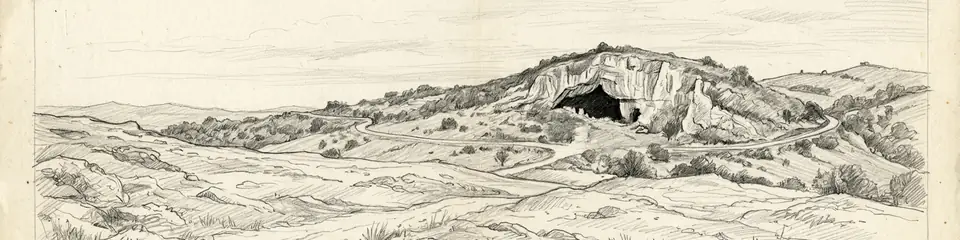
Altamira lies near the town of Santillana del Mar in Cantabria, northern Spain. The cave was used by Palaeolithic humans from roughly 35,000 BCE onward, but its greatest art was created during the Magdalenian period, approximately 18,500 to 14,000 years ago, when a ceiling chamber was painted with an extraordinary panorama of Ice Age animals.
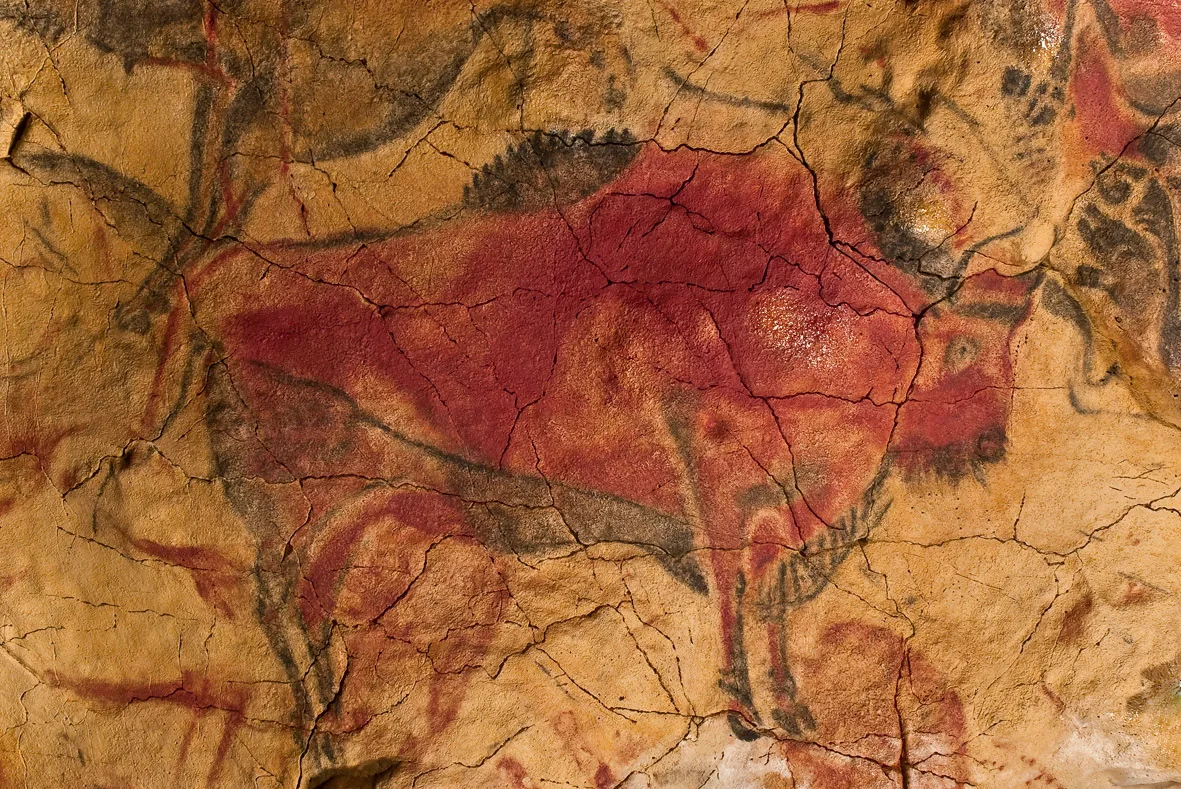
The polychrome paintings on the ceiling of the Great Hall cover an area of about 270 square metres. They depict bison (the dominant subject), horses, deer, a boar, and a wolf — painted in red, black, and ochre pigments applied directly to natural undulations in the rock to create a three-dimensional sculptural effect. The largest bison, at about 2 metres long, are executed with a fluency and naturalism that stunned the modern world when they were first published.
The cave was discovered in 1868 by a local hunter, and the paintings were identified in 1879 by the landowner Marcelino Sanz de Sautuola with the help of his young daughter Maria, who was the first to look up and notice the figures on the ceiling. When Sautuola published his discovery, the scientific establishment refused to believe that prehistoric humans were capable of such art and accused him of fraud. His vindication came only in 1902, when similar paintings were accepted at La Mouthe and Font-de-Gaume in France. By then Sautuola had died, unjustly disgraced. The cave was closed to the public in 2002 to prevent further deterioration and can now only be visited via a full-scale replica. UNESCO inscribed it in 1985 alongside the caves of northern Spain.