
콘텐츠로 건너뛰기
Atlas Anatolia
디그
뉴스술라웨시 빙하기 치아에서 빈랑 사용 25,000년 전까지 소급카스타모누 폼페이오폴리스 바실리카에서 로마 모자이크와 에로스 두상 발견
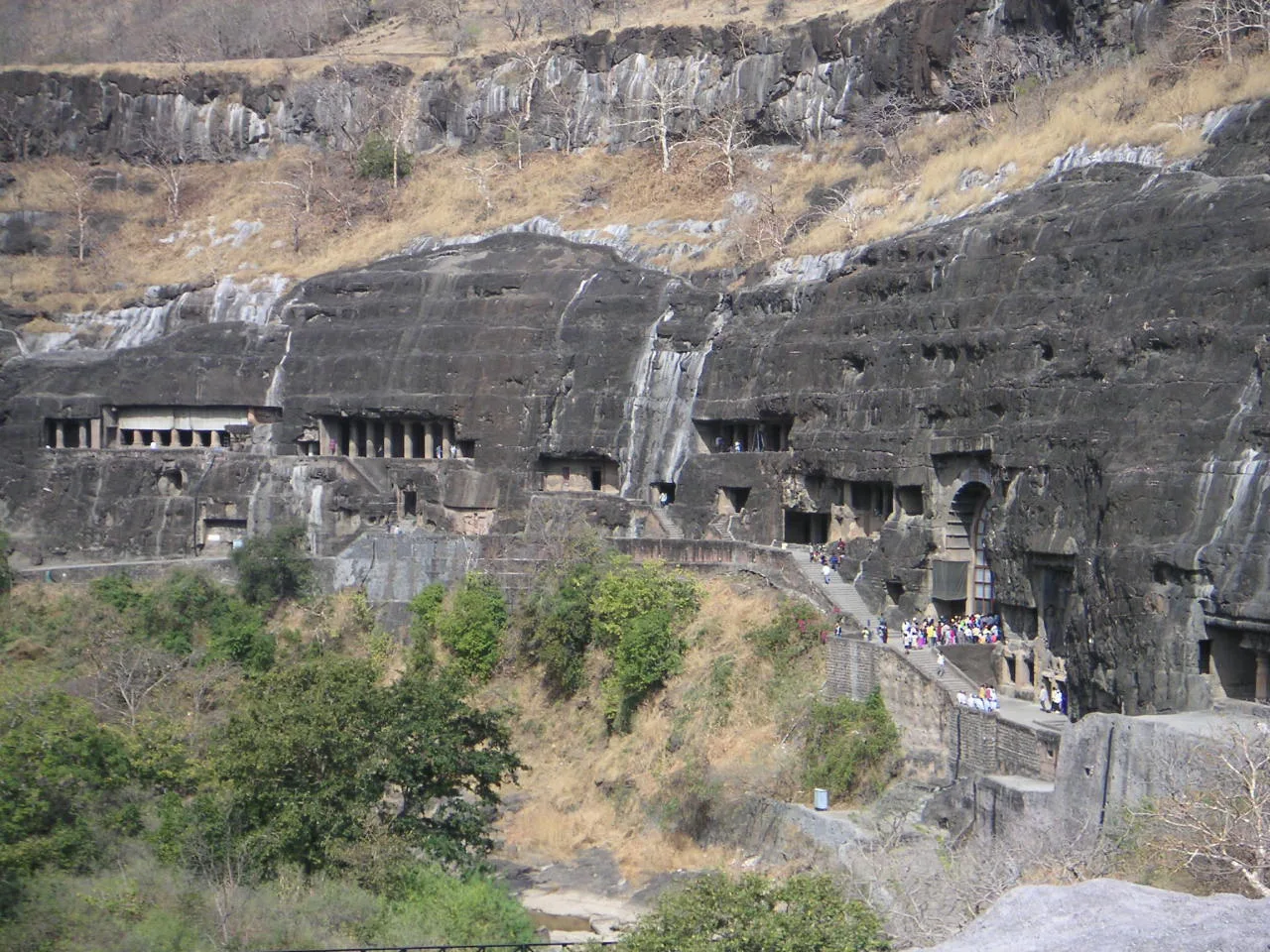
Rock-cut Buddhist cave monasteries at Ajanta, cut into a horseshoe-shaped gorge, Maharashtra, India

Wikimedia Commons

Country Record

Earliest Known Site in India

복합 단지유네스코

Ajanta Caves

Seyfi Cem Baskin

अजिंठा लेणी200 기원전 – 480 서기

The greatest gallery of Buddhist art in the ancient world — 30 rock-cut caves carved into a horseshoe-shaped gorge in Maharashtra, containing murals and sculptures produced from the 2nd century BCE to the 6th century CE. The Gupta-period paintings (4th–5th century CE) in Caves 1, 2, 16, and 17 are among the finest figurative paintings to survive from antiquity anywhere in the world, comparable to the frescoes of Pompeii and the mosaics of Byzantine Ravenna.

31
관심 78

위치

Aurangabad · Maharashtra · 인도

20.55°N · 75.70°E · 아시아

Caves

30 rock-cut caves: viharas (monasteries) and chaityas (prayer halls)

Span

c. 2nd century BCE – 480 CE, with main painting phase in 4th–5th century CE

Paintings

Caves 1, 2, 16, 17: finest surviving figurative paintings of the ancient world

Rediscovery

Abandoned c. 480 CE; rediscovered by British officer John Smith in 1819

UNESCO

World Heritage Site 1983 (jointly with Ellora)

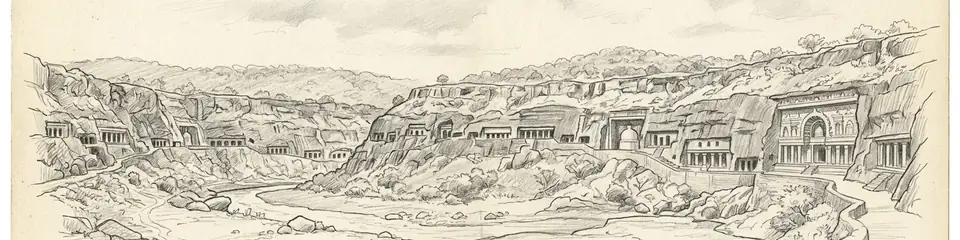
Graphite pencil sketch banner of Ajanta Caves

“Ajanta represents a lost world recovered: a snapshot of 5th-century South Asia preserved in a cave that was sealed for over a thousand years.”

위치

개요

The Ajanta Caves are located in a secluded horseshoe-shaped gorge cut by the Waghora River in the Sahyadri Hills of Maharashtra, about 100 kilometres from Aurangabad. The 30 caves — cut directly from the basalt cliff face between the 2nd century BCE and the 6th century CE — served as Buddhist monasteries (viharas) and prayer halls (chaityas) for monastic communities and pilgrims. They were abandoned around 480 CE as the patronage of the Vakatakas collapsed, and lay largely forgotten for centuries until a British officer, John Smith, rediscovered them in 1819 while tiger hunting.

Ajanta's fame rests primarily on its paintings. The earliest phase (Phase 1: c. 2nd century BCE – 1st century CE) produced narrative sculptures and relief carvings in Caves 9, 10, 12, and 13. The main phase of painting (Phase 2: c. 4th–5th century CE, Gupta-Vakataka period) generated the extraordinary murals now visible in Caves 1, 2, 16, 17, and 19 — entire ceilings and walls covered with depictions of the Jataka tales (previous lives of the Buddha), scenes of court life, and standing Bodhisattva figures of radiant beauty.

The Ajanta paintings represent the apex of classical Indian painting. Their technique is sophisticated: the rock surface was prepared with a layer of mud, cow dung, and rice husks, then plastered and burnished; outlines were drawn in red ochre, then painted in earth pigments (red, yellow, brown, white, lapis lazuli blue), and the final wash was burnished to produce a luminous effect. The subjects range from royal processions and amorous couples to crowds of pilgrims, animals, and forest scenes — a comprehensive portrait of Indian life in the Gupta age.

Cave 1 contains the most celebrated paintings: the Bodhisattva Padmapani (holding a lotus) and Bodhisattva Vajrapani (holding a thunderbolt) flanking the main shrine, and a narrative frieze depicting the story of Simhala. Cave 17 has the most complete programme of paintings, covering virtually every surface. Cave 26, a late chaitya hall, contains a magnificent reclining parinirvana (dying) Buddha over 9 metres long.

Ajanta and Ellora were jointly inscribed as UNESCO World Heritage Sites in 1983. The murals at Ajanta have suffered significant deterioration from moisture, tourists, and earlier amateur restoration attempts; conservation efforts have intensified since the 1990s.

중요성

Ajanta represents a lost world recovered: a snapshot of 5th-century South Asia preserved in a cave that was sealed for over a thousand years. The paintings are not religious icons alone — they are windows onto Gupta-period society, showing merchants, courtiers, musicians, elephants, ships, and urban street scenes alongside the sacred narratives. No comparable pictorial archive of this period survives anywhere else. The technical achievement of the Ajanta murals is staggering. Painted by candlelight, by artists working on a damp lime plaster surface, with mineral pigments that have survived 1,500 years, the best-preserved paintings show a mastery of form, narrative composition, and psychological expression that rivals anything produced in the ancient world. The swelling volumes, the eyes, the fluidity of line — these paintings were the model for subsequent Buddhist art across Asia, from Sri Lanka and Thailand to Central Asia and Japan. Ajanta also marks the origin of a tradition: the idea that a mountainside could be transformed into a sacred architecture of light and paint, hiding worlds of spiritual beauty inside cliff faces — an idea that reached its culmination at Ellora and spread across the Buddhist world from Dunhuang in China to Dambulla in Sri Lanka.

증거와 해석

확립된 사실과 논쟁 중인 사항을 구분합니다.

잘 확립된 사실

3
  • Inscriptions in Caves 16 and 17 name the Vakataka minister Varahadeva as patron, confirming Vakataka royal patronage in the late 5th century CE during the reign of Harishena.
  • Pigment analysis of the Ajanta murals has identified lapis lazuli (imported from Afghanistan), Indian yellow, red ochre, terra verde, and carbon black — confirming both local and long-distance trade sources for artistic materials.
  • Stylistic analysis and radiocarbon dating of organic materials confirm two main phases of activity: Phase 1 (c. 2nd century BCE – 1st century CE) and Phase 2 (c. 4th–5th century CE).

학술적 추론

1
  • The abandonment of Ajanta is associated with the collapse of Vakataka patronage after the death of Harishena (c. 480 CE); direct textual evidence for the specific reasons and timing of abandonment is lacking.

발견과 발굴

1819

British discovery and early survey

John Smith of the Madras Army rediscovered Ajanta in 1819; subsequent surveys by James Prinsep, Robert Gill (who painted copies 1844–1863), and the Archaeological Survey of India established the cave sequence.

1954–2010

Walter Spink systematic research

Spink's decades of stylistic and architectural analysis established the two-phase chronology and identified Vakataka patronage as the key context for Phase 2.

커뮤니티 사진

당신의 경험을 공유하세요

이 유적지를 방문하셨나요? 다른 탐험가들을 위해 사진을 업로드해 보세요.

이 페이지 인용 방법

Atlas Anatolia. (200). Ajanta Caves. Atlas Anatolia. https://atlasanatolia.com/ko/site/ajanta-caves

콘텐츠는 CC BY-SA 4.0 라이선스에 따라 제공됩니다 — 재사용 시 출처 표시가 필요합니다.

출처

  • Ajanta: History and Development (6 vols) — Spink, Walter M. (2005)
  • Fortified Cities of Ancient India: A Comparative Study — Schlingloff, Dieter (2013)
  • UNESCO — Ajanta Caves링크

자주 묻는 질문

Ajanta Caves은(는) 어디에 위치해 있나요?

Ajanta Caves은(는) Aurangabad, Maharashtra, India에 위치해 있습니다.

Ajanta Caves의 연대는 언제인가요?

Ajanta Caves의 연대는 대략 200 기원전 – 480 서기로 거슬러 올라갑니다.

Ajanta Caves과(와) 관련된 고대 문명은 무엇인가요?

Ajanta Caves은(는) Mauryan, Gupta 문명과 관련이 있습니다.

Ajanta Caves이(가) 중요한 이유는 무엇인가요?

Ajanta represents a lost world recovered: a snapshot of 5th-century South Asia preserved in a cave that was sealed for over a thousand years.

Ajanta Caves은(는) 유네스코 세계유산인가요?

예 — Ajanta Caves은(는) 유네스코 세계유산으로 등재되어 있습니다.