
콘텐츠로 건너뛰기
Atlas Anatolia
디그
뉴스술라웨시 빙하기 치아에서 빈랑 사용 25,000년 전까지 소급카스타모누 폼페이오폴리스 바실리카에서 로마 모자이크와 에로스 두상 발견
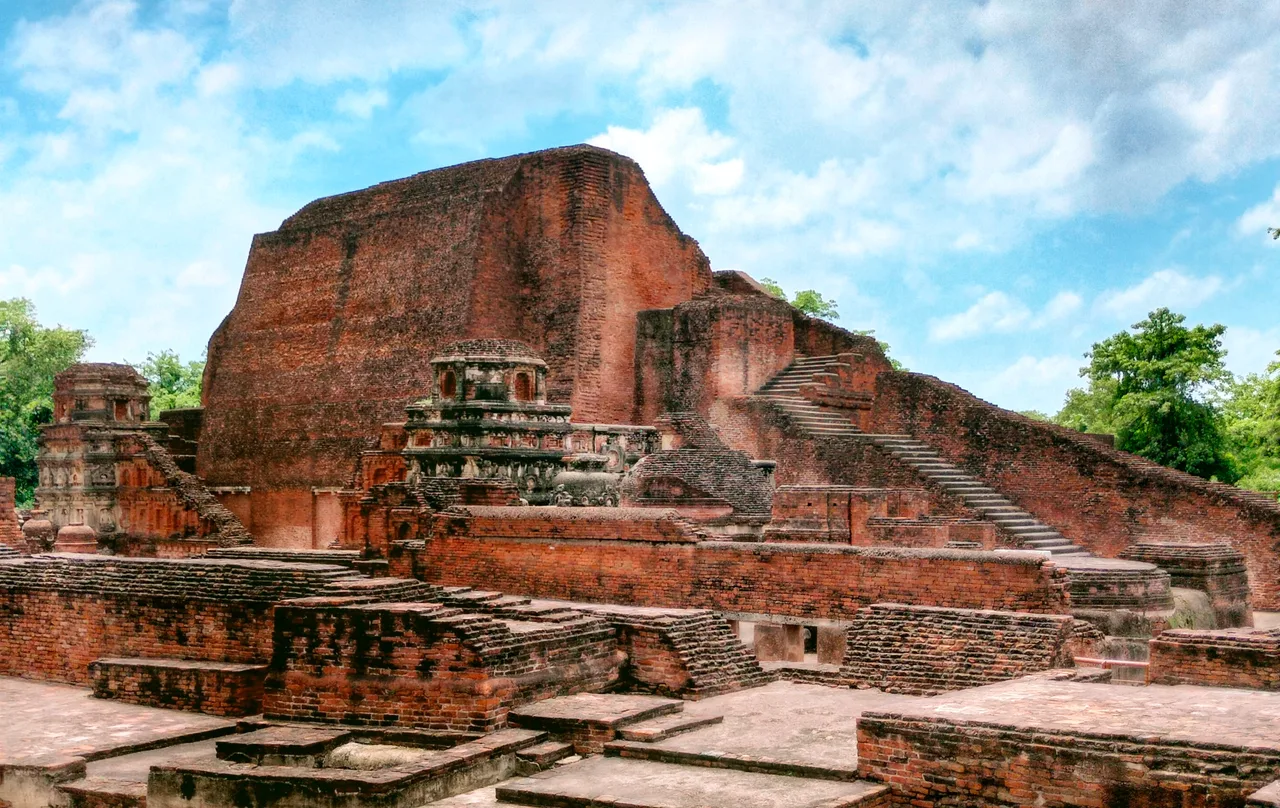
Excavated ruins of the Nalanda Mahavihara monastic university complex, Bihar, India

Wikimedia Commons

복합 단지유네스코

Nalanda

Seyfi Cem Baskin

नालंदा427 서기 – 1200 서기

The ancient world's greatest university — a walled monastic complex in Bihar, India, that functioned as an international center of Buddhist learning from the 5th to 12th centuries CE, housing up to 10,000 students and monks from China, Korea, Tibet, Central Asia, and Southeast Asia before its destruction in 1193.

311
관심 71

위치

인도

25.14°N · 85.44°E · 아시아

Active period

c. 427–1193 CE (~750 years)

Students

Up to 10,000 simultaneous students from across Asia (per Xuanzang)

Founded under

Kumaragupta I (Gupta dynasty, r. 415–455 CE)

Chinese pilgrims

Faxian (c. 405 CE), Xuanzang (629–645 CE), Yijing (671–695 CE) — primary historical sources

Destroyed

1193 CE by Bakhtiyar Khilji; libraries reportedly burned for three months

UNESCO

World Heritage Site 2016

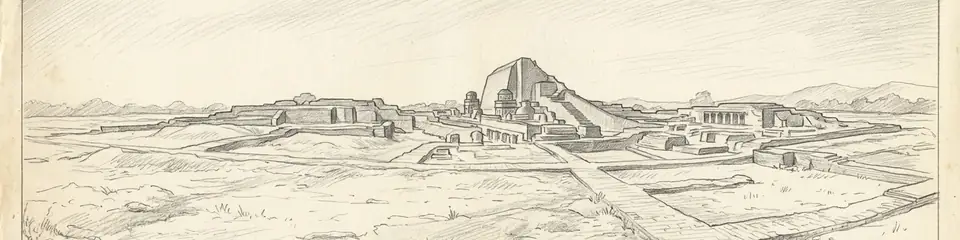
Graphite pencil sketch banner of Nalanda

“Nalanda is the most important site associated with the transmission of Buddhist learning across Asia.”

위치

개요

Nalanda stands in the Magadha plains of Bihar, about 90 kilometres southeast of Patna, on a site that Buddhist tradition associates with the life of the historical Buddha and with several of his great disciples. The institution that made Nalanda famous was a mahavihara — a great monastery — that grew from a collection of smaller monasteries into a massive walled complex housing multiple viharas (residential colleges), temples, libraries, lecture halls, and gardens. The complex at its height covered approximately 14 hectares of formal structures within a larger campus extending over perhaps 400 hectares.

Nalanda was funded primarily by the Gupta emperors (5th–6th century CE), particularly Kumaragupta I (r. 415–455 CE), who is traditionally credited with founding the institution, and by his successors. The Pala dynasty (8th–12th century CE) was equally important as later patrons, expanding the complex significantly. A succession of Chinese Buddhist pilgrims — Faxian (c. 405 CE), Xuanzang (629–645 CE), and Yijing (671–695 CE) — visited and studied at Nalanda, and their detailed accounts are the primary historical source for its scale and curriculum.

Xuanzang, who spent approximately 17 years in India and spent several years at Nalanda, describes a complex of eight viharas and ten temples, with a library in three separate buildings — one of which, he says, was nine stories tall. He counted 10,000 students and 1,500 teachers simultaneously in residence, studying the full range of Buddhist philosophy, logic, Vedic literature, grammar, medicine, mathematics, and astronomy. Students arrived from across Asia: China, Japan, Korea, Tibet, Sri Lanka, Java, and Central Asia all sent scholars to study here. The curriculum was demanding — only one in five applicants was admitted after a rigorous oral examination by a "doorman scholar."

The destruction of Nalanda in 1193 CE by the forces of the Khilji commander Bakhtiyar Khilji is one of the defining cultural catastrophes of the medieval world. The libraries — reportedly containing hundreds of thousands of manuscripts — were burned. Contemporary accounts say the libraries burned for three months. Surviving monks fled to Tibet, Nepal, and Southeast Asia, carrying manuscripts and oral traditions with them. The destruction effectively ended institutional Buddhism in the land of its birth.

중요성

Nalanda is the most important site associated with the transmission of Buddhist learning across Asia. The scholars and texts that passed through it over seven centuries shaped the development of Buddhism in Tibet (where Nalanda masters like Shantarakshita and Kamalashila established the first monasteries), China, Japan, and Southeast Asia. The Tibetan Buddhist tradition — today the most internationally visible form of Buddhism — traces its intellectual lineage directly to Nalanda. The site is also the most concrete physical evidence for the existence of large-scale organized higher education in the ancient world, predating European universities by seven centuries. Archaeological excavation of the site is ongoing; only a fraction of the total complex has been excavated. UNESCO World Heritage Site since 2016.

증거와 해석

확립된 사실과 논쟁 중인 사항을 구분합니다.

잘 확립된 사실

3
  • Xuanzang's detailed account (7th century CE) describes 10,000 students, 1,500 teachers, eight viharas, ten temples, and a library in three buildings. These accounts are corroborated by the physical scale of the excavated site: the foundation walls of viharas, temples, and lecture halls covering approximately 14 hectares, with individual viharas large enough to house hundreds of monks.
  • Copper plate inscriptions from the Pala period (8th–12th century CE) document royal grants of villages to fund Nalanda's operations. The Ghosrawa copper plate of Devapala records a grant from the Srivijayan king of Sumatra/Java to build a monastery at Nalanda — confirming international institutional connections.
  • The destruction in 1193 CE is documented in the Tabaqat-i-Nasiri by Minhaj-i-Siraj Juzjani, written approximately 60 years later. Buddhist scholars fleeing to Tibet after 1193 brought manuscripts and oral traditions that became the foundation of the Tibetan Buddhist canon.

학술적 추론

1
  • The "library of three buildings" described by Xuanzang is typically identified with a cluster of structures in the northern part of the excavated complex. The identification is plausible but not confirmed — no inscribed signage or unambiguous library material has been found. The specific locations of all described features remain partially inferred from the Chinese accounts.

논쟁 중인 해석

1
  • The claim that Nalanda's library burned for three months after the Khilji raid — found in some later sources — is probably a literary exaggeration. The actual extent of library destruction versus dispersal of manuscripts by fleeing monks is unknown. Many Nalanda texts survived in Tibetan translation and in collections brought to Nepal and Southeast Asia.

커뮤니티 사진

당신의 경험을 공유하세요

이 유적지를 방문하셨나요? 다른 탐험가들을 위해 사진을 업로드해 보세요.

이 페이지 인용 방법

Atlas Anatolia. (427). Nalanda. Atlas Anatolia. https://atlasanatolia.com/ko/site/nalanda

콘텐츠는 CC BY-SA 4.0 라이선스에 따라 제공됩니다 — 재사용 시 출처 표시가 필요합니다.

출처

  • On Yuan Chwang's Travels in India, 629-645 AD (2 vols) — Watters, Thomas (1904)
  • Buddhist Monks and Monasteries of India — Dutt, Sukumar (1962)
  • Buddha Gaya: The Hermitage of Sakya Muni — Mitra, Rajendralala (1878)

자주 묻는 질문

Nalanda은(는) 어디에 위치해 있나요?

Nalanda은(는) India에 위치해 있습니다.

Nalanda의 연대는 언제인가요?

Nalanda의 연대는 대략 427 서기 – 1200 서기로 거슬러 올라갑니다.

Nalanda과(와) 관련된 고대 문명은 무엇인가요?

Nalanda은(는) Mauryan, Gupta 문명과 관련이 있습니다.

Nalanda이(가) 중요한 이유는 무엇인가요?

Nalanda is the most important site associated with the transmission of Buddhist learning across Asia.

Nalanda은(는) 유네스코 세계유산인가요?

예 — Nalanda은(는) 유네스코 세계유산으로 등재되어 있습니다.