
콘텐츠로 건너뛰기
Atlas Anatolia
디그
뉴스술라웨시 빙하기 치아에서 빈랑 사용 25,000년 전까지 소급카스타모누 폼페이오폴리스 바실리카에서 로마 모자이크와 에로스 두상 발견
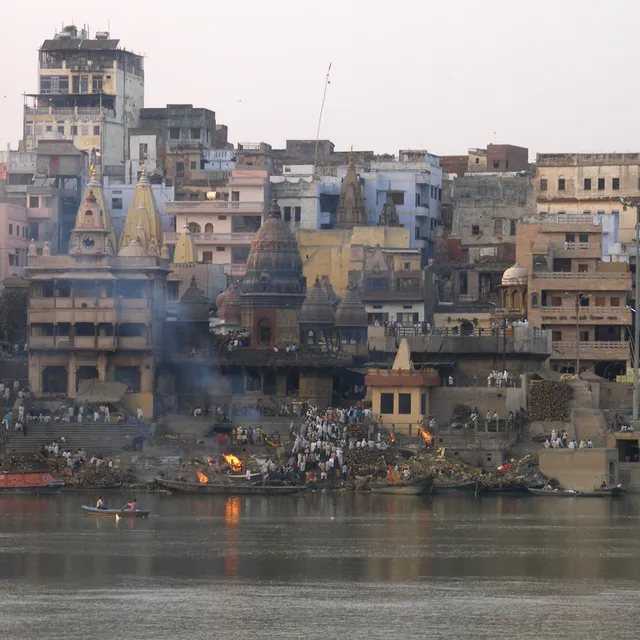
The stone ghats and Ganges riverfront at Varanasi at dawn

Wikimedia Commons

Country Record

Longest Continuously Occupied Site in India

유산도시주요

Varanasi

Seyfi Cem Baskin

वाराणसी1200 기원전 – 1900 서기

One of the world's oldest continuously inhabited cities — on the Ganges in Uttar Pradesh — whose ghats, Kashi Vishwanath Temple, and cremation grounds at Manikarnika Ghat have drawn Hindu pilgrims, scholars, and travellers for millennia.

211
관심 80

위치

인도

25.31°N · 83.01°E · 아시아

Ancient names

Kashi, Banaras — "oldest living city" tradition

Ghats

~80 stone steps along the Ganges riverfront

Sarnath

Buddha's first sermon preached ~8 km northeast

Kashi Vishwanath

Major Shiva temple; current shrine largely 18th century

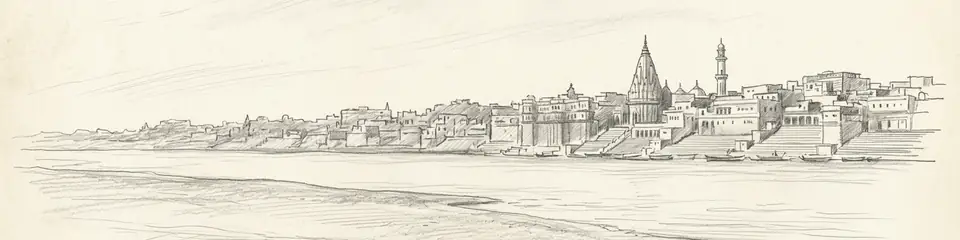
Graphite pencil sketch banner of Varanasi

“Varanasi is the living heart of Hindu sacred geography — a city where ancient ritual, death, and river worship continue uninterrupted in urban form.”

위치

개요

Varanasi (Kashi, "City of Light") lies on the left bank of the Ganges River in Uttar Pradesh, northern India. Textual and archaeological evidence suggests settlement from the Iron Age onward; the city is central to Hindu cosmology as a tirtha where bathing in the Ganges grants spiritual merit and death within the city offers moksha (liberation). Buddha preached his first sermon at nearby Sarnath, linking Varanasi to Buddhist origins as well.

The riverfront ghats — stone steps and platforms numbering around 80 — structure urban life: Dashashwamedh Ghat for daily Ganga Aarti, Assi Ghat at the southern end, Manikarnika and Harishchandra Ghats for cremation. The Kashi Vishwanath Temple (rebuilt repeatedly, current shrine largely 18th century under the Maratha queen Ahilyabai Holkar) honours Shiva as Vishwanath, "Lord of the Universe." Narrow lanes (galis) behind the ghats preserve dense temple and residential fabric.

Varanasi has been a centre of Sanskrit learning, music (Benares gharana), and silk weaving. While not a single UNESCO monument, the living city is inscribed in intangible and cultural heritage discussions and ranks among the most visited destinations in India for both pilgrims and international travellers.
중요성

Varanasi is the living heart of Hindu sacred geography — a city where ancient ritual, death, and river worship continue uninterrupted in urban form. Its ghats and proximity to Sarnath link the origins of Buddhism to the oldest traditions of the Ganges plain.

증거와 해석

확립된 사실과 논쟁 중인 사항을 구분합니다.

잘 확립된 사실

2
  • Archaeological excavations at Rajghat and nearby sites recover Iron Age and early historic pottery and structures.
  • Sarnath Ashokan pillar and Buddhist monuments document the city's role in early Buddhism from the 3rd century BCE.

학술적 추론

1
  • Continuous urban occupation since the 1st millennium BCE is widely argued but difficult to prove uninterrupted across the entire ghats zone.

논쟁 중인 해석

1
  • Claims of Varanasi as the "oldest continuously inhabited city" depend on definition of continuity and comparison with Jericho, Damascus, and other candidates.

커뮤니티 사진

당신의 경험을 공유하세요

이 유적지를 방문하셨나요? 다른 탐험가들을 위해 사진을 업로드해 보세요.

관련 이야기

이 페이지 인용 방법

Atlas Anatolia. (1200). Varanasi. Atlas Anatolia. https://atlasanatolia.com/ko/site/varanasi

콘텐츠는 CC BY-SA 4.0 라이선스에 따라 제공됩니다 — 재사용 시 출처 표시가 필요합니다.

그래프

관련 유적지와 스토리로의 연결.

출처

  • Banaras: City of Light — Eck, Diana L. (1982)
  • Banaras: Making of India's Heritage City — Singh, Rana P. B. (2009)

자주 묻는 질문

Varanasi은(는) 어디에 위치해 있나요?

Varanasi은(는) India에 위치해 있습니다.

Varanasi의 연대는 언제인가요?

Varanasi의 연대는 대략 1200 기원전 – 1900 서기로 거슬러 올라갑니다.

Varanasi과(와) 관련된 고대 문명은 무엇인가요?

Varanasi은(는) Vedic Indian, Mauryan, Gupta, Mughal 문명과 관련이 있습니다.

Varanasi이(가) 중요한 이유는 무엇인가요?

Varanasi is the living heart of Hindu sacred geography — a city where ancient ritual, death, and river worship continue uninterrupted in urban form.

Varanasi은(는) 유네스코 세계유산인가요?

Varanasi은(는) 현재 유네스코 세계유산 목록에 등재되어 있지 않습니다.