콘텐츠로 건너뛰기
Atlas Anatolia
디그
뉴스술라웨시 빙하기 치아에서 빈랑 사용 25,000년 전까지 소급카스타모누 폼페이오폴리스 바실리카에서 로마 모자이크와 에로스 두상 발견
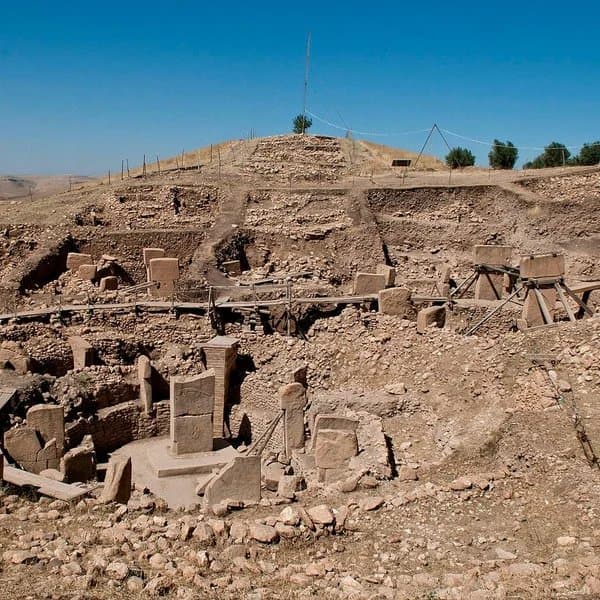
Alacahöyük archaeological site

Wikimedia Commons (CC BY-SA)

Country Record

Earliest Known Site in Türkiye

정착지

Alacahöyük

Seyfi Cem Baskin

4000 기원전 – 700 기원전

One of the most important pre-Hittite and Hittite sites in Anatolia. The royal tombs yielded spectacular gold and bronze artifacts from the Early Bronze Age Hattian civilization.

312
관심 44

위치

Çorum · Central Anatolia · 튀르키예

40.23°N · 34.69°E · 아시아

Date Range

4000 BCE – 700 BCE

Province

Çorum

Location

Corum Province, Central Anatolia, Turkey

Major Periods

Hattian (Early Bronze Age, c. 2500-2000 BCE), Hittite (c. 1650-1200 BCE)

Significance

One of the most important pre-Hittite and Hittite sites; capital of the Hattian civilization

Key Discovery

Royal 'Kings' Tombs' from Early Bronze Age with spectacular gold, silver, bronze, and electrum artifacts

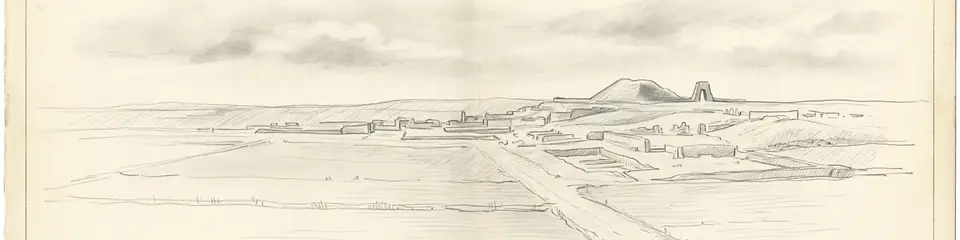
Graphite pencil sketch banner of Alacahöyük

“Alacahöyük matters fundamentally as the royal necropolis of the Hattians, a pre-Hittite Anatolian civilization.”

위치

개요

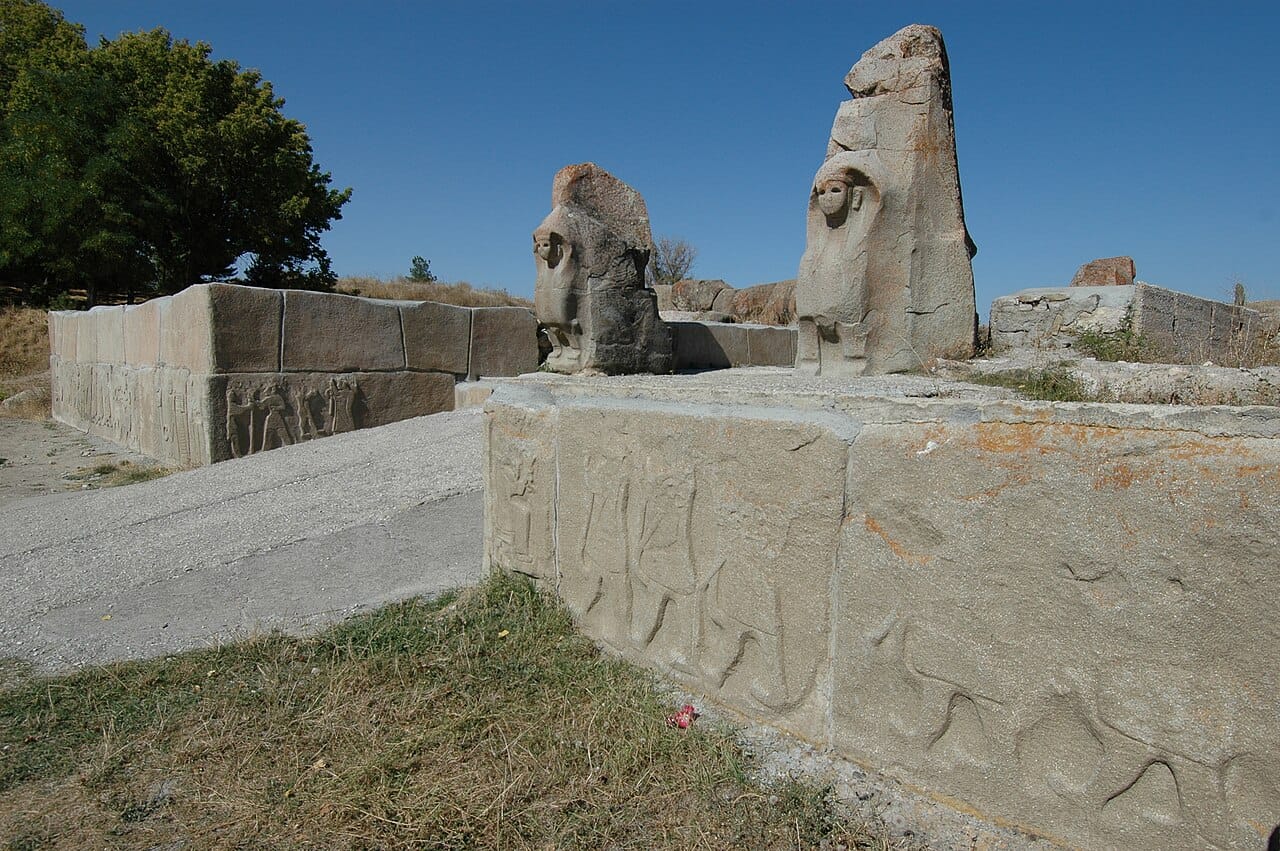
Alacahöyük is a distinctive archaeological mound rising from the flat plains of north-central Anatolia, near the modern town of Alaca. The site consists of a large, flat-topped höyük, or settlement mound, created by the successive layers of human habitation over millennia. Its strategic position allowed control over fertile agricultural land and important routes leading to the Black Sea coast. Excavations have revealed a complex stratigraphy, with the most prominent visible remains belonging to the Hittite Imperial period, including an impressive stone gateway flanked by two monumental sphinxes and sections of a defensive wall with a glacis.

The historical significance of Alacahöyük is profound, bridging two major Anatolian civilizations. Its deepest layers belong to the Early Bronze Age Hattian culture, a pre-Hittite indigenous people. The site gained international fame from the discovery of thirteen spectacular "Royal Tombs" dating to the third millennium BCE. These shaft graves yielded an extraordinary collection of grave goods, including finely crafted solar discs and stylized stag statuettes in gold and electrum, alongside bronze standards, weapons, and jewelry, demonstrating advanced metallurgy and complex religious symbolism. Following a period of abandonment, the site was reoccupied and heavily fortified by the Hittites, serving as an important cultic and administrative center within the Hittite heartland.

"The land of Hatti, rich in silver and gold, is a mountainous country."
— Anitta Text (c. 18th century BCE)

Key structures at the site vividly illustrate its Hittite phase. Visitors approach through the imposing Sphinx Gate, whose monolithic stone blocks and guardian sculptures lead into the city. Within, the foundations of a large temple complex dedicated to the storm god can be seen, aligned with a processional way. The settlement was protected by a formidable circuit wall with projecting towers. While the Hittite structures are most visible, the earlier Hattian period is represented by the carefully excavated tomb chambers themselves, which were set within a dedicated necropolis area outside the contemporary living quarters.

Culturally, Alacahöyük provides a crucial window into the transition and synthesis of Anatolian traditions. The Hattian artifacts from the tombs, with their solar and stag imagery, suggest a sophisticated belief system focused on nature and fertility, likely influencing later Hittite religion. The Hittite rebuilding of the site into a fortified city reflects the imperial organization and monumental architecture characteristic of their empire. Thus, Alacahöyük stands as a testament to both the brilliant indigenous development of the Hattians and their eventual absorption into the Hittite world, with its artifacts representing some of the most iconic treasures of ancient Anatolia.
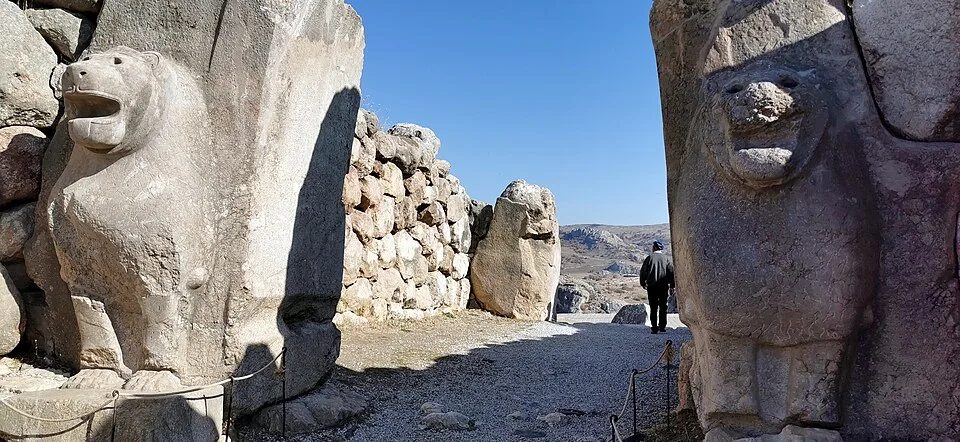
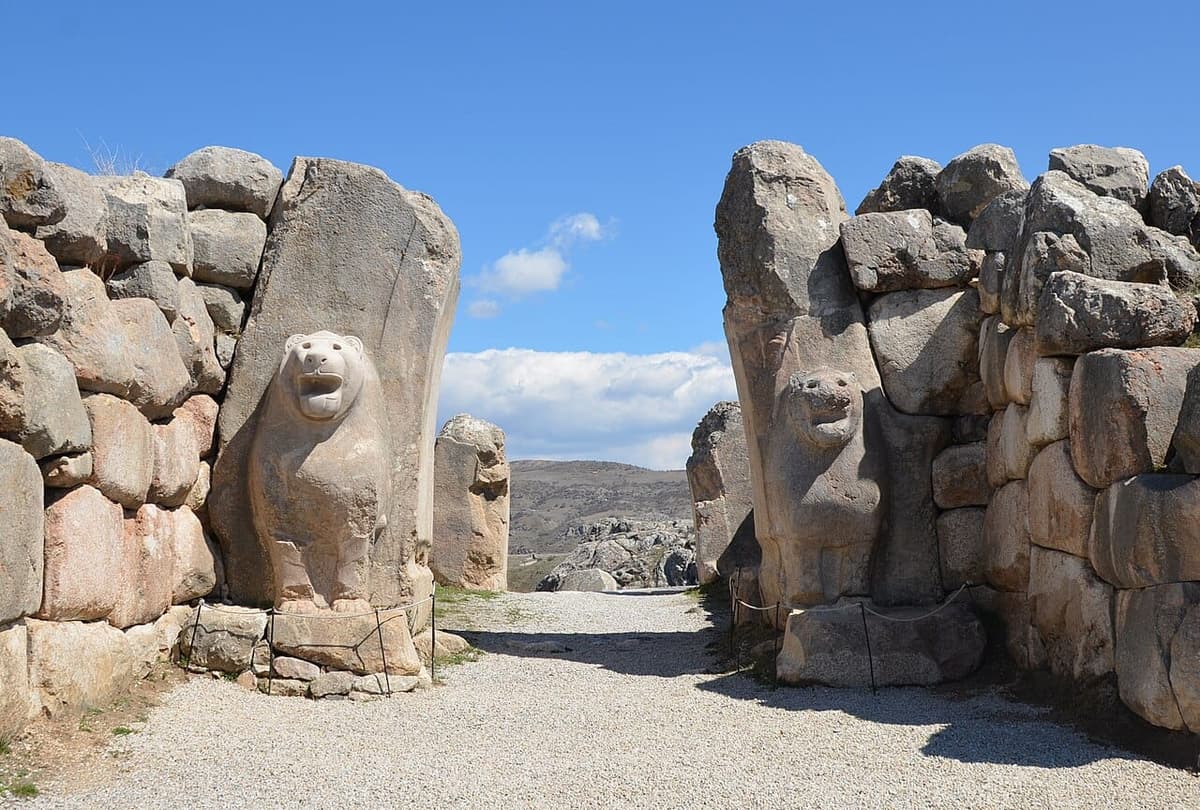
Boğazköy-Alacahöyük National Park - Lions' Gate, Çorum, Turkey
Boğazköy-Alacahöyük National Park - Lions' Gate, Çorum, Turkey | Murat Özsoy 1958 (CC BY-SA 4.0)

중요성

Alacahöyük matters fundamentally as the royal necropolis of the Hattians, a pre-Hittite Anatolian civilization. The spectacular gold and bronze artifacts from its Early Bronze Age "Royal Tombs" provided the first definitive archaeological evidence of this sophisticated indigenous culture, which later formed the substrate of the Hittite Empire. These finds, including iconic solar discs and stag statuettes, revolutionized understanding of Anatolia's cultural and technological complexity long before the Hittites. For history and heritage, the site bridges a critical gap. It demonstrates cultural continuity, showing how Hattian religious symbols and metallurgical expertise were absorbed and adapted by the Hittites, who later built a significant temple city atop the mound. As a source of unique national treasures and a key to Anatolia's deep indigenous past, Alacahöyük anchors Turkey's cultural identity, proving the region was a cradle of advanced civilization millennia before classical antiquity.

증거와 해석

확립된 사실과 논쟁 중인 사항을 구분합니다.

잘 확립된 사실

3
  • The 13 Early Bronze Age royal shaft graves contained confirmed in-situ deposits of spectacular artifacts, including sun discs, stags, and standards made of gold, electrum, and bronze.
  • The site was a major Hittite cult center, confirmed by monumental gate structures (Sphinx Gate) with orthostats and Hittite hieroglyphic inscriptions.
  • The Hittite-period fortification walls and monumental gates, including the Sphinx Gate with its intact sphinx sculptures and Hittite hieroglyphic Luwian inscriptions, confirm the site's status as a major Hittite cult and administrative center during the Empire period (c. 14th-13th centuries BCE).

학술적 추론

1
  • The richness and symbolism of the grave goods in the royal tombs are inferred to represent a sophisticated Hattian religious and political elite with extensive trade networks.

논쟁 중인 해석

2
  • The exact political relationship between the Hattian culture of Alacahöyük and the later Hittite Empire that occupied the site is debated, including questions of cultural continuity versus replacement.
  • The function and symbolic meaning of the iconic 'standards' (sun discs and stag figures) from the Hattian royal tombs are debated, with interpretations ranging from cult objects and royal insignia to parts of a ceremonial wagon or symbols of a cosmological belief system.

발견과 발굴

1907

First Systematic Excavations

지휘 Theodor Makridi Bey

Initial excavations led by Makridi Bey, uncovering significant Hittite remains and bringing the site to scholarly attention.

1935

Discovery of the Royal Tombs

지휘 Hamit Zübeyir Koşay & Remzi Oğuz Arık

Excavations resumed under the Turkish Historical Society, leading to the landmark discovery of 13 Hattian royal shaft graves with rich grave goods.

1935

Discovery of the Royal Tombs

지휘 Hamit Zübeyir Koşay and Remzi Oğuz Arık (Turkish Historical Society)

Directed by Hamit Zübeyir Koşay and Remzi Oğuz Arık, this campaign uncovered the thirteen spectacular Early Bronze Age 'Royal Tombs' with their unparalleled gold, bronze, and electrum artifacts, defining the Hattian culture.

1997

Modern Investigations & Conservation

지휘 Aykut Çınaroğlu (University of Ankara)

Renewed, ongoing excavations focusing on stratigraphy, settlement patterns, and conservation of the site's monumental structures.

커뮤니티 사진

당신의 경험을 공유하세요

이 유적지를 방문하셨나요? 다른 탐험가들을 위해 사진을 업로드해 보세요.

관련 이야기

이 페이지 인용 방법

Atlas Anatolia. (4000). Alacahöyük. Atlas Anatolia. https://atlasanatolia.com/ko/site/alacahoyuk

콘텐츠는 CC BY-SA 4.0 라이선스에 따라 제공됩니다 — 재사용 시 출처 표시가 필요합니다.

그래프

관련 유적지와 스토리로의 연결.

World History Encyclopedia에서 전체 기사 읽기
World History Encyclopedia · CC BY-NC-SA

출처

  • Wikipedia — Alacahöyük링크

자주 묻는 질문

Alacahöyük은(는) 어디에 위치해 있나요?

Alacahöyük은(는) Çorum, Central Anatolia, Türkiye에 위치해 있습니다.

Alacahöyük의 연대는 언제인가요?

Alacahöyük의 연대는 대략 4000 기원전 – 700 기원전로 거슬러 올라갑니다.

Alacahöyük과(와) 관련된 고대 문명은 무엇인가요?

Alacahöyük은(는) Hittite, Hattian 문명과 관련이 있습니다.

Alacahöyük이(가) 중요한 이유는 무엇인가요?

Alacahöyük matters fundamentally as the royal necropolis of the Hattians, a pre-Hittite Anatolian civilization.

Alacahöyük은(는) 유네스코 세계유산인가요?

Alacahöyük은(는) 현재 유네스코 세계유산 목록에 등재되어 있지 않습니다.