콘텐츠로 건너뛰기
Atlas Anatolia
디그
뉴스술라웨시 빙하기 치아에서 빈랑 사용 25,000년 전까지 소급카스타모누 폼페이오폴리스 바실리카에서 로마 모자이크와 에로스 두상 발견
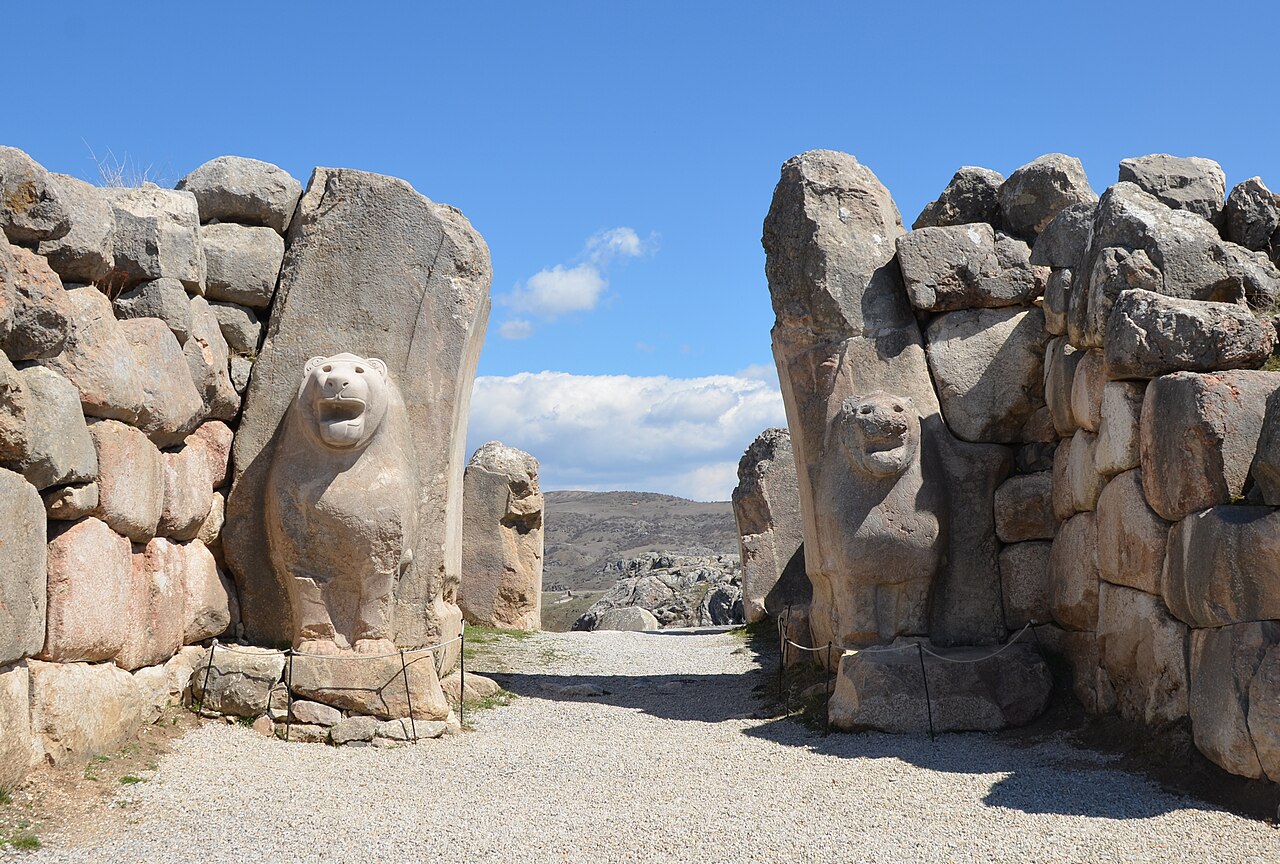
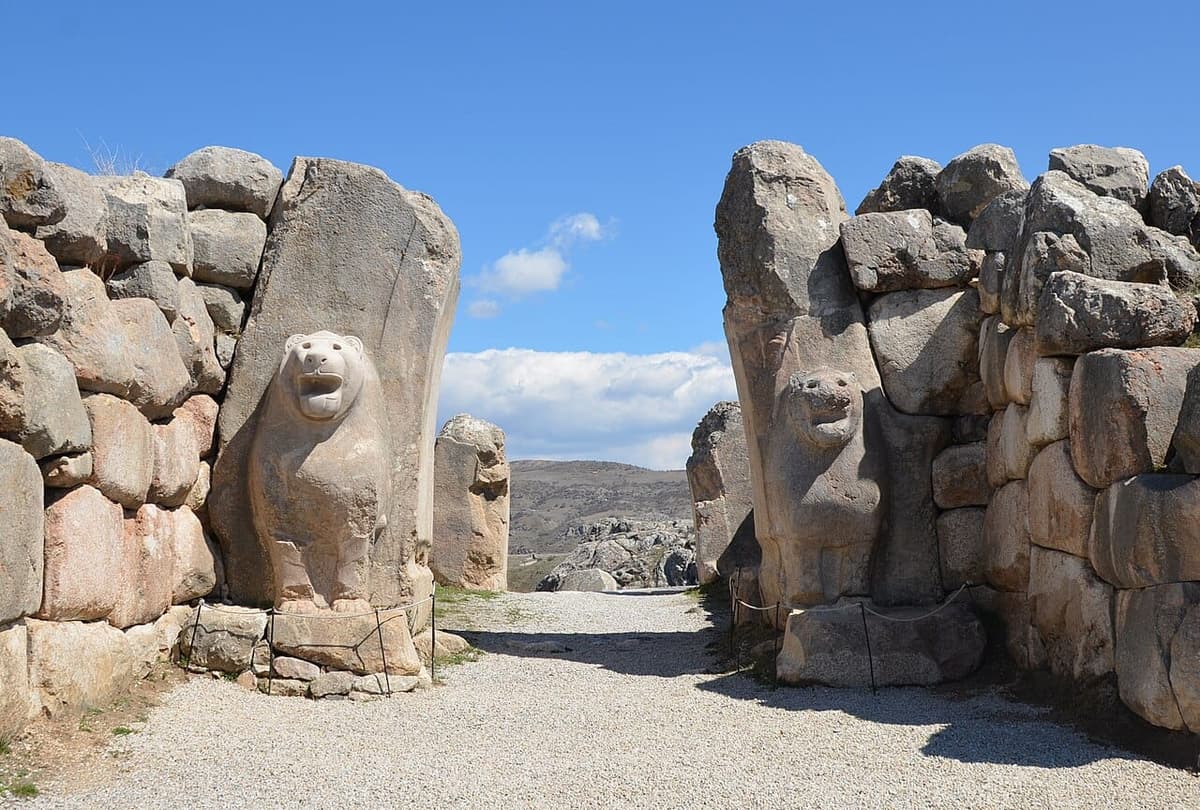
The Lion Gate at Hattusha, capital of the Hittite Empire

Wikimedia Commons (CC BY-SA)

도시유네스코주요

Hattusha

Seyfi Cem Baskin

Hattuşa1650 기원전 – 1178 기원전

Capital of the Hittite Empire, one of the great powers of the Late Bronze Age. Features massive fortifications, monumental gates with lion and sphinx sculptures, and the Great Temple.

411
관심 65

위치

Çorum · Central Anatolia · 튀르키예

40.02°N · 34.62°E · 아시아

Date Range

c. 1650–1178 BCE

City Area

~1.8 km²

UNESCO Status

World Heritage Site (1986)

Key Find

Royal cuneiform archives

Water Reservoir Capacity

Approximately 2,200 cubic meters in the Great Temple complex reservoir

Number of Cuneiform Tablets Found

Over 30,000 fragments, reconstructed into about 13,000 tablets

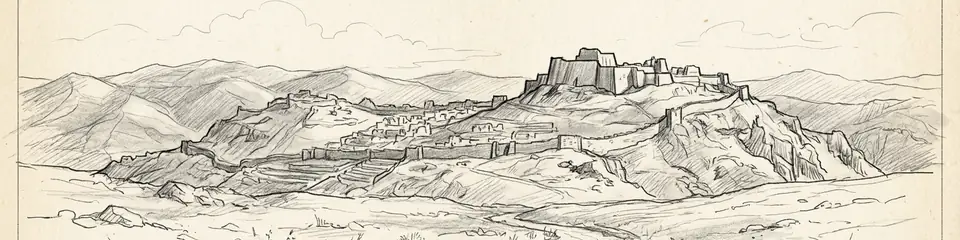
Graphite pencil sketch banner of Hattusha

“Hattusha was the center of the Hittite Empire, one of the most powerful states of the Late Bronze Age alongside Egypt and Assyria.”

위키백과에서

Hattusa was the capital of the Hittite Empire in the late Bronze Age. Its ruins lie near modern Boğazkale, Turkey, within the great loop of the Kızılırmak River. The city was at its peak during the mid-14th century BC, when it was one of the largest urban centers in the Near East.

위키백과에서 전체 기사 읽기 →

위치

개요

Hattusha, located near the modern village of Boğazkale in Çorum Province, was the capital of the Hittite Empire from roughly 1650 to 1178 BCE. At its height, the city covered approximately 1.8 square kilometers and was enclosed by more than 6 kilometers of fortification walls.

The city's most recognizable features include the Lion Gate, the Sphinx Gate, and the King's Gate — monumental entrances adorned with carved reliefs. The Great Temple (Temple I), dedicated to the storm god and the sun goddess of Arinna, is the largest known Hittite temple.

"The Sun-goddess of Arinna is queen of all lands. In the land of Hatti she bears the name Sun-goddess of Arinna."
— Hittite Prayer Text, c. 1400 BCE

In 1906, thousands of cuneiform clay tablets were discovered at the site, constituting the royal archives of the Hittite Empire. These tablets, written in Hittite, Akkadian, and several other languages, provide an extraordinary record of Hittite diplomacy, religion, law, and daily life. Among them is one of the earliest known peace treaties — between Hittite King Hattusili III and Egyptian Pharaoh Ramesses II.

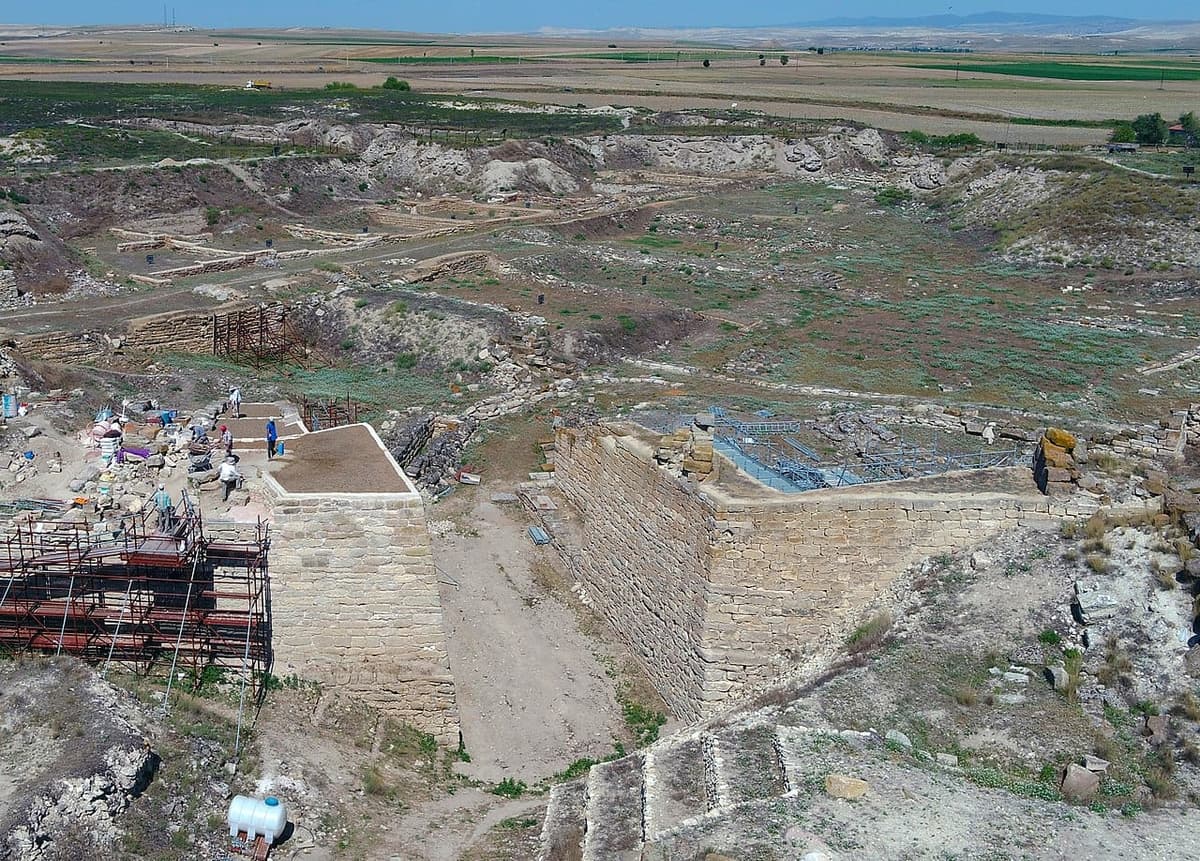
The site has been extensively excavated since 1906, primarily by German archaeological teams.
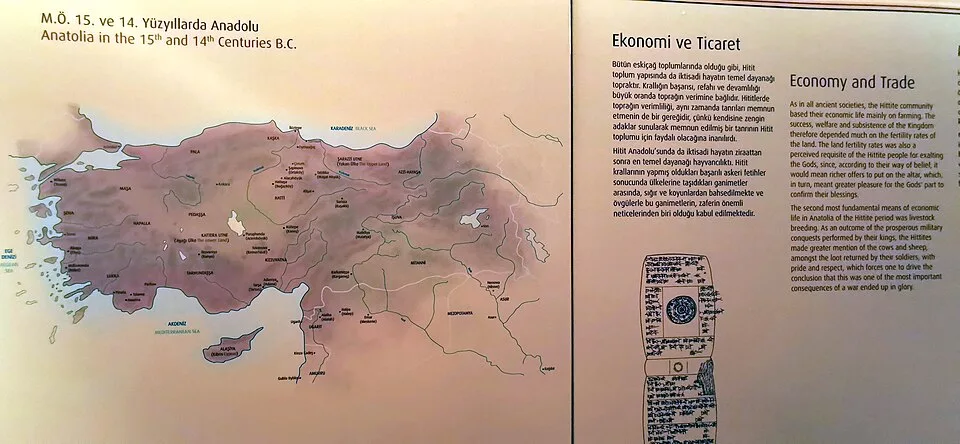
Museum Hattusa - Boğazköy Museum, Boğazköy, Çorum, Turkey 16
Museum Hattusa - Boğazköy Museum, Boğazköy, Çorum, Turkey 16 | Murat Özsoy 1958 (CC BY-SA 4.0)

Beyond its monumental gates and temples, Hattusha's urban landscape reveals sophisticated infrastructure. The city featured an extensive network of subterranean passages, most notably the 71-meter-long Yerkapı postern tunnel, and large artificial ponds for water storage. Residential quarters, such as those excavated on Büyükkaya, show a mix of large, multi-roomed houses and smaller dwellings, indicating social stratification. Artifacts like spindle whorls, loom weights, and imported items like Egyptian scarabs and Mycenaean pottery attest to a vibrant daily life of craft production and long-distance trade connections across the Mediterranean and Near East. The city's final destruction around 1178 BCE was comprehensive, with evidence of intense fire across the Upper City. While often linked to the broader Late Bronze Age Collapse, the precise agents—whether the so-called Sea Peoples, internal rebellion, or a combination of factors—remain a subject of scholarly investigation. The site was not reoccupied as a major urban center, preserving its Hittite strata for modern archaeology.
중요성

Hattusha was the center of the Hittite Empire, one of the most powerful states of the Late Bronze Age alongside Egypt and Assyria. The discovery of the royal archives revolutionized understanding of ancient Near Eastern history, diplomacy, and linguistics. The Hittite-Egyptian peace treaty found here is one of the earliest known international peace agreements and is commemorated at the United Nations headquarters. Hattusha was inscribed as a UNESCO World Heritage Site in 1986.

증거와 해석

확립된 사실과 논쟁 중인 사항을 구분합니다.

잘 확립된 사실

4
  • Thousands of cuneiform tablets document Hittite law, diplomacy, religion, and administration.
  • The city was protected by massive fortification walls with monumental gates.
  • The Hittite-Egyptian peace treaty (Treaty of Kadesh) was found among the archives.
  • The city's fortifications included a postern tunnel, over 70 meters long, constructed through the rampart near the Sphinx Gate.

학술적 추론

1
  • The city's destruction around 1178 BCE is linked to the broader Late Bronze Age Collapse.

논쟁 중인 해석

1
  • The exact causes and sequence of Hattusha's abandonment and destruction remain under study.

발견과 발굴

1834

First European visit

지휘 Charles Texier

French explorer Charles Texier visited the ruins and published descriptions.

1906

Discovery of cuneiform archives

지휘 Hugo Winckler

Hugo Winckler discovered thousands of cuneiform tablets constituting the Hittite royal archives.

1931

Systematic German excavations begin

지휘 Kurt Bittel / German Archaeological Institute

Kurt Bittel led long-term excavations that revealed the full extent of the city.

1993

Discovery of the Südburg Inscription

지휘 Jürgen Seeher (German Archaeological Institute)

Excavation revealed a rock-cut hieroglyphic Luwian inscription detailing the military achievements of Suppiluliuma II, the last known Hittite king.

커뮤니티 사진

당신의 경험을 공유하세요

이 유적지를 방문하셨나요? 다른 탐험가들을 위해 사진을 업로드해 보세요.

관련 이야기

이 페이지 인용 방법

Atlas Anatolia. (1650). Hattusha. Atlas Anatolia. https://atlasanatolia.com/ko/site/hattusha

콘텐츠는 CC BY-SA 4.0 라이선스에 따라 제공됩니다 — 재사용 시 출처 표시가 필요합니다.

그래프

관련 유적지와 스토리로의 연결.

World History Encyclopedia에서 전체 기사 읽기
World History Encyclopedia · CC BY-NC-SA

출처

  • The Hittites and Their World — Billie Jean Collins (2007)
  • UNESCO World Heritage — Hattusha링크

자주 묻는 질문

Hattusha은(는) 어디에 위치해 있나요?

Hattusha은(는) Çorum, Central Anatolia, Türkiye에 위치해 있습니다.

Hattusha의 연대는 언제인가요?

Hattusha의 연대는 대략 1650 기원전 – 1178 기원전로 거슬러 올라갑니다.

Hattusha과(와) 관련된 고대 문명은 무엇인가요?

Hattusha은(는) Hittite 문명과 관련이 있습니다.

Hattusha이(가) 중요한 이유는 무엇인가요?

Hattusha was the center of the Hittite Empire, one of the most powerful states of the Late Bronze Age alongside Egypt and Assyria.

Hattusha은(는) 유네스코 세계유산인가요?

예 — Hattusha은(는) 유네스코 세계유산으로 등재되어 있습니다.