コンテンツへスキップ
Atlas Anatolia
ニュースIce Age teeth in Sulawesi push betel-nut use back as far as 25,000 yearsRoman mosaic and Eros head uncovered in the basilica at Pompeiopolis, Kastamonu
Mycenae — Greece

Wikimedia Commons (CC BY-SA)

Continent Record

Oldest City in Europe

都市UNESCO注目

Mycenae

Seyfi Cem Baskin

Μυκῆναι1750 紀元前 – 1100 紀元前

Citadel of Agamemnon in the Argolid, its Lion Gate and Grave Circles defining our image of Late Bronze Age Greece. Mycenae commanded the isthmus approaches to the Peloponnese and left Linear B archives, tholos tombs, and Cyclopean walls that Homer already called famous.

322
関心 84

所在地

Argolis · Peloponnese · ギリシャ

37.73°N · 22.76°E · ヨーロッパ

Built

ca. 1750 BCE (peak occupation)

Civilization

Mycenaean

Discovered

1876 by Heinrich Schliemann

Status

UNESCO World Heritage Site (1999)

Location

Argolid, Peloponnese, Greece

Key Feature

Lion Gate and Cyclopean Walls

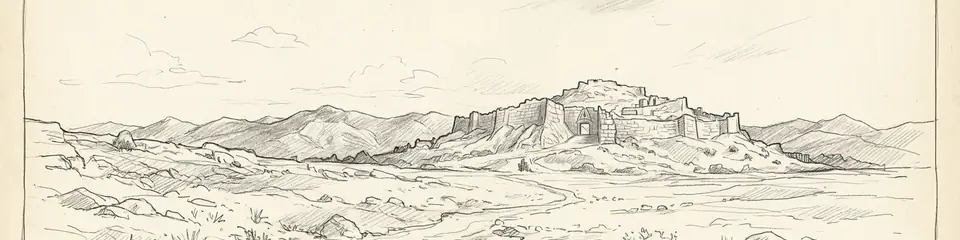
Graphite pencil sketch banner of Mycenae

“Mycenae gave its name to an entire civilization and supplied the gold standard (sometimes literally) for imagining Homeric kingship.”

所在地

概要

Mycenae crowns a rocky hill between two hills in the Argolid plain of northeastern Peloponnese. From roughly 1750 to 1100 BCE it was among the most powerful centres of the Mycenaean world, a network of palaces writing Greek in Linear B and trading across the eastern Mediterranean. The Lion Gate, two lions flanking a column above the main entrance, is still the site's icon.

Heinrich Schliemann excavated here in 1876, opening Grave Circle A inside the later walls and recovering gold masks, cups, and weapons he attributed to Agamemnon and his family. We now date those shaft graves to the 16th century BCE, centuries before any plausible Trojan War, but the grave goods remain masterpieces of Aegean metalwork. Later Greek excavators and the ongoing work of the Archaeological Society of Athens exposed the palace on the summit, further grave circles, and the tholos tombs called Treasury of Atreus and Tomb of Clytemnestra.
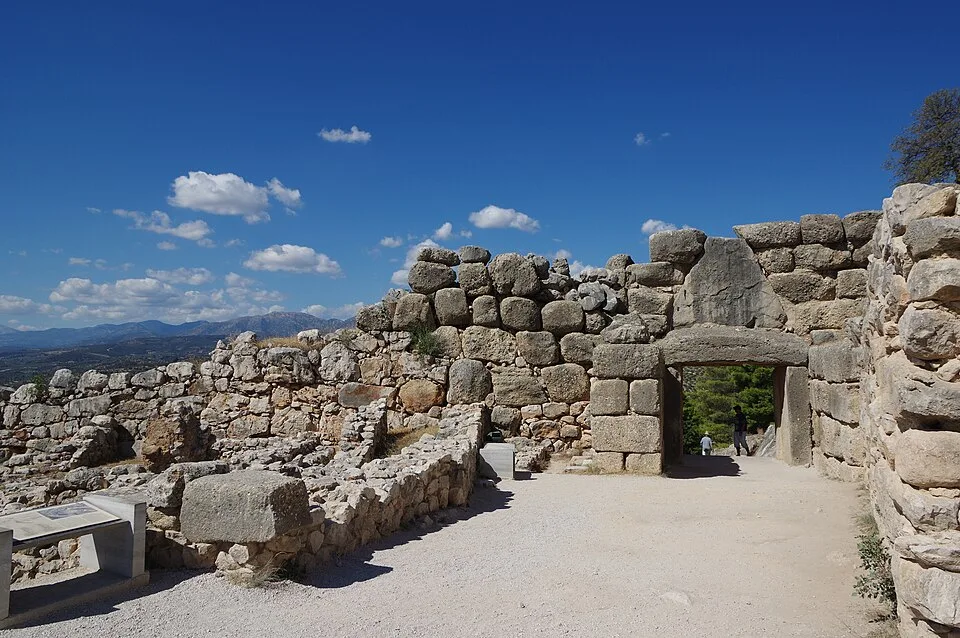
Mykene BW 2017-10-10 13-23-40
Mykene BW 2017-10-10 13-23-40 | Berthold Werner (CC BY-SA 3.0)
"I have gazed upon the face of Agamemnon — for the gold mask we lifted from the shaft grave seemed to me, in that first moment, the very portrait of the king of men."
— Heinrich Schliemann, telegram to King George of Greece on the discovery of Grave Circle A at Mycenae, 28 November 1876

Linear B tablets from the palace record personnel, offerings, and industries. They confirm that the language of administration was an early form of Greek. Mycenae's collapse around 1100 BCE belongs to the wider Bronze Age crisis that ended palatial economies across the region.
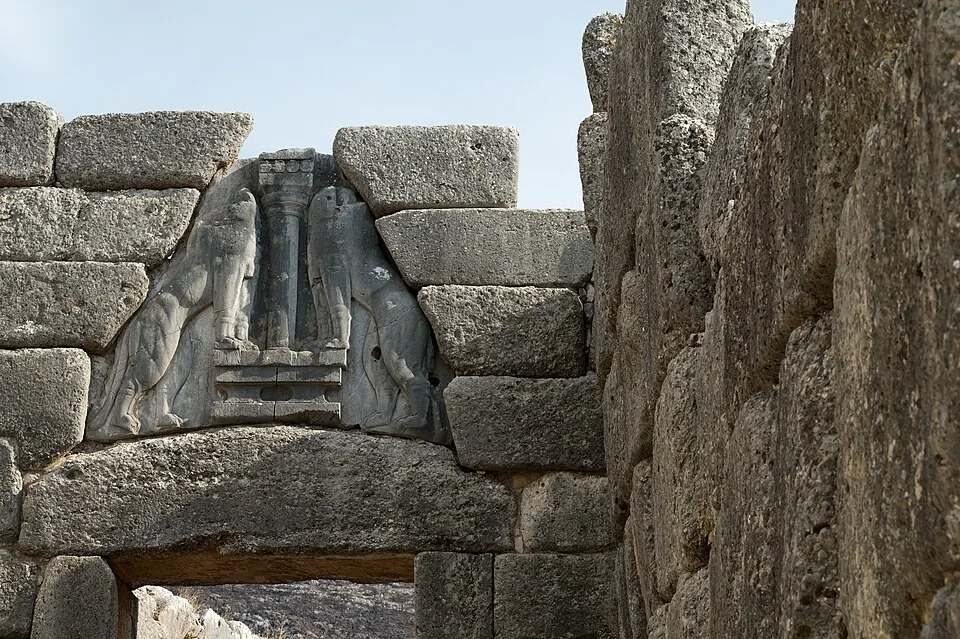
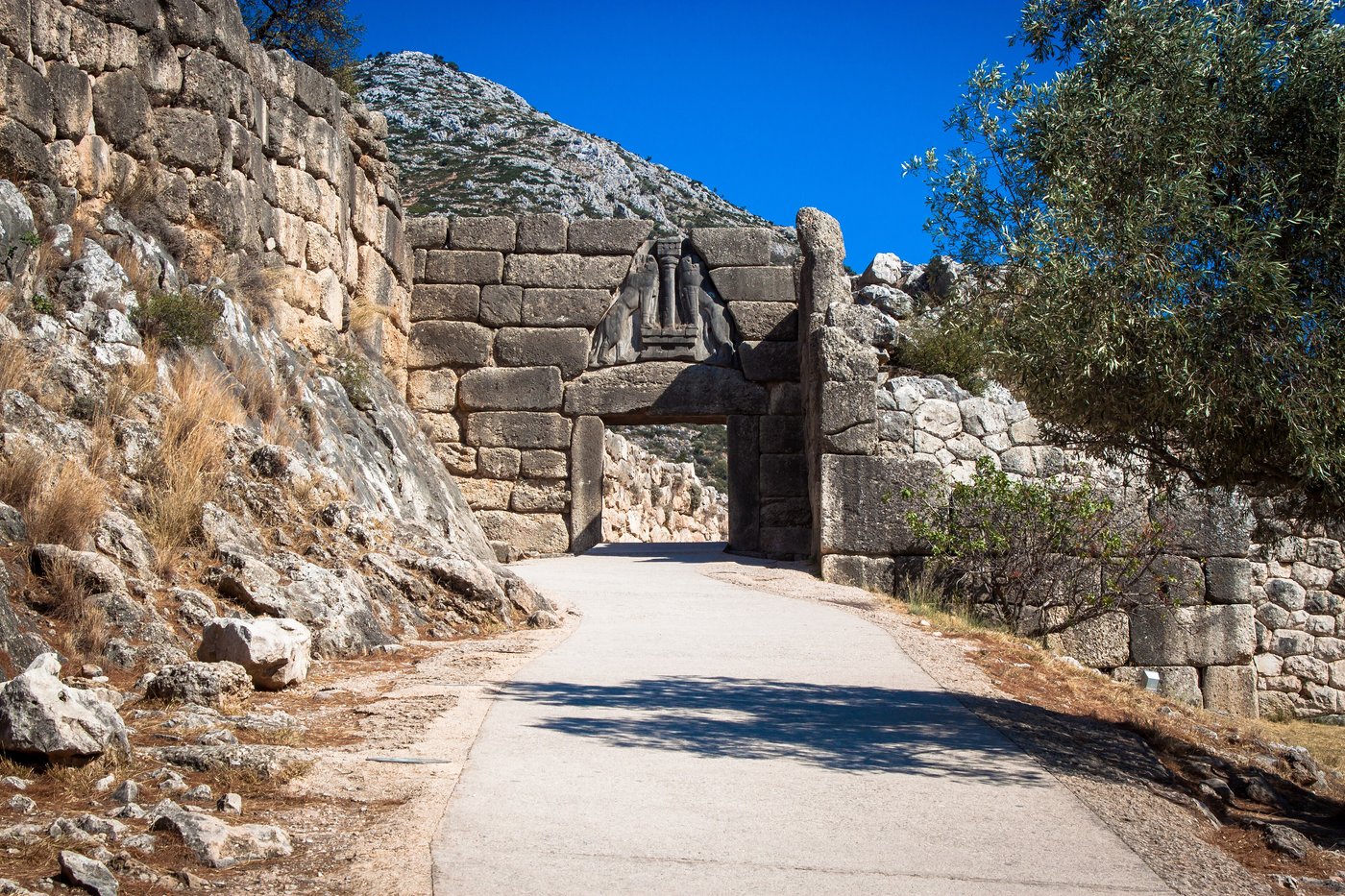
Lion Gate, Mycenae, 201510
Lion Gate, Mycenae, 201510 | Zde (CC BY-SA 4.0)

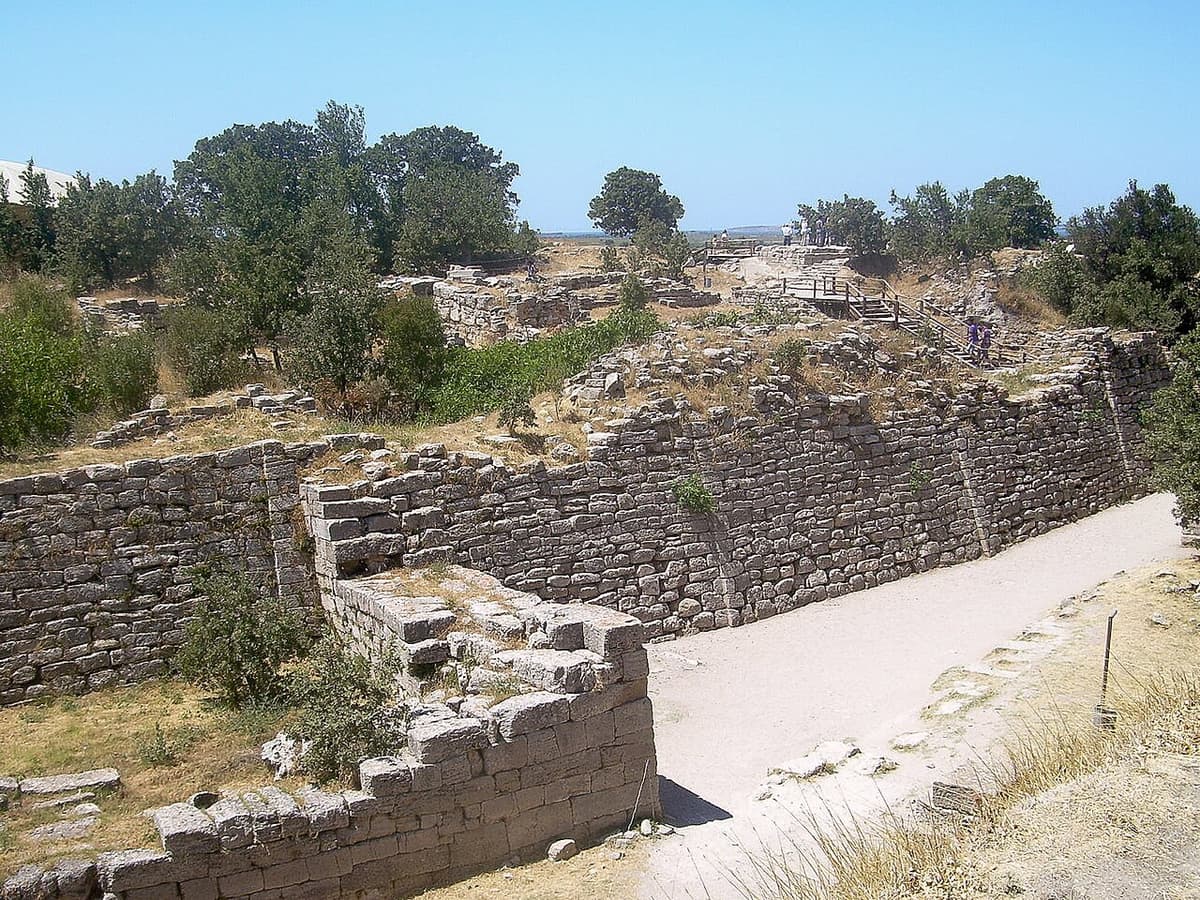
Homer makes Mycenae "rich in gold," home of Agamemnon who leads the Greek coalition against Troy. Whether a single high king ever ruled from here is debated; the archaeology shows elite wealth and fortification, not proof of Homer's genealogy. Pair Mycenae with Tiryns, its neighbour citadel, and Palace of Nestor at Pylos for three mainland palaces named in epic tradition.

Film crews seeking authentic Cyclopean walls often scout the Argolid. The stones are real even when the dialogue is not.
重要性

Mycenae gave its name to an entire civilization and supplied the gold standard (sometimes literally) for imagining Homeric kingship. The Lion Gate is among the earliest monumental sculptures in Europe still standing in situ.

証拠と解釈

確立された事実と議論が続く事柄を区別する。

確立された事実

3
  • The Lion Gate, built ca. 1250 BCE, bears two facing lions carved in relief on a triangular stone above the lintel.
  • Grave Circle A contained six shaft graves with multiple burials and opulent grave goods, including the gold Mask of Agamemnon.
  • Linear B tablets found at Mycenae document administrative records of goods, personnel, and religious offerings.

学術的推論

2
  • The shift from shaft graves to monumental tholos tombs around 1500 BCE indicates the consolidation of royal authority and dynastic succession.
  • The Cyclopean walls were likely built as much for prestige and symbols of power as for actual defense against external threats.

議論のある解釈

2
  • The identification of the gold mask from Grave V as that of Agamemnon is contested; most scholars consider it a conventional representation of a ruler rather than a portrait.
  • The cause of the Mycenaean collapse around 1100 BCE remains unresolved, with hypotheses including foreign invasion, internal revolt, natural disaster, and economic decline.

発見と発掘調査

Modern conservation and research

指揮 Greek Archaeological Service

Ongoing work by the Greek Ministry of Culture focuses on stabilization, restoration of the Lion Gate and tholos tombs, and public interpretation.

1876–1876

Initial excavations of Grave Circle A

指揮 Heinrich Schliemann

Heinrich Schliemann uncovered the shaft graves, revealing rich finds that brought Mycenae to international attention.

1886–1902

Systematic exploration and mapping

指揮 Christos Tsountas

Christos Tsountas carried out extensive excavations of the palace, fortifications, and tombs for the Archaeological Society of Athens.

1920–1955

British School at Athens excavations

指揮 Alan Wace

Alan Wace and colleagues refined the stratigraphy, restored key monuments, and excavated the lower town and suburbs.

コミュニティ写真

あなたの体験を共有する

この遺跡を訪れたことがありますか?写真をアップロードして魅力を共有しましょう。

関連記事

このページの引用方法

Atlas Anatolia. (1750). Mycenae. Atlas Anatolia. https://atlasanatolia.com/ja/site/mycenae

コンテンツはCC BY-SA 4.0ライセンスの下で提供されています — 再利用の際は出典表示が必要です。

グラフ

関連する遺跡やストーリーへのつながり。

出典

  • Schliemann, H. (1878), Mycenae: A Narrative of Researches and Discoveries at Mycenae and Tiryns — Heinrich Schliemann (1878)
  • Wace, A.J.B. (1949), Mycenae: An Archaeological History and Guide — Alan J. B. Wace (1949)
  • Chadwick, J. (1976), The Mycenaean World — John Chadwick (1976)
  • Shelton, K. (2010), ‘The State of Mycenaean Studies’ in E.H. Cline (ed.), The Oxford Handbook of the Bronze Age Aegean — Kim Shelton (2010)
  • UNESCO World Heritage List – Archaeological Sites of Mycenae and Tirynsリンク

よくある質問

Mycenaeはどこにありますか?

MycenaeはArgolis, Peloponnese, Greeceに位置しています。

Mycenaeの年代はいつ頃ですか?

Mycenaeはおよそ1750 紀元前 – 1100 紀元前のものとされています。

Mycenaeはどの文明に関連していますか?

MycenaeはMycenaean文明に関連しています。

Mycenaeが重要な理由は何ですか?

Mycenae gave its name to an entire civilization and supplied the gold standard (sometimes literally) for imagining Homeric kingship.

Mycenaeはユネスコ世界遺産ですか?

はい — Mycenaeはユネスコ世界遺産に登録されています。