
コンテンツへスキップ
Atlas Anatolia
ニュースIce Age teeth in Sulawesi push betel-nut use back as far as 25,000 yearsRoman mosaic and Eros head uncovered in the basilica at Pompeiopolis, Kastamonu
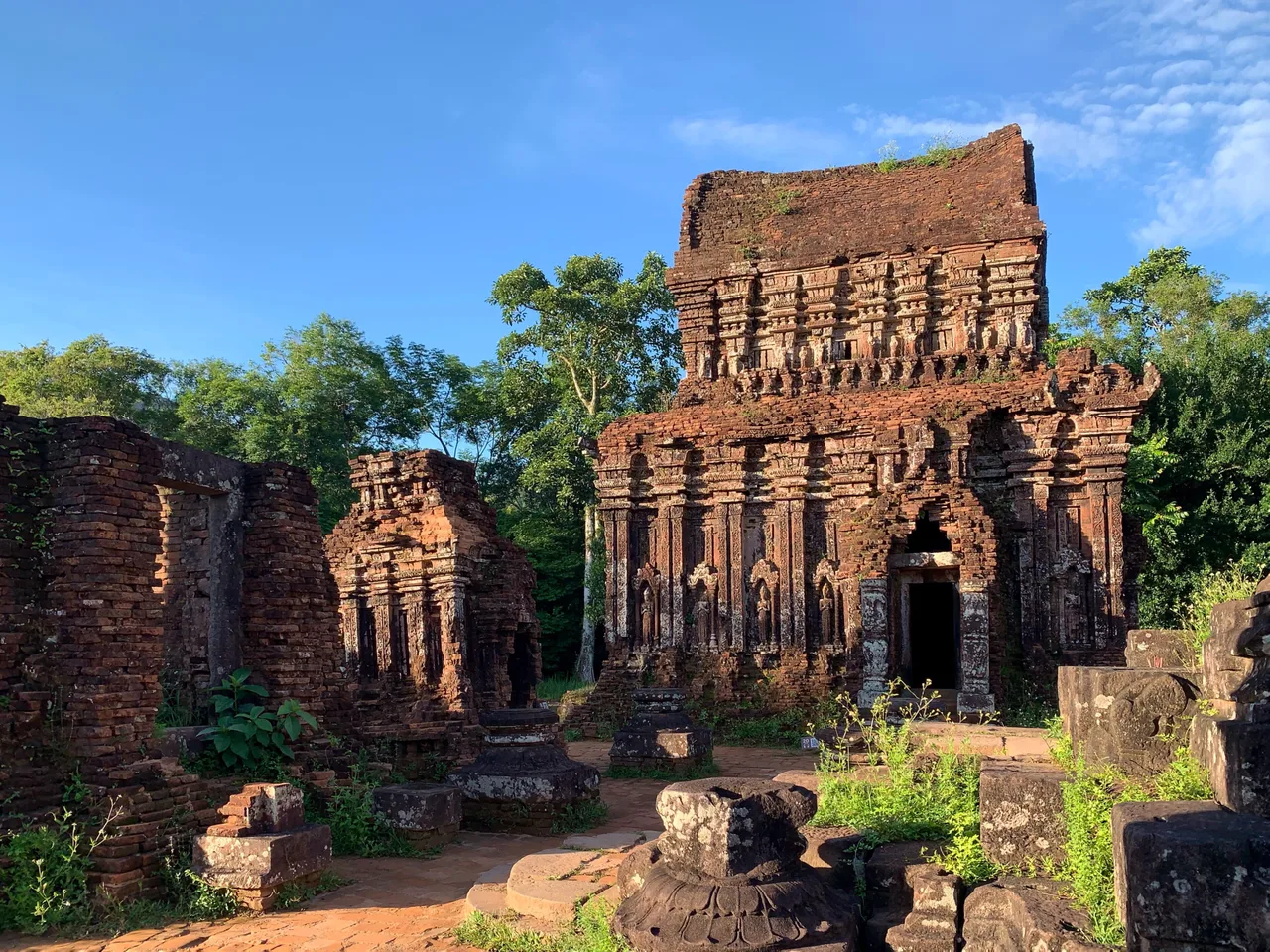
Red-brick Cham temple towers at My Son Sanctuary, Vietnam

Wikimedia Commons

神殿UNESCO注目

My Son Sanctuary

Seyfi Cem Baskin

Khu den thap My Son350 西暦 – 1200 西暦

The sacred heartland of the Cham Kingdom — a valley of red-brick Hindu temple towers in central Vietnam that served as the main royal religious centre for nearly a millennium and ranks among the most important archaeological sites in Southeast Asia.

31
関心 17

所在地

Vietnam

15.78°N · 108.12°E · アジア

Active

c. 4th-13th century CE (nearly 1,000 years)

Temples

Over 70 brick temple towers originally; c. 20 survive

Dedication

Primarily to Siva, syncretically merged with Cham kings

Construction

Fired brick with sandstone carvings; adhesive technique not fully replicated

War damage

Many towers destroyed by US bombing in 1969

UNESCO

World Heritage Site 1999

Graphite pencil sketch banner of My Son Sanctuary

“My Son is the primary monument of Cham civilisation and the most important Hindu sacred site in Southeast Asia outside of Bali.”

所在地

概要

My Son lies in a secluded valley surrounded by jungle-covered mountains in Quang Nam province, central Vietnam, about 40 kilometres from the ancient Cham trading port of Hoi An. The valley was selected as a royal sanctuary by Cham kings around the 4th century CE and remained their principal religious site until the 13th century — nearly a thousand years during which successive dynasties built, repaired, and expanded a complex of more than seventy temples and towers dedicated primarily to the Hindu god Siva.

The Cham were a Malayo-Polynesian-speaking people who dominated central and southern Vietnam from roughly the 2nd to the 15th century CE. Their kingdom absorbed profound cultural influences from India — Hindu religion, Sanskrit learning, temple architecture — while developing a distinctive artistic style of remarkable quality. Royal steles found at My Son record the consecration of temples and the donation of land and slaves to the sanctuary's priests.

The temples are built in fired brick decorated with elaborate sandstone carvings of Hindu deities, dancers, mythological animals, and abstract ornament. The towers taper into curvilinear spires transformed into a distinctive Cham style from the Indian shikhara. The site suffered severe bombing during the Vietnam War — many towers destroyed in 1969 — and UNESCO inscribed the surviving structures in 1999.

重要性

My Son is the primary monument of Cham civilisation and the most important Hindu sacred site in Southeast Asia outside of Bali. It represents the easternmost reach of Indian religious and artistic influence and demonstrates how a maritime Southeast Asian civilisation absorbed and transformed South Asian culture into something entirely its own. The sanctuary bridges the Hindu and Buddhist traditions and contains inscriptions in Sanskrit and Old Cham that are among the most important sources for Cham history. Its partial destruction in the Vietnam War gives it additional historical weight as a site of both ancient and recent catastrophe. The Cham artistic tradition visible here — especially the sandstone sculptures — is among the greatest achievements of Southeast Asian art.

証拠と解釈

確立された事実と議論が続く事柄を区別する。

確立された事実

3
  • Inscribed steles in Sanskrit and Old Cham found at the site record the founding of temples from the 4th century CE onward, naming Cham kings and their religious dedications — the primary written evidence for Cham royal history.
  • Fired-brick construction with mortar of undetermined composition (possibly a resin-based adhesive) has been confirmed by analysis of surviving towers; modern experiments have not fully replicated the technique.
  • Sandstone sculptures have been dated by art-historical analysis to successive periods spanning the 7th to 13th centuries, tracing a thousand years of Cham artistic development.

学術的推論

1
  • The valley's selection as a sacred site may reflect both its seclusion (appropriate for a royal sanctuary) and a natural spring associated with the linga of Siva; the precise founding myth is not recorded in surviving inscriptions.

コミュニティ写真

あなたの体験を共有する

この遺跡を訪れたことがありますか?写真をアップロードして魅力を共有しましょう。

このページの引用方法

Atlas Anatolia. (350). My Son Sanctuary. Atlas Anatolia. https://atlasanatolia.com/ja/site/my-son-sanctuary

コンテンツはCC BY-SA 4.0ライセンスの下で提供されています — 再利用の際は出典表示が必要です。

出典

  • Cham and the Archaeology of My Son (Vietnam) — Hardy, Andrew et al. (eds) (2009)
  • Southeast Asia: From Prehistory to History — Glover, Ian & Bellwood, Peter (eds) (2004)

よくある質問

My Son Sanctuaryはどこにありますか?

My Son SanctuaryはVietnamに位置しています。

My Son Sanctuaryの年代はいつ頃ですか?

My Son Sanctuaryはおよそ350 西暦 – 1200 西暦のものとされています。

My Son Sanctuaryはどの文明に関連していますか?

My Son SanctuaryはCham Kingdom文明に関連しています。

My Son Sanctuaryが重要な理由は何ですか?

My Son is the primary monument of Cham civilisation and the most important Hindu sacred site in Southeast Asia outside of Bali.

My Son Sanctuaryはユネスコ世界遺産ですか?

はい — My Son Sanctuaryはユネスコ世界遺産に登録されています。