
コンテンツへスキップ
Atlas Anatolia
ニュースIce Age teeth in Sulawesi push betel-nut use back as far as 25,000 yearsRoman mosaic and Eros head uncovered in the basilica at Pompeiopolis, Kastamonu
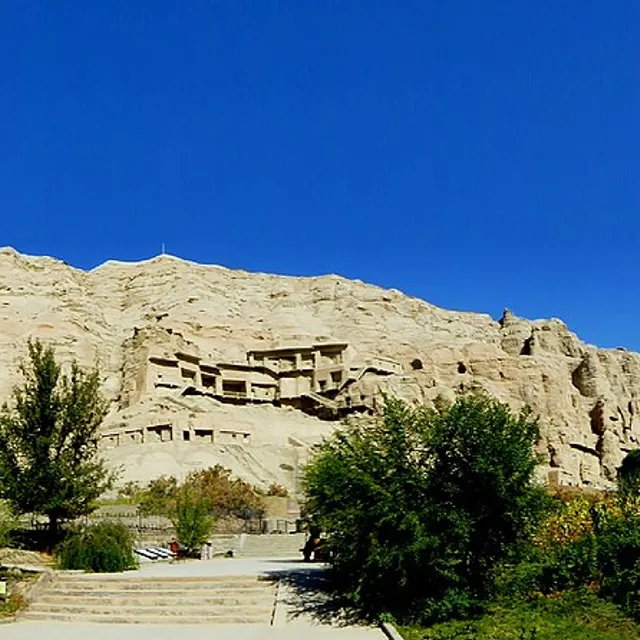
Cliff face and cave openings of the Kizil Buddhist grottoes, Xinjiang

Wikimedia Commons

聖域UNESCO

Kizil Caves

Seyfi Cem Baskin

克孜尔千佛洞300 西暦 – 800 西暦

The earliest large complex of Buddhist rock-cut cave temples on the northern Silk Road, carved into cliffs above the Muzart River near Kucha — murals of Indo-Iranian and Central Asian style that predate and influenced later Chinese grotto art.

21
関心 56

所在地

中国

41.78°N · 82.50°E · アジア

Scale

200+ rock-cut caves along the Muzart River cliffs

Date

Main painting phases c. 3rd–8th centuries CE

Culture

Buddhist monasteries of the Kucha / Tocharian oasis kingdom

Art history

Earliest large grotto complex on the northern Silk Road

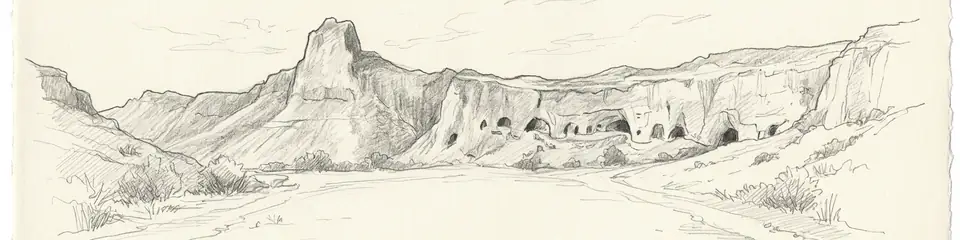
Graphite pencil sketch banner of Kizil Caves

“Kizil is foundational for Central Asian Buddhist art history — chronologically early, stylistically hybrid, and textually linked to Tocharian monastic culture.”

所在地

概要

The Kizil Caves stretch along river cliffs about 70 kilometres west of Kucha (Kuqa) in Xinjiang, China. From roughly the 3rd to 8th centuries CE, Buddhist monastic communities excavated and painted over 230 caves, making Kizil the earliest major grotto series of the Tarim Basin — earlier in origin than Dunhuang’s Mogao heyday and crucial for understanding how Indian Buddhist art adapted along the northern route around the Taklamakan.

Murals employ distinctive “Western Regions” styles: stylised drapery, musical and narrative scenes from Jātakas and Avadānas, and a palette influenced by Iranian and Gandhāran visual traditions. German Turfan expeditions under Albert Grünwedel and Albert von Le Coq removed many mural panels to Berlin; surviving in situ painting still shows diamond-ceiling patterns, musicians, and donor figures of Tocharian-speaking oasis elites.
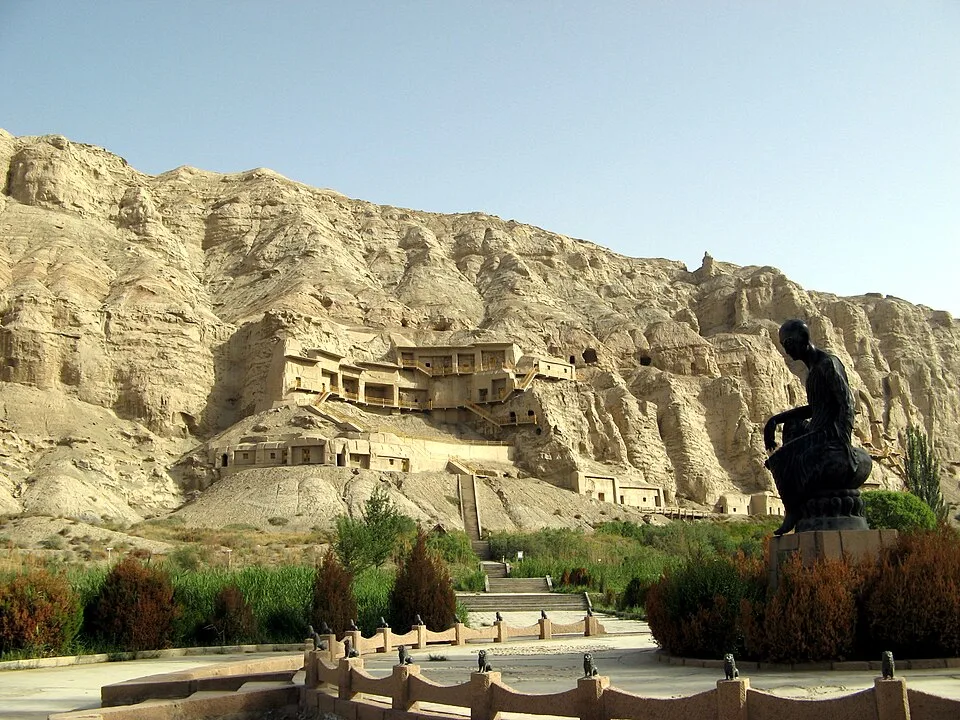
Kuqa May 2007 427
Kuqa May 2007 427 | G41rn8 (CC BY-SA 4.0)
"In the cliffs above the river the monks of Kucha cut cells and painted the deeds of the Bodhisattva — music, dance, and the path to nirvana in colours brought along the northern road."
— Modern paraphrase of Kucha Buddhist mural programmes at Kizil

Kizil belongs to the broader Kucha kingdom’s Buddhist landscape and is a component of UNESCO Silk Roads serial heritage. Conservation and documentation by Chinese institutes continue to recover chronology through radiocarbon and stylistic sequencing.
重要性

Kizil is foundational for Central Asian Buddhist art history — chronologically early, stylistically hybrid, and textually linked to Tocharian monastic culture. It shows how the Silk Road was not only a trader’s corridor but a monastery network that translated Indian Buddhism into oasis visual languages later radiating into China proper.

証拠と解釈

確立された事実と議論が続く事柄を区別する。

確立された事実

2
  • Standing caves and remaining murals document an extensive early Buddhist monastic complex.
  • Stylistic and palaeographic links connect Kizil art to Indo-Iranian and Tocharian Buddhist cultures of Kucha.

議論のある解釈

1
  • Fine-grained dating of individual cave phases continues to be refined; some early expedition attributions have been revised.

コミュニティ写真

あなたの体験を共有する

この遺跡を訪れたことがありますか?写真をアップロードして魅力を共有しましょう。

関連記事

このページの引用方法

Atlas Anatolia. (300). Kizil Caves. Atlas Anatolia. https://atlasanatolia.com/ja/site/kizil-caves

コンテンツはCC BY-SA 4.0ライセンスの下で提供されています — 再利用の際は出典表示が必要です。

グラフ

関連する遺跡やストーリーへのつながり。

出典

  • Chinese Sculpture — Howard, Angela F. et al. (2006)
  • Archaeological Survey at Kizil — Vignato, Giuseppe (2006)

よくある質問

Kizil Cavesはどこにありますか?

Kizil CavesはChinaに位置しています。

Kizil Cavesの年代はいつ頃ですか?

Kizil Cavesはおよそ300 西暦 – 800 西暦のものとされています。

Kizil Cavesはどの文明に関連していますか?

Kizil CavesはHan, Tocharian文明に関連しています。

Kizil Cavesが重要な理由は何ですか?

Kizil is foundational for Central Asian Buddhist art history — chronologically early, stylistically hybrid, and textually linked to Tocharian monastic culture.

Kizil Cavesはユネスコ世界遺産ですか?

はい — Kizil Cavesはユネスコ世界遺産に登録されています。