
コンテンツへスキップ
Atlas Anatolia
ニュースIce Age teeth in Sulawesi push betel-nut use back as far as 25,000 yearsRoman mosaic and Eros head uncovered in the basilica at Pompeiopolis, Kastamonu
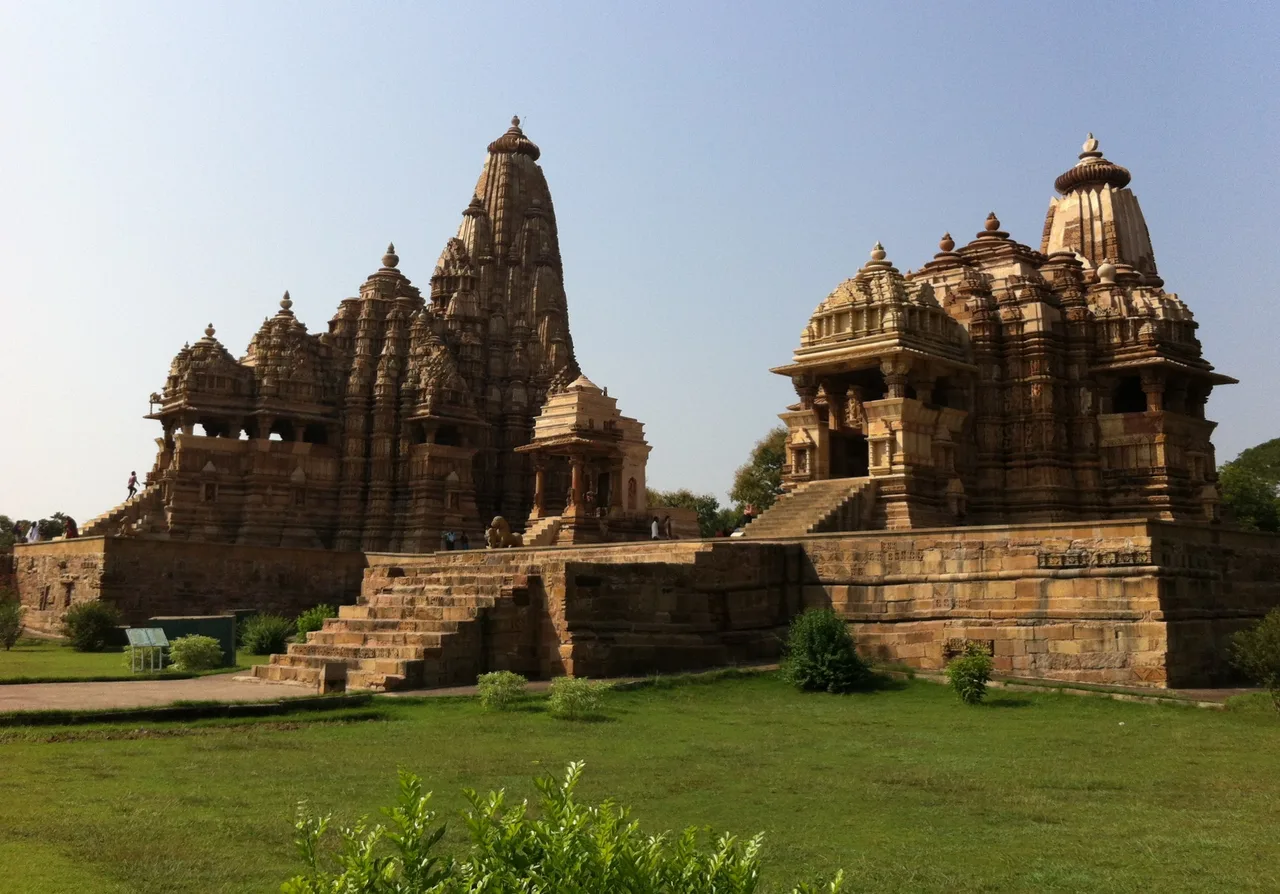
The Kandariya Mahadeva temple at Khajuraho, Madhya Pradesh, India

Wikimedia Commons

神殿UNESCO

Khajuraho

Seyfi Cem Baskin

खजुराहो950 西暦 – 1050 西暦

India's supreme expression of medieval temple architecture — 25 surviving sandstone temples built by the Chandela dynasty in central India between 950 and 1050 CE, celebrated for their exuberantly carved sculptural programs depicting gods, celestial beings, and erotic scenes, rising from a flat plain with no other settlement in sight.

311
関心 74

所在地

インド

24.83°N · 79.92°E · アジア

Built by

Chandela dynasty, c. 950–1050 CE

Original temples

Approximately 85; 25 survive

Largest temple

Kandariya Mahadeva: 31 m tall, 872 sculptures

Sculptural program

~10% erotic mithuna; 90% celestial beings, gods, and ritual scenes

UNESCO

World Heritage Site 1986

Rediscovery

T.S. Burt, Bengal Engineers, 1838 — abandoned for ~500 years

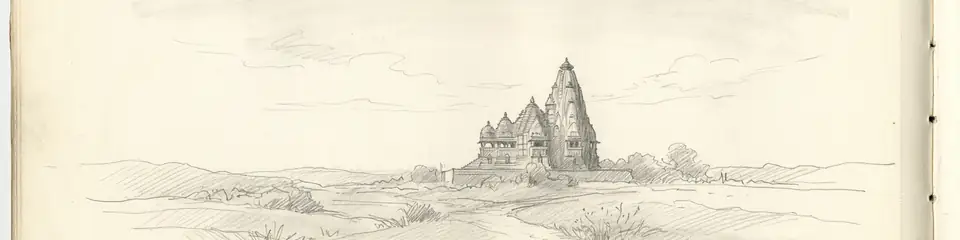
Graphite pencil sketch banner of Khajuraho

“Khajuraho is India's most complete surviving medieval Hindu temple complex and one of the finest achievements of Nagara-style architecture.”

所在地

概要

The Khajuraho temples stand in a small town in Madhya Pradesh, central India, surrounded by flat agricultural land with no geographic feature to explain their location — they were built here because this was the Chandela dynastic heartland, not because of any strategic or economic advantage. The Chandelas were a Rajput clan who ruled central India from approximately 831 to 1308 CE, and the main cluster of temples at Khajuraho was their principal religious endowment, built during the dynasty's most prosperous century (c. 950–1050 CE).

Originally the complex contained approximately 85 temples; 25 survive in varying states of completion. They are distributed across three groups: Western (the most numerous and best preserved, including the largest temple, the Kandariya Mahadeva), Eastern (with Jain temples alongside Hindu ones, reflecting the Chandelas' patronage of both traditions), and Southern (most distant from the main complex). All are built in the Nagara (north Indian) style, characterized by a curvilinear superstructure (shikhara) rising above the sanctuary, with clustered subsidiary towers creating a mountain-like profile.

The sculptural program covering the outer walls is what made Khajuraho internationally famous after its "rediscovery" by T.S. Burt of the Bengal Engineers in 1838. The sculptures depict three registers of subject matter: celestial beings (apsaras and surasundaris — the heavenly nymphs that adorn the central band), gods and goddesses in ritual and narrative scenes, and — most controversially — erotic couples (mithuna figures) in explicit sexual positions. The erotic sculptures constitute perhaps 10% of the total carvings but have dominated Western perception of the site. Their purpose is debated: proposed explanations include tantric ritual function, instruction for temple priests required to be celibate, apotropaic (evil-averting) power, or simply the aesthetic convention of abundance and fertility appropriate to a temple's exterior.

The temples were abandoned by the 14th century following the decline of Chandela power and the arrival of Delhi Sultanate armies. They were largely forgotten by the outside world until the 19th century — a period of abandonment that paradoxically preserved them from the modifications typically imposed on living religious sites.

重要性

Khajuraho is India's most complete surviving medieval Hindu temple complex and one of the finest achievements of Nagara-style architecture. The Kandariya Mahadeva temple, with its 31-metre shikhara bristling with 872 sculptures, is among the most sophisticated stone buildings ever erected. The sculptural program — which encompasses the full range of Hindu cosmology, aesthetics, and erotic literature in a single architectural sequence — represents medieval India's conception of the temple as a microcosm of the universe, its outer walls showing the world of human desire that must be traversed before entering the pure inner sanctuary of the divine. UNESCO World Heritage Site since 1986.

証拠と解釈

確立された事実と議論が続く事柄を区別する。

確立された事実

3
  • Inscriptions at Khajuraho provide the names of Chandela rulers who commissioned the temples, particularly Yashovarman (c. 930–950 CE) and Dhanga (c. 950–1002 CE). The Lalguan Mahadeva inscription of 954 CE is among the earliest dateable Khajuraho inscriptions.
  • The Kandariya Mahadeva temple is demonstrably the most accomplished of the group, both in scale (31 m) and sculptural complexity (872 figures). Stylistic analysis of the sculpture places it in the late Chandela period, c. 1025–1050 CE.
  • The Eastern group includes Jain temples (Parsvanatha, Adinatha) of comparable quality to the Hindu temples, confirming that the Chandela dynasty patronized both religious traditions simultaneously — unusual for a Hindu Rajput dynasty.

学術的推論

1
  • The abandonment of the temples sometime in the 13th–14th century CE is connected to the decline of Chandela political power following repeated raids by the Delhi Sultanate. The temples were not destroyed — there is no evidence of deliberate demolition — but were simply no longer maintained as the ruling dynasty lost control of the region.

議論のある解釈

1
  • The function of the erotic (mithuna) sculptures remains one of the most debated questions in Indian art history. Proposed interpretations include: (1) tantric ritual instruction for brahmins; (2) apotropaic function — protecting the temple from lightning or evil forces; (3) the boundary between the outer world of desire and the inner world of divine presence; (4) simple aesthetic convention representing abundance. No consensus has emerged.

コミュニティ写真

あなたの体験を共有する

この遺跡を訪れたことがありますか?写真をアップロードして魅力を共有しましょう。

このページの引用方法

Atlas Anatolia. (950). Khajuraho. Atlas Anatolia. https://atlasanatolia.com/ja/site/khajuraho

コンテンツはCC BY-SA 4.0ライセンスの下で提供されています — 再利用の際は出典表示が必要です。

出典

  • The Religious Imagery of Khajuraho — Desai, Devangana (1996)
  • Temples of Khajuraho (2 vols) — Deva, Krishna (1990)

よくある質問

Khajurahoはどこにありますか?

KhajurahoはIndiaに位置しています。

Khajurahoの年代はいつ頃ですか?

Khajurahoはおよそ950 西暦 – 1050 西暦のものとされています。

Khajurahoはどの文明に関連していますか?

KhajurahoはVedic Indian文明に関連しています。

Khajurahoが重要な理由は何ですか?

Khajuraho is India's most complete surviving medieval Hindu temple complex and one of the finest achievements of Nagara-style architecture.

Khajurahoはユネスコ世界遺産ですか?

はい — Khajurahoはユネスコ世界遺産に登録されています。