
Aller au contenu
Atlas Anatolia
ActualitésIce Age teeth in Sulawesi push betel-nut use back as far as 25,000 yearsRoman mosaic and Eros head uncovered in the basilica at Pompeiopolis, Kastamonu
Excavated stone walls and spoil of Tel Megiddo overlooking the Jezreel Valley

Wikimedia Commons (CC BY-SA 3.0)

Country Record

Longest Continuously Occupied Site in Israel

ÉtablissementUNESCOEn vedette

Tel Megiddo

Seyfi Cem Baskin

תל מגידו7000 av. J.-C. – 400 av. J.-C.

The multi-layered tell overlooking the Jezreel Valley — Canaanite city, Egyptian stronghold, and Israelite fortress whose Greek name Armageddon entered apocalyptic tradition — ranks first among missing archaeological sites in our EN/DE/TR/ZH Wikipedia pageview audit.

21
Intérêt 68

Localisation

Israël

32.59°N · 35.18°E · Asie

Strata

20+ occupation levels, Neolithic–Persian

Battle of Megiddo

Thutmose III, c. 1457 BCE

UNESCO

Biblical Tels (2005)

Famous find

Water system, six-chambered gate, “stables”

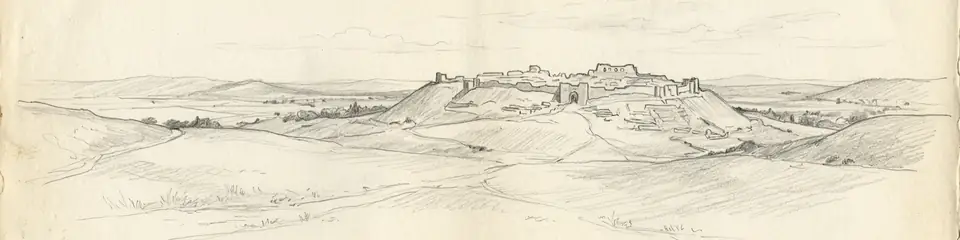
Graphite pencil sketch banner of Tel Megiddo

“Megiddo’s stratigraphy is a laboratory for correlating biblical narratives with Egyptian and Assyrian texts against continuous material layers.”

Localisation

Aperçu

Tel Megiddo rises about 60 metres above the western Jezreel Valley in northern Israel, controlling the Via Maris pass that funneled traffic between Egypt and Mesopotamia. Excavations by Gottlieb Schumacher (1903–05), the Oriental Institute of Chicago (1925–39), Yigael Yadin, and the Tel Aviv–Pennsylvania consortium since the 1990s have cut more than twenty occupational strata from the Neolithic into the Persian period.

Middle and Late Bronze layers expose massive Canaanite fortifications, the well-known “Gallery 629” water system, and palace compounds tied to Egyptian overlordship — Megiddo is named in Thutmose III’s year-23 campaign records among the coalition defeated at the Battle of Megiddo (c. 1457 BCE). Iron Age rebuilds include six-chambered gates, stables long debated as Solomonic or Omride, and Assyrian destruction horizons after Tiglath-Pileser III.

The New Testament Greek Harmagedōn (“Mount Megiddo”) fixed the site in Christian apocalyptic geography. UNESCO inscribed the “Biblical Tels — Megiddo, Hazor, Beer Sheba” serial property in 2005. Pair with Jericho and Hattusha for contrasting Levantine and Anatolian bronze-age power centres.
Pourquoi c'est important

Megiddo’s stratigraphy is a laboratory for correlating biblical narratives with Egyptian and Assyrian texts against continuous material layers. Its water system, gates, and destruction deposits remain reference points for Iron Age Levantine chronology and for how geography produces strategic myth.

Preuves et interprétation

Distinguer ce qui est bien établi de ce qui reste débattu.

Faits bien établis

2
  • Egyptian annals of Thutmose III name Megiddo as the focus of the year-23 Syrian campaign.
  • Ceramic, radiocarbon, and architectural sequences from Chicago and Tel Aviv–Pennsylvania digs fix major Bronze and Iron horizons.

Interprétations débattues

1
  • Whether the famous stables and six-chambered gate date to Solomon (10th c. BCE) or the Omride dynasty remains contested.

Photos de la communauté

Partagez votre expérience

Avez-vous visité ce site ? Téléchargez vos photos pour aider les autres à le découvrir.

Récits liés

Comment citer cette page

Atlas Anatolia. (7000). Tel Megiddo. Atlas Anatolia. https://atlasanatolia.com/fr/site/megiddo

Contenu sous licence CC BY-SA 4.0 — attribution requise en cas de réutilisation.

Graphique

Connexions avec des sites et récits associés.

Sources

  • The Battles of Armageddon: Megiddo and the Jezreel Valley from the Bronze Age to the Nuclear Age — Cline, Eric H. (2000)
  • The Bible Unearthed — Finkelstein, Israel; Silberman, Neil Asher (2001)
  • UNESCO — Biblical TelsLien

Questions fréquentes

Où se trouve Tel Megiddo ?

Tel Megiddo est situé à/en Israel.

De quand date Tel Megiddo ?

Tel Megiddo remonte approximativement à 7000 av. J.-C. – 400 av. J.-C..

Quelles civilisations sont associées à Tel Megiddo ?

Tel Megiddo est associé à la civilisation Ancient Egyptian, Canaanite, Israelite.

Pourquoi Tel Megiddo est-il important ?

Megiddo’s stratigraphy is a laboratory for correlating biblical narratives with Egyptian and Assyrian texts against continuous material layers.

Tel Megiddo est-il inscrit au patrimoine mondial de l'UNESCO ?

Oui — Tel Megiddo est inscrit sur la liste du patrimoine mondial de l'UNESCO.