
Aller au contenu
Atlas Anatolia
ActualitésIce Age teeth in Sulawesi push betel-nut use back as far as 25,000 yearsRoman mosaic and Eros head uncovered in the basilica at Pompeiopolis, Kastamonu
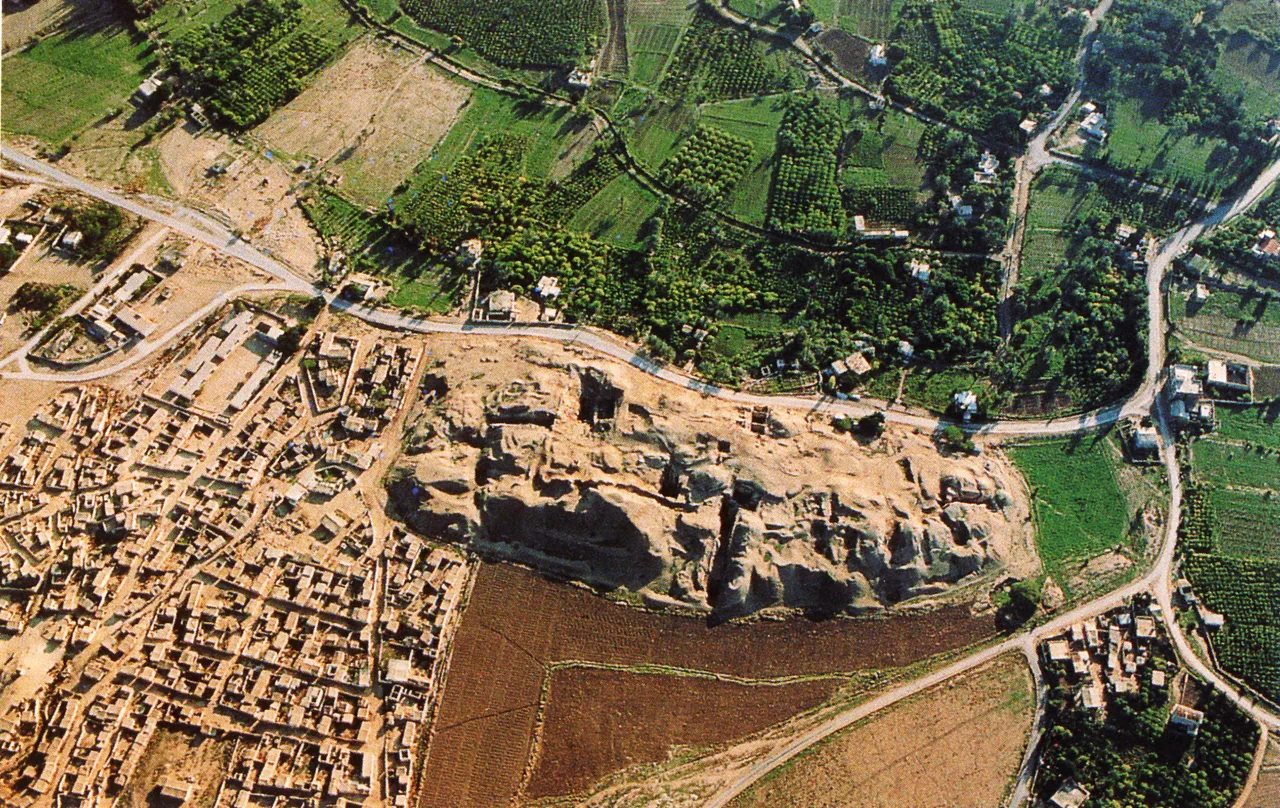
The Stone Tower of Jericho (Tell es-Sultan), c. 8500 BCE — among the world's earliest stone monuments

Wikimedia Commons

Country Record

Oldest Settlement in Palestine

Établissement

Jericho

Seyfi Cem Baskin

أريحا9600 av. J.-C. – 700 apr. J.-C.

The world's oldest continuously inhabited city — a Neolithic settlement in the Jordan Valley where humans first built permanent stone structures and cultivated crops around 9600 BCE. The Tower of Jericho, erected by an early Neolithic community around 8500 BCE, is one of the earliest stone monuments on Earth, predating Stonehenge by more than 5,000 years and the Egyptian pyramids by more than 6,000.

31
Intérêt 80

Localisation

Jericho · Jordan Valley · Palestine

31.87°N · 35.44°E · Asie

First settlement

c. 10,000 BCE (Natufian camp); permanent settlement c. 9600 BCE

Tower of Jericho

c. 8500 BCE — one of the world's oldest stone monuments, 8.2 m tall

Altitude

258 m below sea level — the lowest city on Earth

Excavator

Kathleen Kenyon (1952–1958) established the site's extraordinary chronology

Bible

Conquest by Joshua described in the Book of Joshua; archaeological evidence is contested

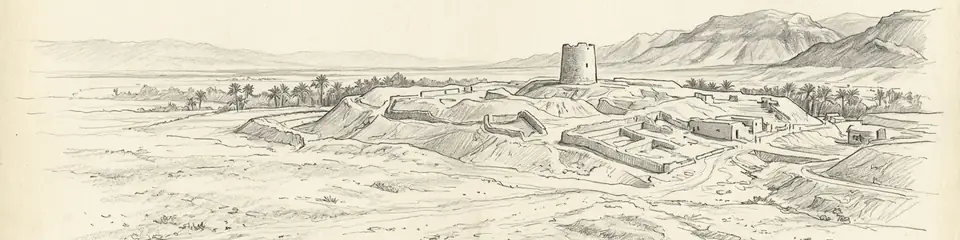
Graphite pencil sketch banner of Jericho

“Jericho is the clearest evidence we have that the Neolithic transition — from mobile forager to settled farmer — happened not gradually over millennia but with remarkable speed in the Levant.”

Localisation

Aperçu

Jericho (Tell es-Sultan) stands at the edge of the Jordan Valley, about 258 metres below sea level — the lowest city on Earth — in a desert landscape fed by the perennial Ein es-Sultan spring. The tell (occupation mound) records more than 10,000 years of nearly continuous human habitation, making it one of the most chronologically deep archaeological sites in the world.

The earliest substantial remains date to the Natufian period (c. 10,000 BCE), when hunter-gatherers established a seasonal camp around the spring. By approximately 9600 BCE, at the dawn of the Pre-Pottery Neolithic A (PPNA) period, communities here transitioned to year-round settlement and early cultivation of emmer wheat and einkorn. They built a remarkable circular stone tower about 8.5 metres in diameter and 8.2 metres tall, with an interior staircase of 22 stone steps — the Tower of Jericho, arguably the world's first monumental stone construction. Radiocarbon dates place its construction around 8500–8000 BCE.

British archaeologist Kathleen Kenyon's systematic excavations from 1952 to 1958 revealed the stratigraphic sequence that established Jericho's extraordinary antiquity and rewrote the chronology of early civilisation. She identified Pre-Pottery Neolithic settlements, later Bronze Age occupation, and evidence that Jericho was a walled city long before writing was invented.

The city features extensively in the Hebrew Bible: the Book of Joshua describes the conquest of Jericho, whose walls fell miraculously at the blast of trumpets. Archaeologically, the timing of this event remains controversial — most scholars find no destruction layer matching the biblical account at the expected date (c. 1400 BCE), and some question whether the city was inhabited at all during that period.

Jericho continued to be occupied through the Hellenistic, Roman, and Byzantine periods. Herod the Great built a winter palace nearby. The city today is administered by the Palestinian Authority and Tel es-Sultan is a Palestinian Heritage Site. The site was nominated for UNESCO World Heritage status in 2012.

Pourquoi c'est important

Jericho is the clearest evidence we have that the Neolithic transition — from mobile forager to settled farmer — happened not gradually over millennia but with remarkable speed in the Levant. Within a few generations, communities at Jericho went from seasonal camp to permanent settlement with stone architecture, grain storage, and communal public works. The Tower of Jericho asks a profound question: why did communities with no tradition of stone architecture, no state organisation, and no metal tools invest enormous collective labour in building an 8-metre stone tower? The tower predates agriculture's full establishment — suggesting that ritual or social imperatives for monumental construction may have preceded, and even driven, the adoption of farming rather than the other way around. Jericho also shows that the Neolithic Revolution was not a single event but a layered process played out over millennia at specific places with reliable water and ecological abundance. The Ein es-Sultan spring made this desert location habitable; without it, no settlement would have taken root.

Preuves et interprétation

Distinguer ce qui est bien établi de ce qui reste débattu.

Faits bien établis

3
  • Radiocarbon dates from the Tower of Jericho context place its construction between c. 8500–8000 BCE, making it one of the earliest stone monuments in human history.
  • Emmer wheat and einkorn grain from Jericho Neolithic layers show early cultivation — among the earliest evidence of managed cereal cultivation in the Levant.
  • Kathleen Kenyon's systematic stratigraphic excavation (1952–1958) identified over 20 distinct occupation phases spanning c. 10,000 BCE to the Islamic period, confirming near-continuous habitation.

Interprétations débattues

1
  • A Late Bronze Age destruction layer matching the biblical account of Joshua's conquest (c. 1400 BCE) has not been identified at the site; Kenyon found evidence of Middle Bronze Age destruction but the city appears largely unoccupied in the relevant Late Bronze Age period.

Découverte et fouilles

1907–1909

Ernst Sellin and Carl Watzinger

First systematic excavation, identified city walls and Bronze Age layers.

1952–1958

Kathleen Kenyon excavations

Pioneering use of stratigraphic excavation method; identified the Tower of Jericho and established the Pre-Pottery Neolithic sequence.

1997

Italian-Palestinian Mission

Ongoing excavations at Tell es-Sultan producing refined radiocarbon chronology for the Neolithic occupation.

Photos de la communauté

Partagez votre expérience

Avez-vous visité ce site ? Téléchargez vos photos pour aider les autres à le découvrir.

Comment citer cette page

Atlas Anatolia. (9600). Jericho. Atlas Anatolia. https://atlasanatolia.com/fr/site/jericho

Contenu sous licence CC BY-SA 4.0 — attribution requise en cas de réutilisation.

Sources

  • Digging Up Jericho — Kenyon, Kathleen M. (1957)
  • The Natufian Culture in the Levant, Threshold to the Origins of Agriculture — Bar-Yosef, Ofer (1998)
  • Midsummer Sunset at Neolithic Jericho — Barkai, R. & Liran, R. (2008)

Questions fréquentes

Où se trouve Jericho ?

Jericho est situé à/en Jericho, Jordan Valley, Palestine.

De quand date Jericho ?

Jericho remonte approximativement à 9600 av. J.-C. – 700 apr. J.-C..

Quelles civilisations sont associées à Jericho ?

Jericho est associé à la civilisation Canaanite, Pre-Pottery Neolithic.

Pourquoi Jericho est-il important ?

Jericho is the clearest evidence we have that the Neolithic transition — from mobile forager to settled farmer — happened not gradually over millennia but with remarkable speed in the Levant.

Jericho est-il inscrit au patrimoine mondial de l'UNESCO ?

Jericho n'est pas actuellement inscrit sur la liste du patrimoine mondial de l'UNESCO.