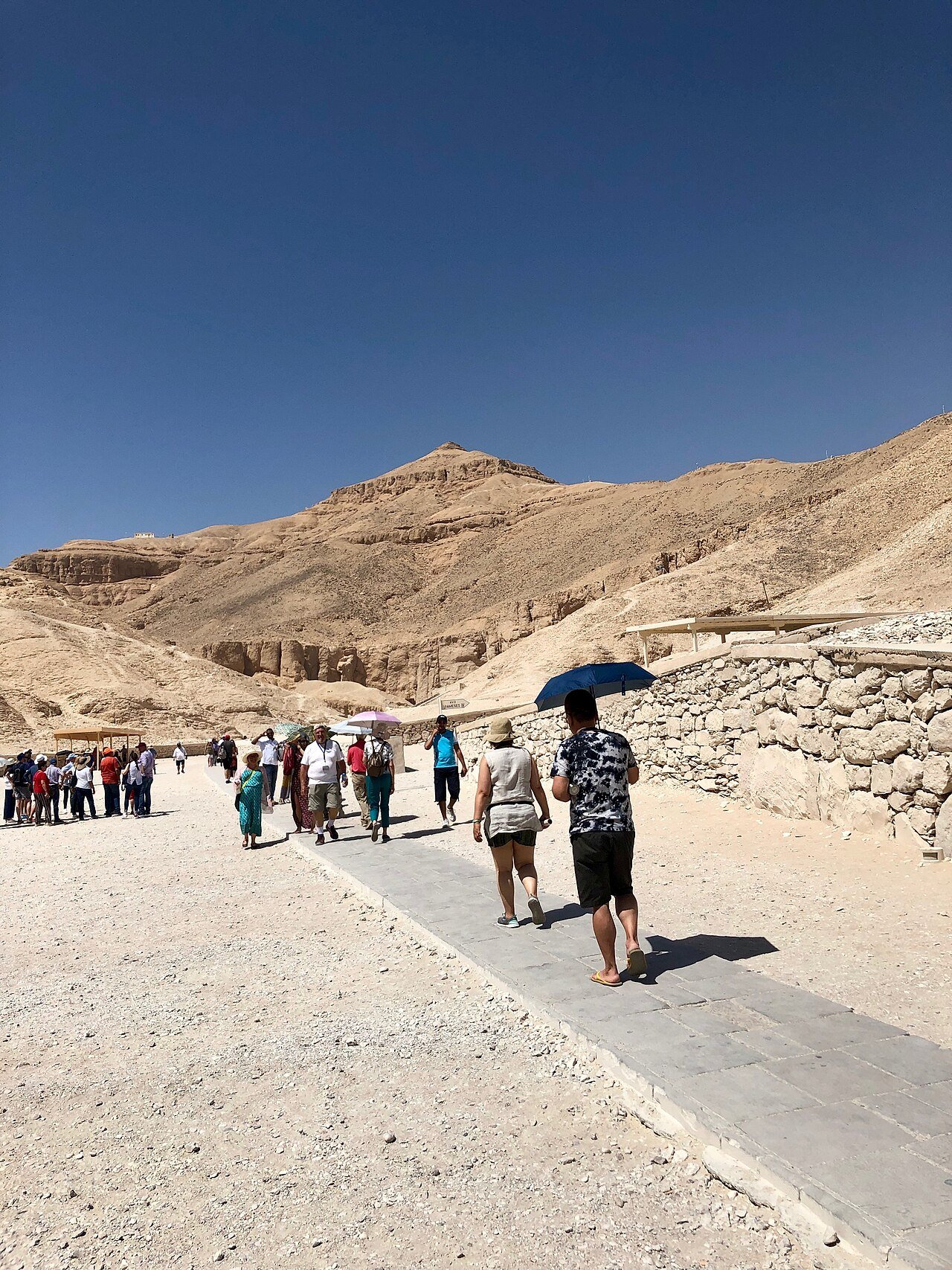
From above, the Valley of the Kings looks almost empty: pale cliffs, a dry wadi floor, a few ticket booths and paths. Underground it is one of the densest royal archives on Earth. New Kingdom pharaohs cut corridors into the Theban limestone, painted the journey of the sun through the night, and sealed bodies and equipment against a world that still tried to rob them.
This guide is visual on purpose. It is how to read the valley as a place of plans, chambers, and wall programs, not as a list of KV numbers. For the August 2027 eclipse over Luxor, start with The Valley of the Kings Will Go Dark. Come back here when you want the tombs themselves.
Egypt
Valley of the Kings
The Valley of the Kings, ancient Egypt's primary royal necropolis during the New Kingdom (c. 1539–1075 BCE), c
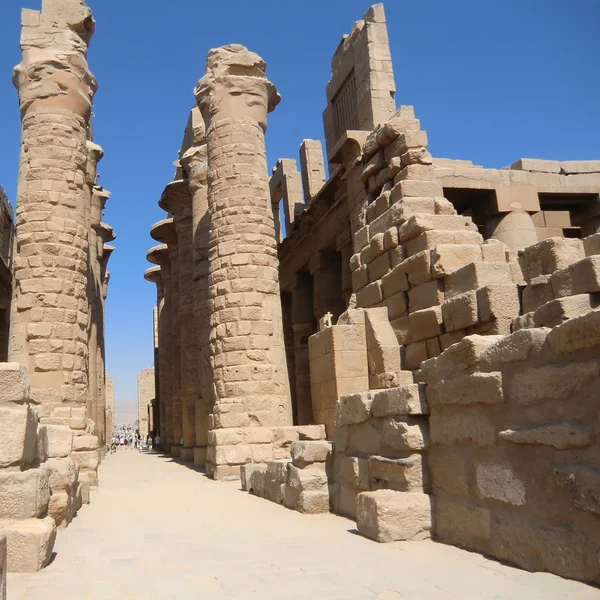
Egypt
Karnak
The Karnak Temple Complex, the largest religious site ever built, developed over two thousand years as the pre
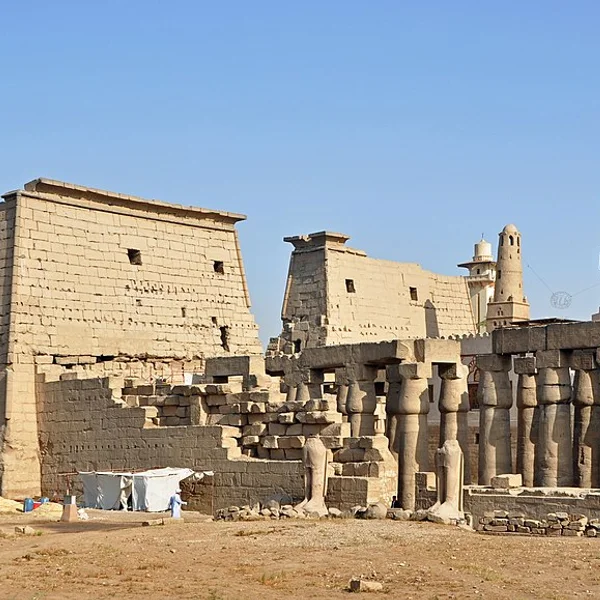
Egypt
Luxor Temple
The southern sanctuary of ancient Thebes — a colonnaded temple built by Amenhotep III and extended by Ramesses
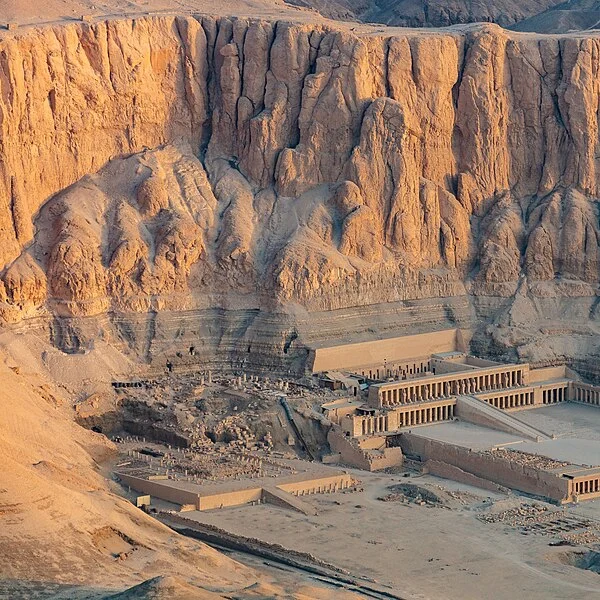
Egypt
Deir el-Bahari
Queen Hatshepsut's terraced mortuary temple rising in limestone tiers against the Theban cliffs at Deir el-Bah
How to see the valley before you enter a tomb
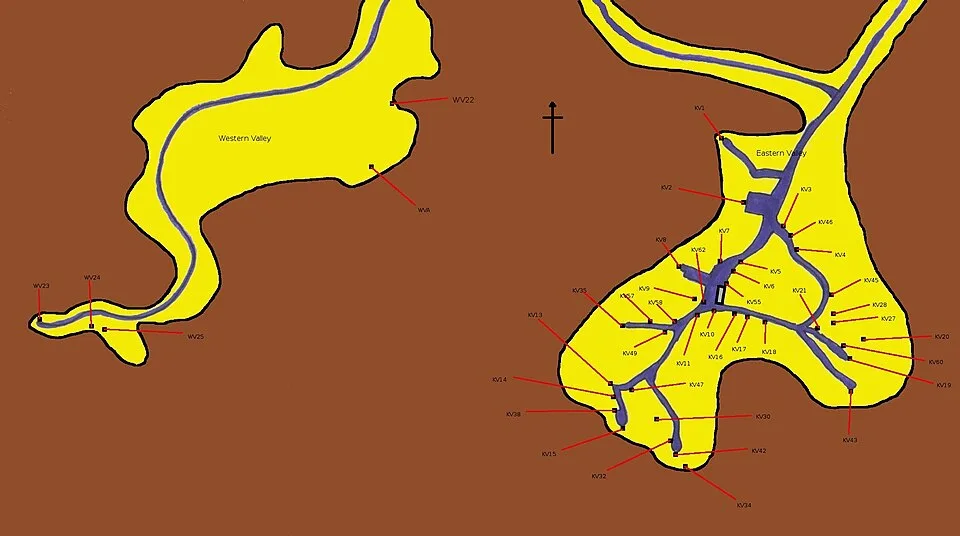
Stand on the main path and orient yourself. The East Valley holds most of the famous royal tombs. A narrower West Valley (sometimes called the Valley of the Monkeys) holds fewer, including the tomb of Ay. Cliffs rise hard on both sides. Flash floods once tore through these wadis; modern drainage and gravel paths are not decoration. They are damage control for painted plaster.
!Plan of the Valley of the Kings showing tomb locations
Plan of the Valley of the Kings showing tomb locations | Wikimedia Commons (Public domain)
Egypt's monuments portal and the Theban Mapping Project treat each KV entry as architecture: axis, depth, chamber count, decoration state. Use that habit. Before you care who was buried here, ask: how long is the descent? Where does the burial chamber sit relative to the entrance? Is the ceiling a star field, a goddess of the sky, or a solar barque cycle?
Valley of the Kings on Atlas is the dossier for dating, UNESCO context inside Ancient Thebes with its Necropolis, and evidence ratings. This page is the companion field guide.
Three tombs that teach the eye
You will not see every open tomb on one ticket. Three monuments still explain most of what visitors come to understand.
Tutankhamun (KV62): small plan, outsized fame
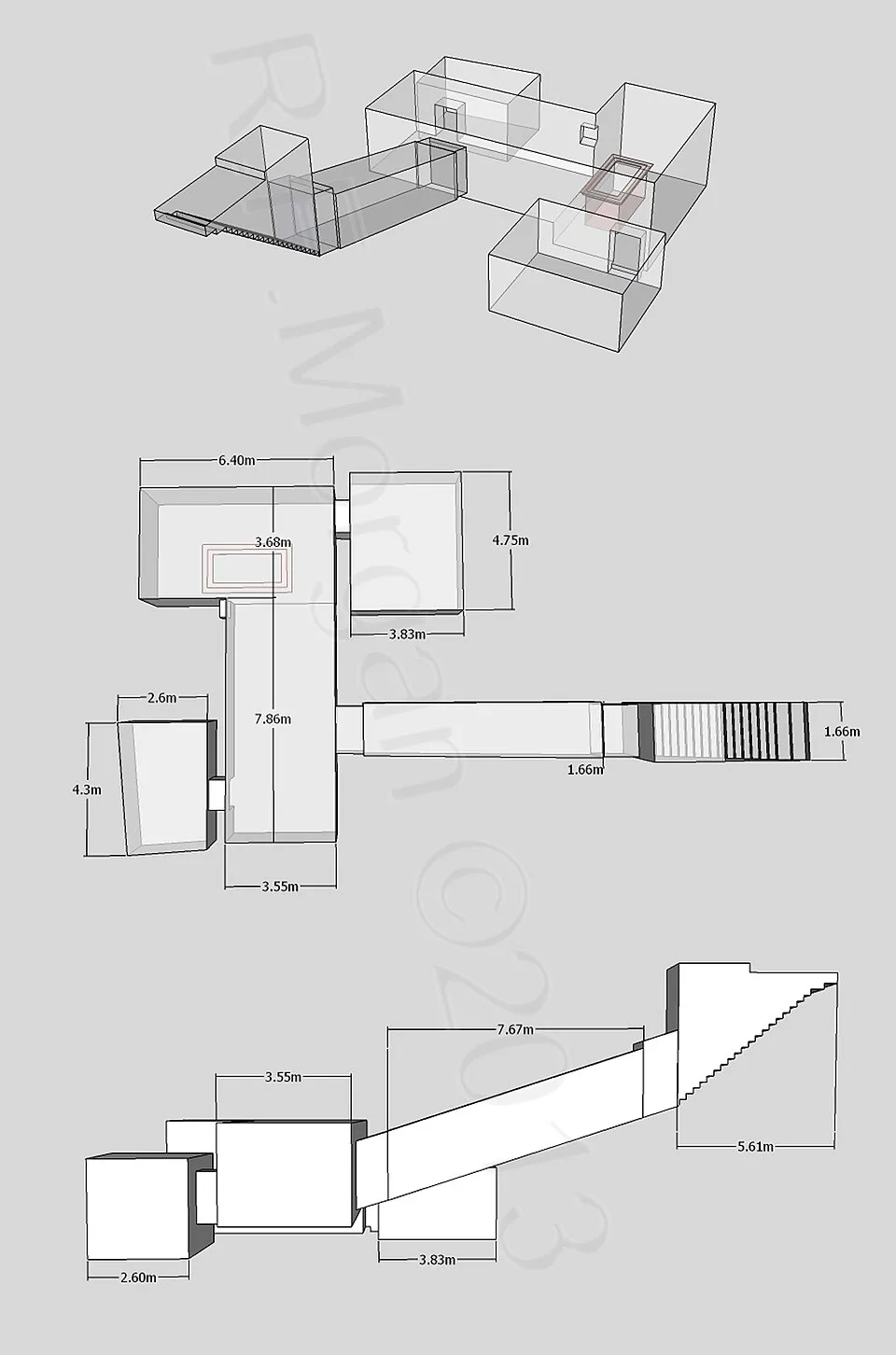
KV62 is short. That is the first visual lesson. Later Ramesside tombs plunge deep; Tutankhamun's burial is a compressed suite whose celebrity comes from what Carter found inside in 1922, not from corridor length. The isometric plan below makes the compactness obvious: entrance, descending passage, antechamber logic, burial chamber with the nested shrines.
!Isometric plan and elevation of KV62, tomb of Tutankhamun
Isometric plan and elevation of KV62, tomb of Tutankhamun | R.F. Morgan via Wikimedia Commons (CC BY-SA 3.0)
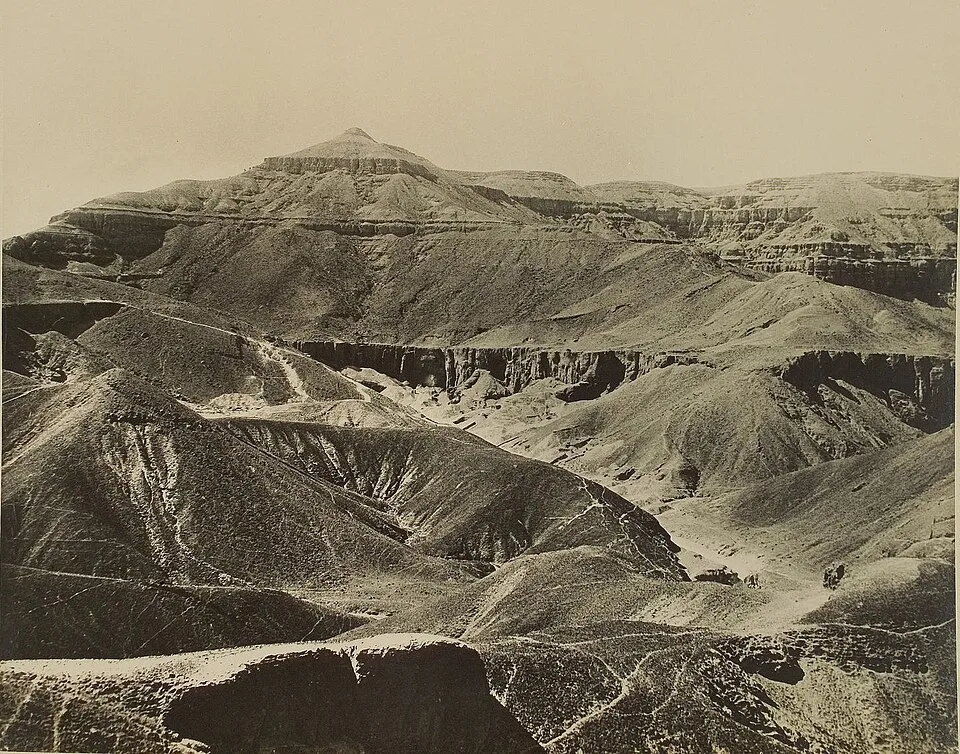
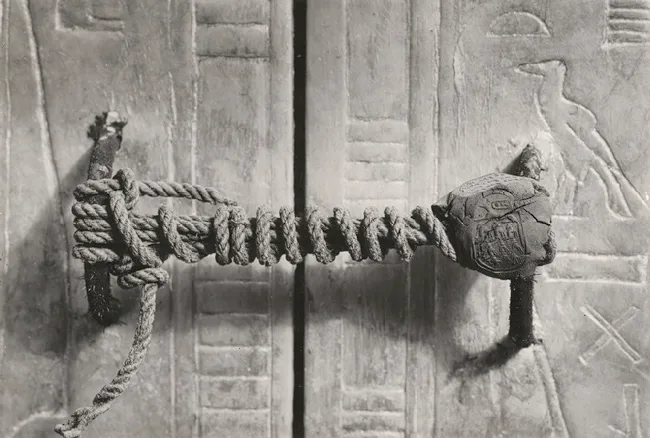
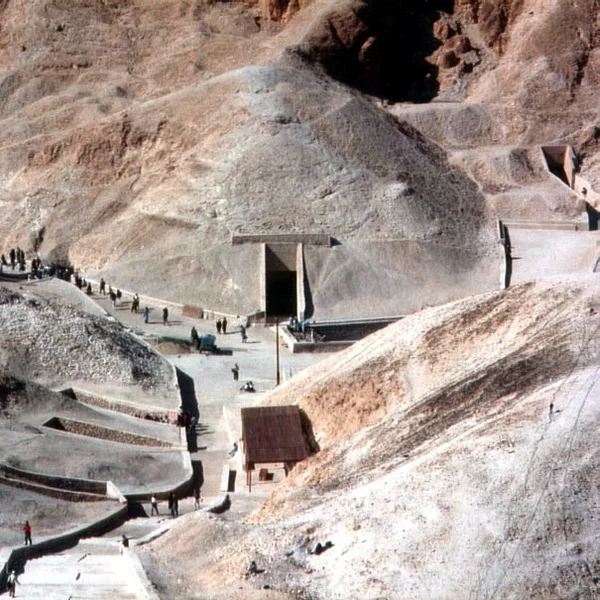
Harry Burton's excavation photographs still do more educational work than most modern tourist snaps. One frame shows the valley floor in 1922 with the tomb near the central path. Another preserves the unbroken seal on the third shrine: rope, clay, and the moment before modern hands opened the king's last privacy.
!Valley of the Kings in 1922 during the Tutankhamun excavation
Valley of the Kings in 1922 during the Tutankhamun excavation | Harry Burton via Wikimedia Commons (Public domain)
!Unbroken seal on the third shrine in Tutankhamun tomb, 1922
Unbroken seal on the third shrine in Tutankhamun tomb, 1922 | Harry Burton via Wikimedia Commons (Public domain)
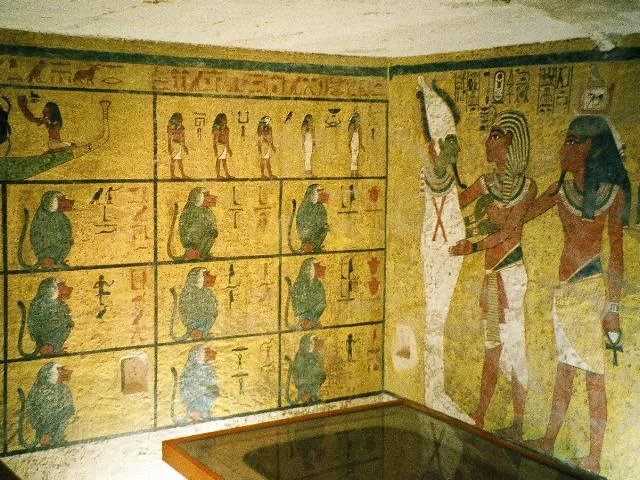
Inside the burial chamber, painted walls show the young king before the gods. The palette is strong: gold-yellow grounds, deep blues, ritual gestures frozen at human scale. Compare that intimacy with the endless corridors of Seti I and you understand why KV62 feels like a room and KV17 feels like a mine of theology.
!Painted burial-chamber walls in KV62, Tutankhamun
Painted burial-chamber walls in KV62, Tutankhamun | Hajor via Wikimedia Commons (CC BY-SA 3.0)
Seti I (KV17): depth as a statement
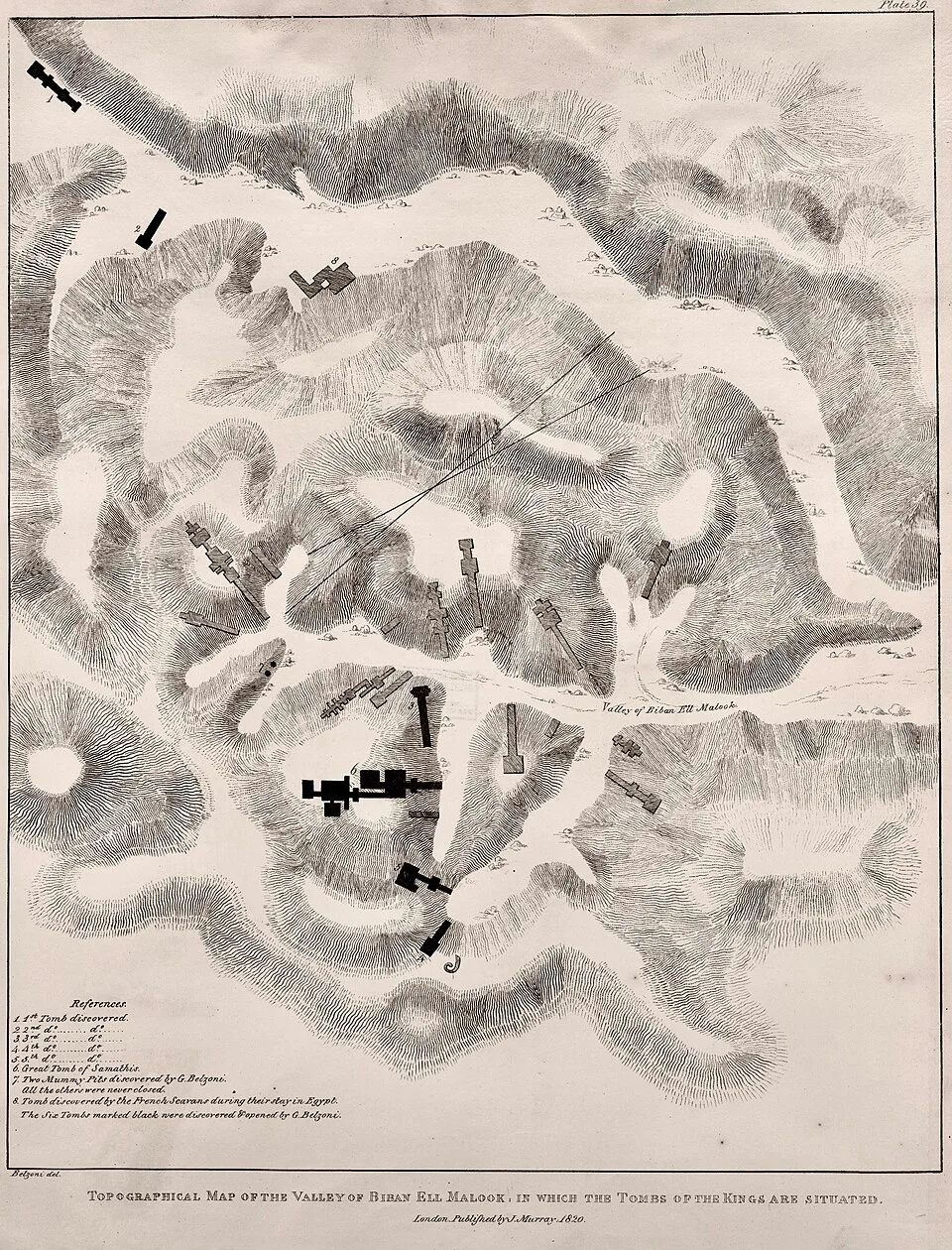
KV17 is the opposite visual argument. Belzoni entered it in 1817 and found a tomb that keeps going: long axis, steep descents, chamber after chamber of high-quality relief and paint. Nineteenth-century views of the valley still carry Belzoni's shadow. The landscape print below is not a modern drone shot; it is how Europe first learned to picture this wadi as a destination.
!Nineteenth-century view of the Valley of the Kings after Belzoni
Nineteenth-century view of the Valley of the Kings after Belzoni | Wikimedia Commons (Public domain)
When KV17 is open, move slowly. The eye needs time for the Book of Gates and related solar texts, for the precision of carving, for the sheer length of the royal road underground. Depth here is ideology made into metres of rock.
Ramesses VI (KV9): ceilings you can actually read
KV9 rewards looking up. The vaulted astronomical and funerary compositions are among the clearest introductions to how New Kingdom kings used the tomb as a cosmic machine. Even visitors who skip hieroglyph primers can follow boats, hours of the night, and the rebirth of the sun when lighting and access allow. Pair KV9 with KV62 on the same day if you can: one tomb famous for finds, one famous for sky.
What the walls are trying to do
Royal tombs in this valley are not illustrated biographies in the modern sense. They are machines for rebirth. Recurring programs include:
- Solar night journeys: the sun dies, travels through the underworld, and rises. The king joins that circuit.
- Guardians and gates: hours and portals that must be named and passed.
- Sky goddesses and star clocks: ceilings that turn the burial chamber into a model of the night sky.
- Offering and protection scenes: gods receive the king; the king receives life.
Damage is part of the visual record. Flood staining, soot, unfinished plaster, and ancient robbery cuts tell you the valley was never a sealed museum. It was a working necropolis under pressure.
New Kingdom royal burials concentrate in rock-cut tombs in the Valley of the Kings
KV62 is the only nearly intact royal burial found in the valley
KV17 is among the longest and most elaborately decorated royal tombs
Every painted scene is a literal portrait of daily court life
Open tombs today look exactly as they did at the funeral
How to visit without fighting the place
Tickets, which tombs are open, and photography rules change. Check official Egyptian antiquities guidance before you travel. Practical visual tips that travel well:
- Arrive early. Soft light on the cliffs helps you photograph the landscape legally from outside; queues inside grow fast.
- Pick a short tomb and a deep tomb. KV62 (when available) plus one long Ramesside corridor teaches contrast better than three similar plans.
- Look at ceilings deliberately. In KV9 and other decorated vaults, the theology is overhead.
- Respect no-flash rules. Pigments and tourist volume do not mix with camera flash.
- Walk to the west-bank temples afterward. Deir el-Bahari, Karnak, and Luxor Temple show the living cult landscape that faced these tombs across the Nile.
FAQ
How many tombs are in the Valley of the Kings?
More than sixty numbered tombs and pits in the wider valley system. Only a rotating subset is open to visitors.
Which tomb should a first-time visitor prioritise?
If open: Tutankhamun (KV62) for historical fame and a short plan, plus one deep decorated tomb such as Seti I (KV17) or Ramesses VI (KV9) for architecture and texts.
Can I take photos inside?
Rules change by tomb and season. Many interiors ban flash; some ban cameras entirely. Follow on-site signage.
Is the valley the same as the Valley of the Queens?
No. The Valley of the Queens lies nearby on the west bank and held royal wives and children. Different wadi, different burial community.
Where should I read next on Atlas?
Start with the Valley of the Kings site page, then the eclipse companion Valley of the Kings Will Go Dark, then the east-bank temples Karnak and Luxor Temple.
Keep exploring
- Valley of the Kings dossier
- Compare Valley of the Kings and Deir el-Bahari
- Eclipse guide: Luxor 2027 totality
- Explore map and UNESCO filter
The cliffs look bare. The plans, seals, and painted hours underneath are why people still walk this wadi with a ticket in hand.
Last updated: August 2026