
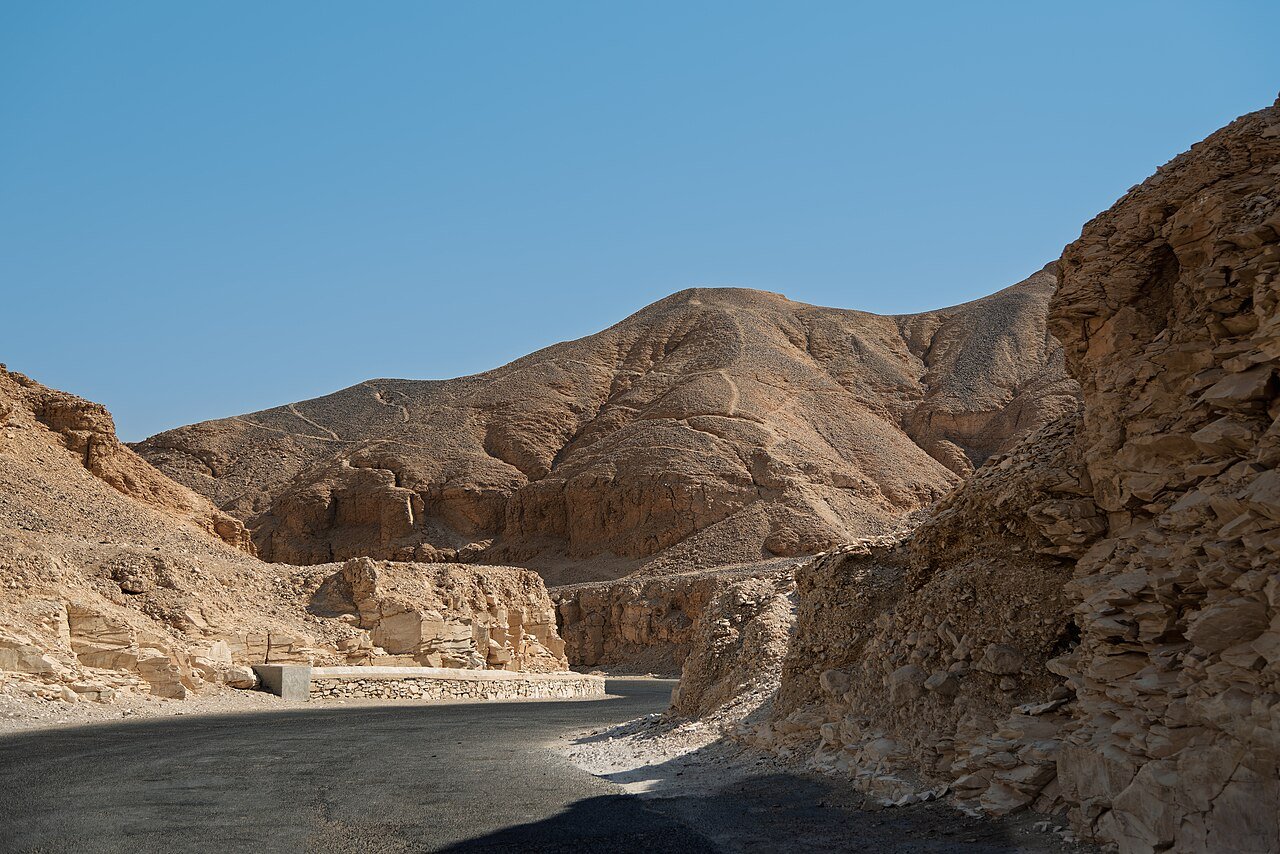
Shortly after midday on 2 August 2027, the desert around ancient Thebes will fall into shadow. For several minutes the temples, tombs, and limestone cliffs of Luxor will stand under the Sun's corona: a thin white ring above a landscape that usually burns white-hot in late summer.
That is not a travel slogan. It is a prediction from NASA's Goddard Space Flight Center. On that Monday the Moon's umbral shadow will race across North Africa and the Middle East. Near Luxor, Egypt, travellers and locals will experience one of the longest total solar eclipses of the twenty-first century: roughly six minutes of totality, with a central maximum of about 6 minutes 23 seconds on the eclipse path. The Valley of the Kings sits inside that story, not as a gimmick, but as the most famous necropolis in the path of a very dark, very public sky.
Eclipse predictions by Fred Espenak, NASA's GSFC. Check NASA's interactive path maps closer to the date for local circumstances; limb-profile refinements can shift the edges by a kilometre or two and change duration by a few seconds.
"Ancient Thebes with its Necropolis" gathers Karnak, Luxor Temple, the Valleys of the Kings and Queens, and the west-bank temples into one World Heritage landscape of outstanding universal value.
>
UNESCO World Heritage Centre, property description (paraphrase)
Why Luxor sits in the path that matters
Luxor's latitude and longitude put it near the centreline of the 2 August 2027 totality track as it crosses Egypt. Greatest eclipse for the event falls around 10:07 UT near 25.5°N, 33.2°E: east of Luxor toward the Red Sea corridor, with the Sun high overhead. Egypt Standard Time is UTC+2 year-round, so the Luxor-area mid-eclipse comes shortly after local noon: bright desert heat, then sudden twilight, then the corona, then the return of hard light.
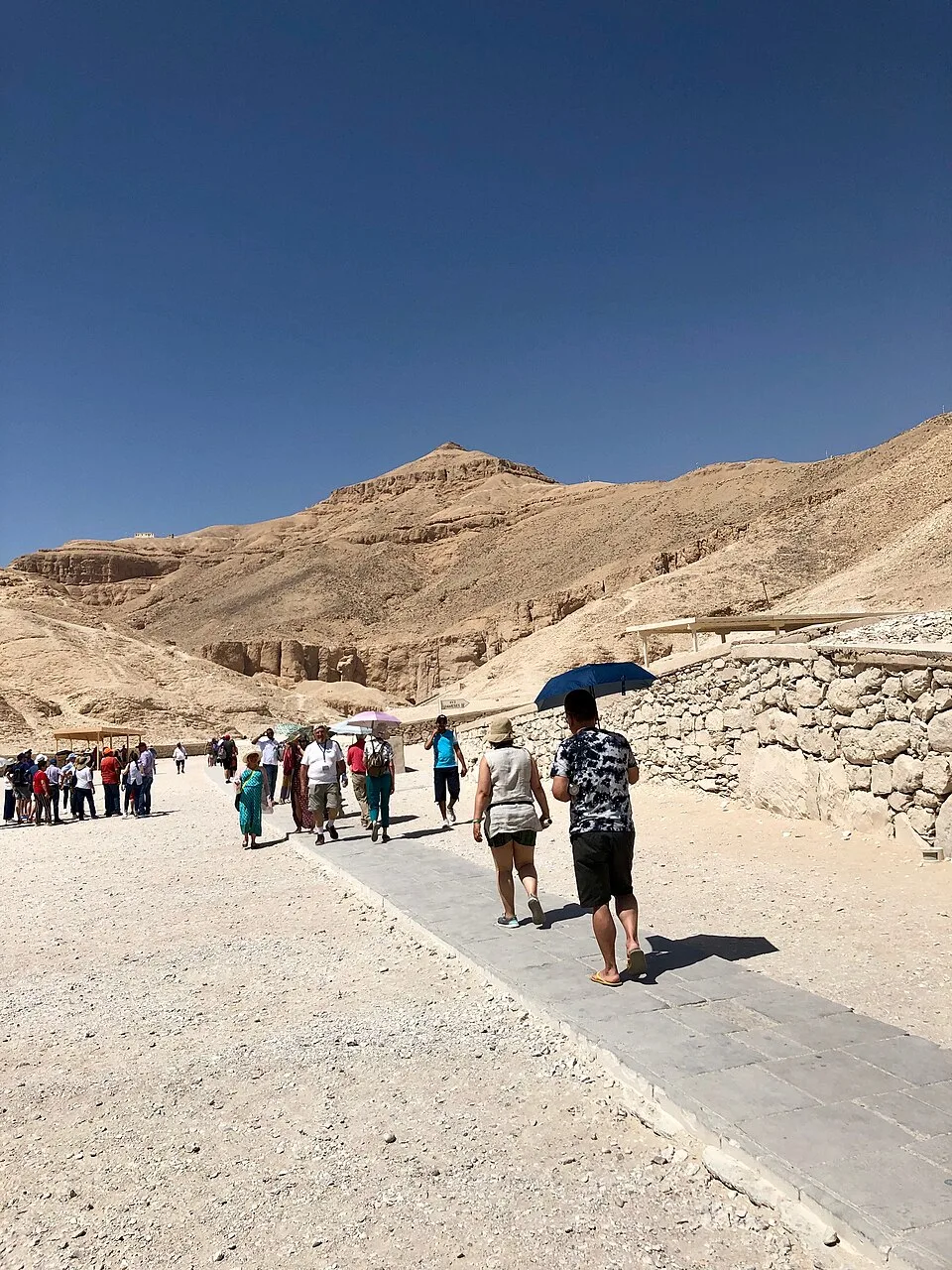
Three things make the Luxor window unusual even among eclipse destinations:
- Duration. Totality near the Egyptian centreline stretches past six minutes. Many eclipses offer two or three. That extra time is why booking noise for Upper Egypt has already started.
- Weather odds. August on the Nile is hot and usually dry. Cloud risk is not zero, but it is lower than for many temperate eclipse tracks.
- The backdrop. You are not only under a rare sky. You are between the Nile, the west-bank cliffs, UNESCO-listed temples, and the rock-cut tombs of New Kingdom royalty. The archaeology is the reason the place was famous long before anyone scheduled a flight for 2027.
Treat the valley itself as a protected archaeological landscape, not an unofficial viewing stadium. Crowd pressure will be real. Access rules for monuments can tighten as the date approaches. Plan for flexible lodging and transport, and assume you will watch from designated public areas, hotel terraces, or river-side open ground, not from inside a tomb corridor.
What the Valley of the Kings actually was
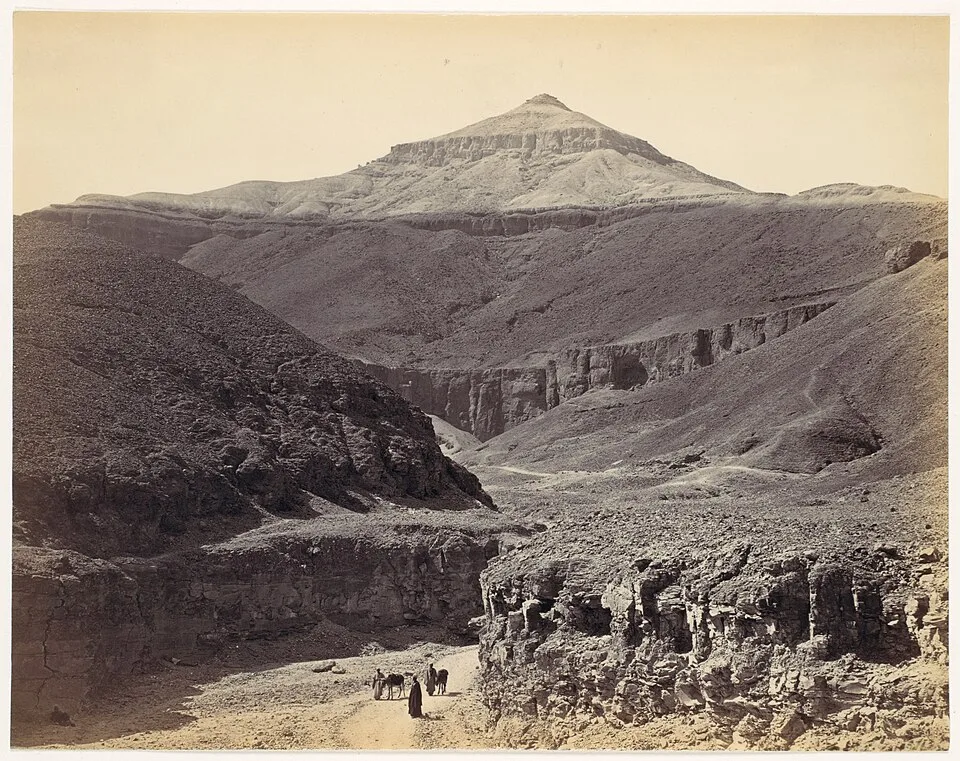
Valley of the Kings is the English name for a secluded wadi on the west bank of the Nile opposite modern Luxor. In the New Kingdom (roughly the sixteenth to eleventh centuries BCE), Egyptian rulers largely abandoned conspicuous pyramid burials for hidden, rock-cut tombs cut into the Theban hills. The idea was practical as much as theological: hide the burial, decorate the road to the afterlife on the walls, and leave the east bank for temples of the living cult.
Egypt's official monuments portal identifies Thutmose I as the earliest New Kingdom ruler confirmed to have been buried here. Later kings and a few high officials filled the valley with corridors, chambers, and painted texts until the necropolis became a dense underground city of royal hope. Tomb robbers, later priests, and modern excavators all rewrote what survived. UNESCO folds the valley into the larger property Ancient Thebes with its Necropolis, together with Karnak, Luxor Temple, the Valley of the Queens, and other west-bank monuments.
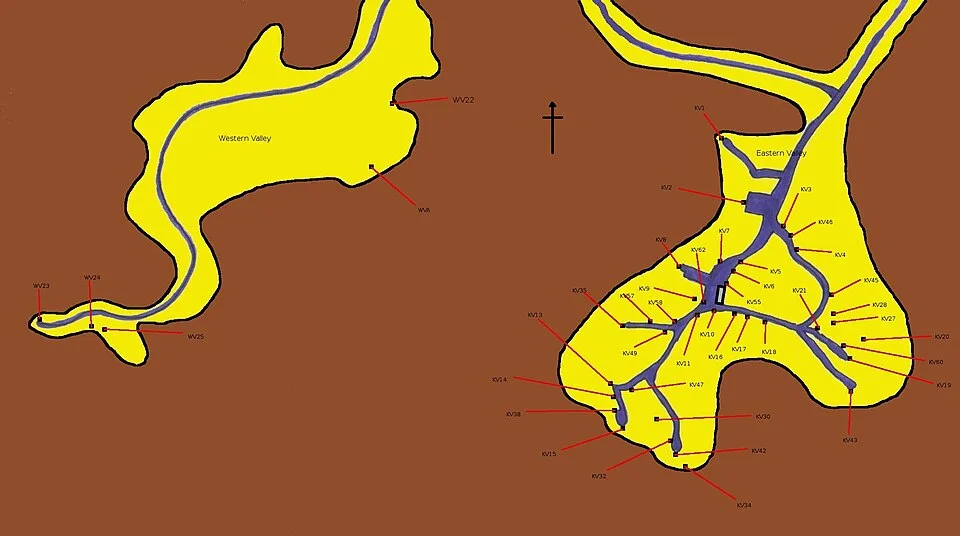
Theban Mapping Project work at the American University in Cairo remains one of the best specialist gateways for plans, photographs, and bibliography if you want more than a tour brochure.
Three tombs that still carry the valley's reputation
You do not need every KV number to understand the place. Three tombs explain why the valley stays in the public imagination.
Tutankhamun (KV62). The valley's most famous tomb, and still the only near-intact royal burial found here. Howard Carter's 1922 clearance turned a short-lived boy king into a global icon. The chambers are small compared with later royal projects; the fame is archaeological luck plus an untouched assemblage, not sheer scale.
Seti I (KV17). One of the longest, deepest, and most extensively decorated tombs in the valley. Belzoni entered it in 1817. The corridors plunge, the reliefs dense. If KV62 is the celebrity find, KV17 is the architectural argument for how ambitious New Kingdom funerary design became.
Ramesses VI (KV9). A visually generous tomb whose ceilings and texts make royal funerary books readable even to first-time visitors (when open and lit). It is a good place to grasp how New Kingdom kings used painted cosmology as a map of rebirth.
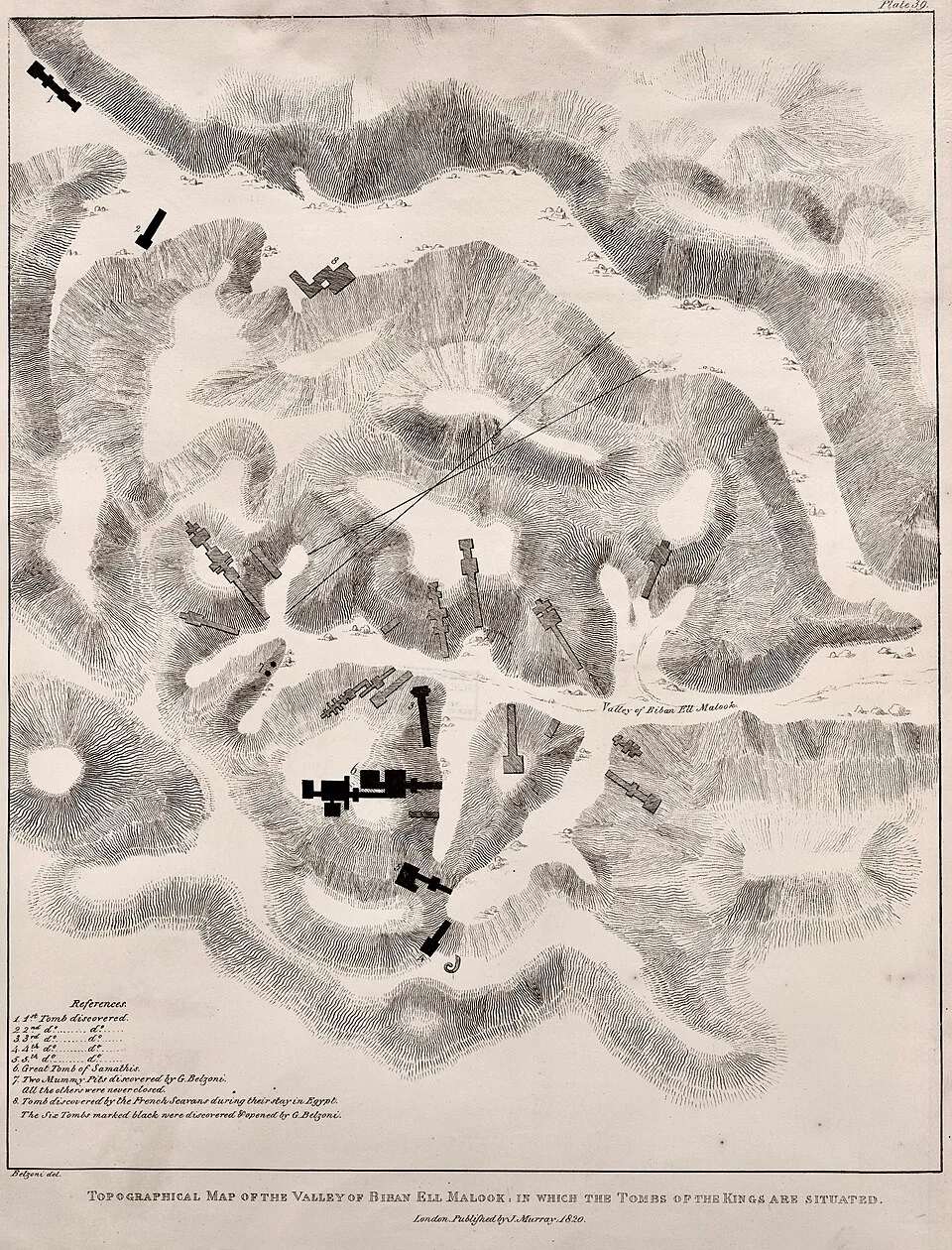
These three also leave room for later Atlas dossiers. For now, open the Valley of the Kings site page for evidence ratings, dating, and sources, then widen to the Theban temples around them.
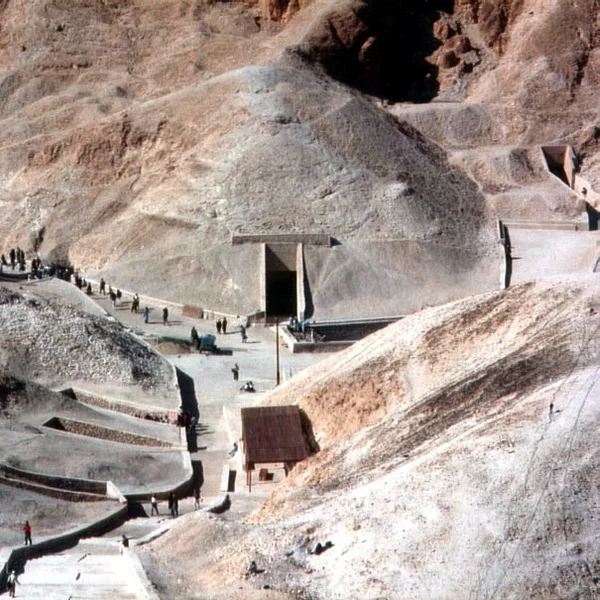
Egypt
Valley of the Kings
The Valley of the Kings, ancient Egypt's primary royal necropolis during the New Kingdom (c. 1539–1075 BCE), c
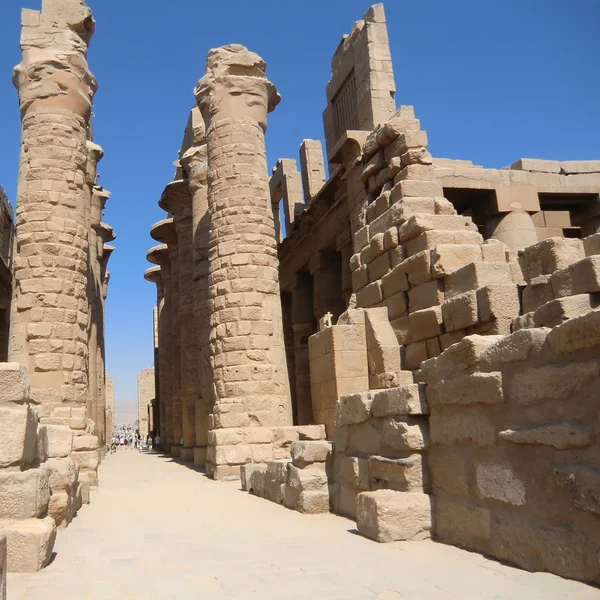
Egypt
Karnak
The Karnak Temple Complex, the largest religious site ever built, developed over two thousand years as the pre
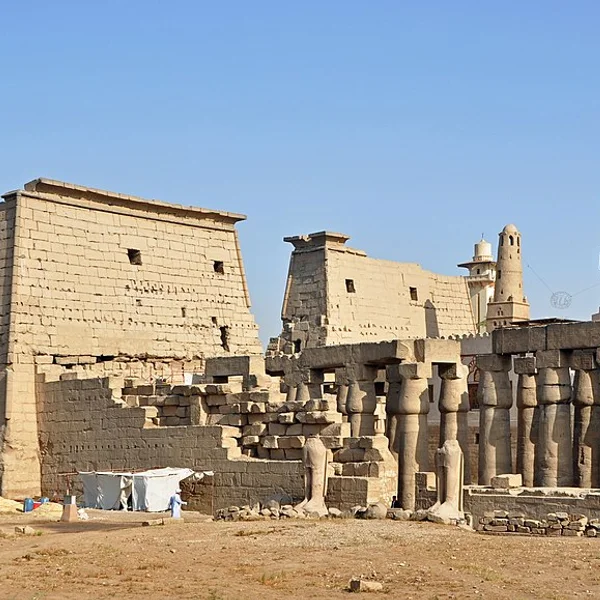
Egypt
Luxor Temple
The southern sanctuary of ancient Thebes — a colonnaded temple built by Amenhotep III and extended by Ramesses
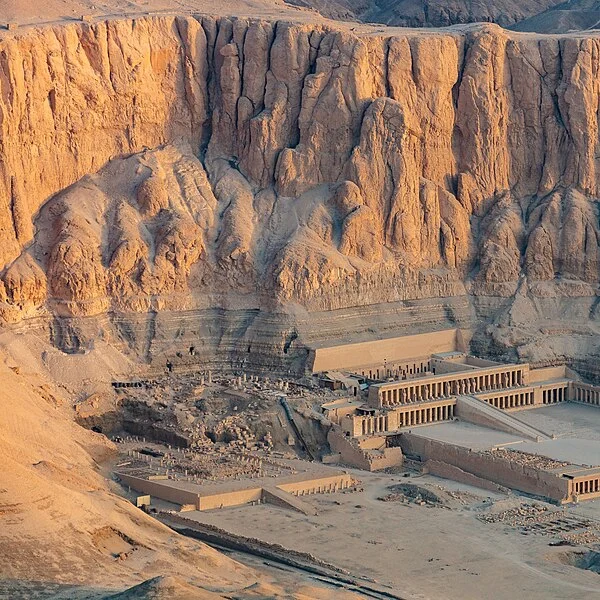
Egypt
Deir el-Bahari
Queen Hatshepsut's terraced mortuary temple rising in limestone tiers against the Theban cliffs at Deir el-Bah
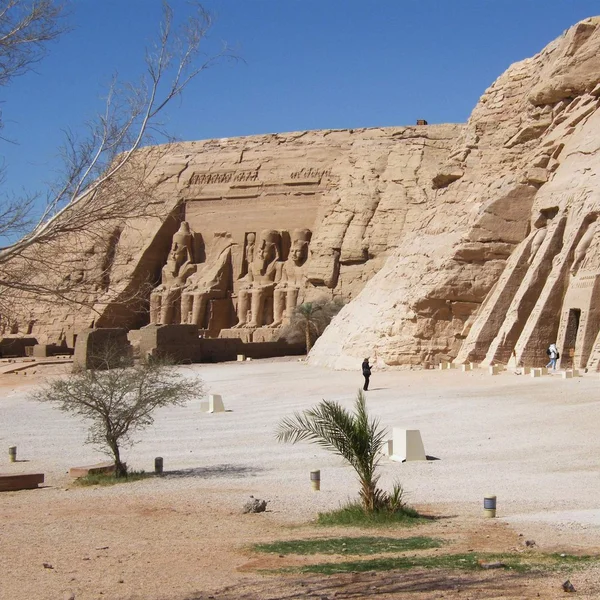
Egypt
Abu Simbel
The twin rock temples of Abu Simbel, carved by Ramesses II (c. 1264–1244 BCE) in Nubia, showcase colossal stat
The ancient city around the eclipse
People will search for the Luxor eclipse, not only the Valley of the Kings. The UNESCO property and Egypt's heritage portal both insist on the wider Theban landscape.
- Karnak on the east bank: the vast Amun-Ra temple complex, pylons, hypostyle hall, and processional routes that defined New Kingdom state religion.
- Luxor Temple closer to the modern city: the ceremonial twin of Karnak, joined historically by the Avenue of Sphinxes.
- Deir el-Bahari and the Temple of Hatshepsut: terraces cut into the cliffs, facing the Nile, a west-bank landmark for anyone photographing the Theban skyline.
- Valley of the Queens, Deir el-Medina, the Colossi of Memnon, and Medinet Habu: royal wives, workmen's village, Amenhotep III's colossi, and Ramesses III's mortuary temple. They complete the west-bank circuit even when they are not yet separate Atlas dossiers.
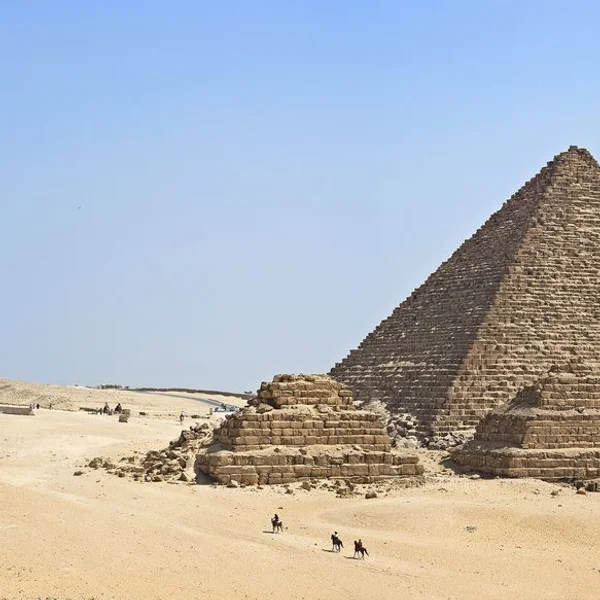
Further south, Abu Simbel is outside Luxor's immediate neighbourhood but sits in the same Egyptian eclipse conversation: Ramesside rock-cut temples on a Nile that tourists already know how to reach. To the north, the Pyramids of Giza remain Egypt's global brand; they are not the best place to chase six-minute totality, but they explain why Egypt itself trends whenever the sky and the past collide.
What might an eclipse have meant in ancient Egypt?
Handle this carefully. The Sun was central to Egyptian royal ideology: Re, the solar barque, the king's duty to uphold ma'at (order) against chaos. Myths of the Eye of Re and the sun's nightly fight with Apophis show how seriously darkness and light were narrated. That does not mean we have a tidy archive of dated eclipse omens tied to specific Theban monuments.
Direct Egyptian records of solar eclipses are limited and debated. Do not invent a legend in which a pharaoh "built the valley because of an eclipse." The honest framing is narrower: a culture that watched the Sun obsessively would have noticed a daytime darkening, and later readers should separate established solar religion from modern speculation. Use the 2027 event to ask better questions about evidence, not to retrofit a Hollywood myth onto KV62.
New Kingdom kings preferred rock-cut tombs in the Valley of the Kings over pyramid burials
Thutmose I is the earliest New Kingdom ruler confirmed buried in the valley
The 2 Aug 2027 eclipse reaches ~6m23s maximum duration on the central line
Ancient Egyptians left abundant, unambiguous dated eclipse chronicles for Thebes
The Valley of the Kings was designed specifically to observe solar eclipses
Visiting Luxor for the 2027 eclipse
Date: Monday, 2 August 2027.
Safety: Outside totality, look at the Sun only through certified eclipse glasses or a projection method. Totality itself is the brief window when the corona is visible to the unaided eye; partial phases before and after are not. Eye damage is permanent and boringly preventable.
Archaeology etiquette: Do not expect to watch from inside a tomb or from a restricted temple roof. Monument authorities set the rules. Respect barriers, no-flash policies, and crowd-control plans. The valley's value after 2027 depends on people not treating it like a festival ground.
Logistics: Book flexible accommodation and Nile transport early. Assume roads and viewing spots will fill. Have a cloud contingency (river cruise mobility helps). Follow official Egyptian tourism and antiquities guidance as it firms up in 2026-2027.
Maps: Use NASA GSFC path tables and Google-map overlays for Luxor's local circumstances. Atlas Anatolia is an archaeology atlas, not an eclipse-forecast service; we cite NASA so you can verify numbers yourself.
FAQ
When is the 2027 Luxor eclipse?
2 August 2027. Mid-eclipse near Luxor falls shortly after local noon.
Will the Valley of the Kings experience totality?
Yes: Luxor and the west-bank necropolises lie inside the path of totality for this eclipse. Confirm the exact northern and southern limits on NASA's path map before you choose a viewing spot.
How long will the eclipse last in Luxor?
Near the Egyptian centreline, totality lasts on the order of six minutes. The global central maximum is about 6 minutes 23 seconds. Local duration depends on how close you stand to the centreline.
Can visitors watch from the Valley of the Kings?
Do not assume tomb courtyards or cliffs will be open as viewing platforms. Treat access as subject to Egyptian antiquities rules and crowd management. Plan a legal, open-sky alternative.
Which ancient Egyptian sites are near the eclipse path?
In the Luxor area: Valley of the Kings, Karnak, Luxor Temple, Hatshepsut's temple at Deir el-Bahari, plus the wider west-bank circuit. Elsewhere in Egypt the path also draws attention to Upper Egyptian monuments such as Abu Simbel.
Is the 2027 eclipse the longest in history?
No. Call it one of the longest total eclipses of the twenty-first century, or cite NASA's ~6m23s central maximum. "Longest eclipse in history" is false.
What time will the eclipse happen in Egypt?
Use NASA's UT tables and convert with Egypt Standard Time (UTC+2). For Luxor, expect the deepest phase in the early afternoon local time on 2 August 2027.
Keep exploring on Atlas Anatolia
- Open the Valley of the Kings dossier for dating, evidence ratings, and sources.
- Compare the Valley of the Kings and Karnak for necropolis versus living temple.
- Walk the east-bank pair: Karnak and Luxor Temple.
- Climb the west-bank terraces at Deir el-Bahari.
- Widen the frame on the interactive ancient world map or filter UNESCO sites.
The corona over Luxor will last minutes. The Theban landscape has held attention for three thousand years. Use the eclipse as the hook; stay for the archaeology.
Last updated: August 2026. Eclipse predictions by Fred Espenak, NASA's GSFC.


