Overview
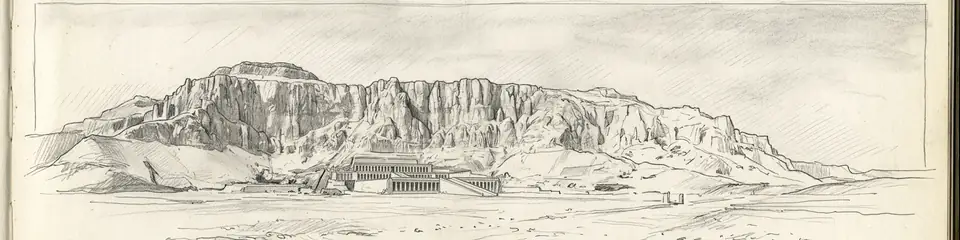
Deir el-Bahari (Arabic "Northern Monastery") names both the bay in the Theban necropolis and the mortuary temple of Hatshepsut (c. 1479–1458 BCE) built into its amphitheatre cliffs. The queen-pharaoh's architect Senenmut designed Djeser-Djeseru ("Holy of Holies") as three colonnaded terraces linked by ramps, once planted with myrrh trees from Punt. Reliefs on the middle terrace depict the expedition to Punt — among the most detailed trade missions preserved in Egyptian art.
The temple was dedicated to Amun-Re and served Hatshepsut's mortuary cult. After her death, Thutmose III and later kings attempted to erase her names; restoration in the 20th century by Polish-Egyptian missions reassembled fallen colonnades and recovered painted relief. The site sits directly across the desert ridge from the Valley of the Kings and near the Temple of Karnak on the east bank.
Christian monks later occupied ruined Pharaonic structures in the bay, giving the Arabic name. Today wooden walkways guide visitors along terraces where statues of Hatshepsut as sphinx and Osiride pillars once stood. Sunrise light on the cliff face makes the temple a standard Luxor itinerary stop.