Overview
Yinxu ("Ruins of Yin") lies on the Huan River at Anyang in northern Henan. It was the Shang capital from about the late 14th century BCE until the Zhou conquest around 1046 BCE. Academia Sinica excavations under Li Ji began in 1928 after looted oracle bones were traced to the village of Xiaotun. Tens of thousands of cattle-scapula and turtle-plastron inscriptions name kings, sacrifices, and wars that match later transmitted king lists.
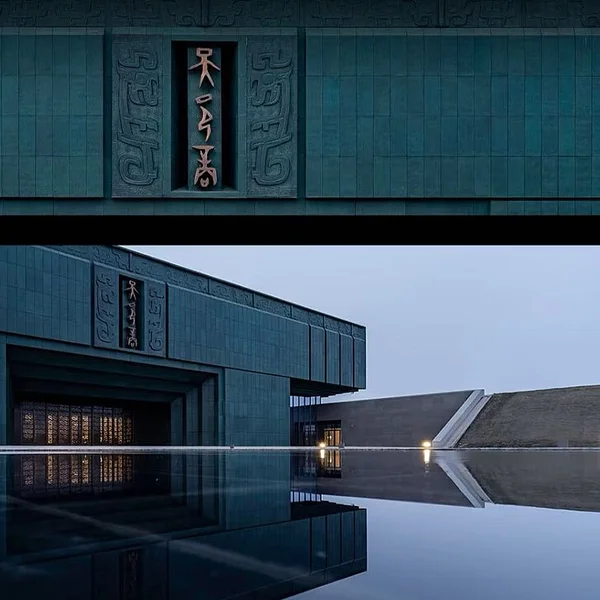
The site includes palace-temple foundations, bronze workshops, chariot burials, and the Xibeigang royal cemetery. Tomb 5, excavated in 1976, belonged to Fu Hao, a consort of King Wu Ding: intact bronzes, jades, and weapons with her name. Human and animal sacrifice is archaeologically abundant. The modern Yinxu Museum and a reconstructed palace precinct present the ruins to visitors.
This is the documentary heart of early China on the atlas, the counterpart to Harappa for a Bronze Age capital with writing. Sanxingdui is a different Bronze Age world; Yinxu is the one tied to the historical Shang court.