Overview
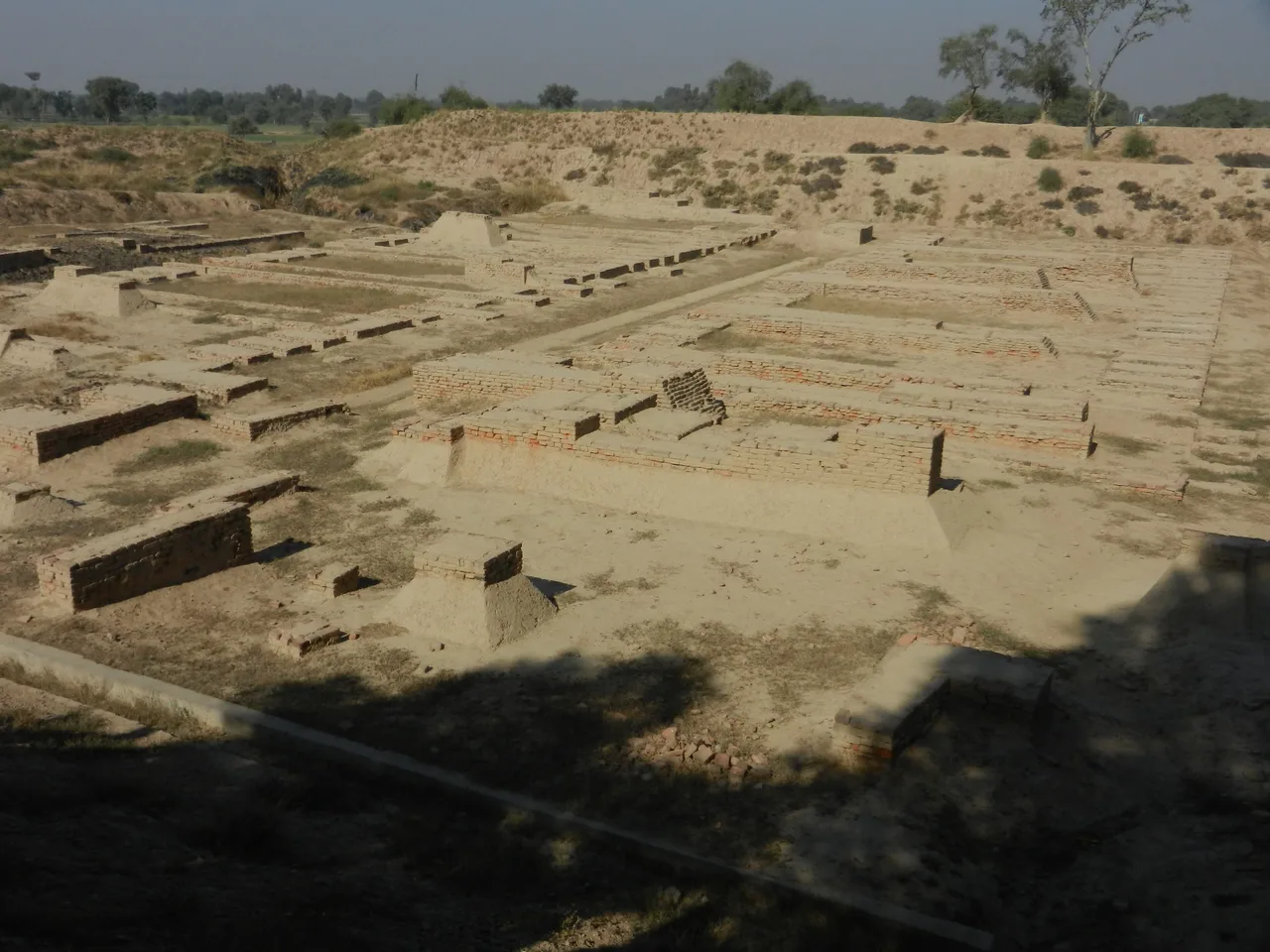
Harappa stands beside the Ravi River in the Punjab region of modern Pakistan. It was one of the two great urban centres — alongside Mohenjo-daro — of the Indus Valley Civilisation, which flourished between approximately 2600 and 1900 BCE across a territory spanning modern Pakistan and northwestern India that was, by area, the largest of all Bronze Age civilisations.
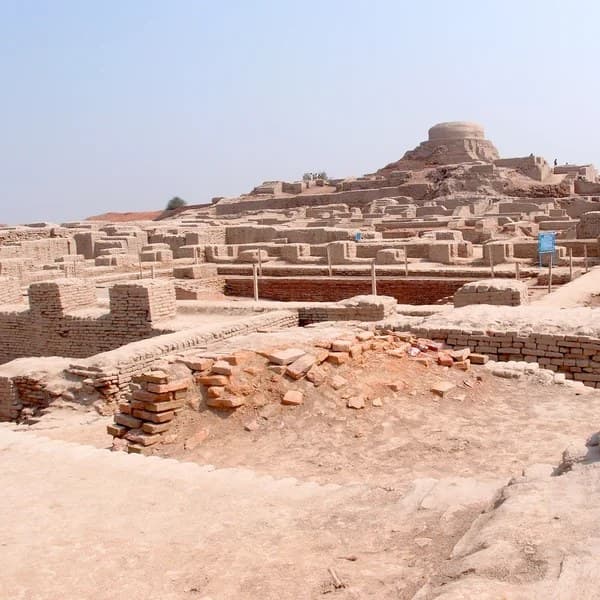
At its peak Harappa covered at least 150 hectares and housed an estimated 23,000 to 50,000 inhabitants. The city was laid out on a grid plan with streets aligned to the cardinal directions, brick-built houses with private bathrooms draining into a city-wide sewage system — the most sophisticated urban sanitation network in the ancient world, far surpassing anything in contemporary Egypt or Mesopotamia. A large citadel mound dominated the western part of the city, and massive granaries indicate organised food storage and redistribution.
The Indus script found on Harappan seals — small carved stones used to stamp goods in trade — remains one of the great unsolved puzzles in linguistics. No bilingual text has been found, and the script (comprising about 400 signs) has not been deciphered, meaning we cannot read the language of this civilisation. Despite this, the material culture is extraordinarily rich: standardised weights and measures (used from Afghanistan to Gujarat), distinctive pottery, bronze tools, terracotta figurines, and carved seals of remarkable artistry.
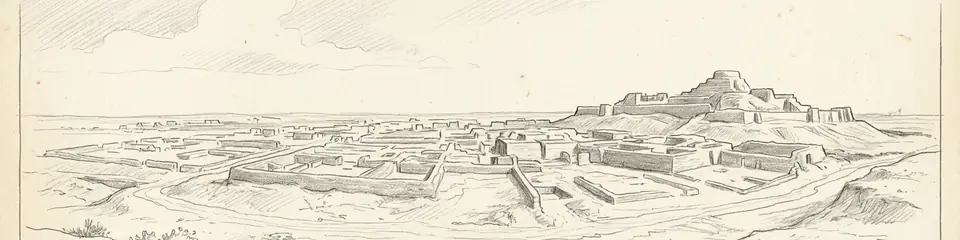
Harappa declined around 1900 BCE, possibly due to climate change (a prolonged drought), shifts in the course of the Ravi River, and the collapse of long-distance trade networks. The site was rediscovered in 1829 and extensively excavated from 1921 onward.