Skip to content
Atlas Anatolia
Dig
NewsNeolithic malachite and copper workshop exposed at Çayönü Tepesi, ErganiNature lidar survey estimates tens of thousands of earthworks in southwest Amazonia
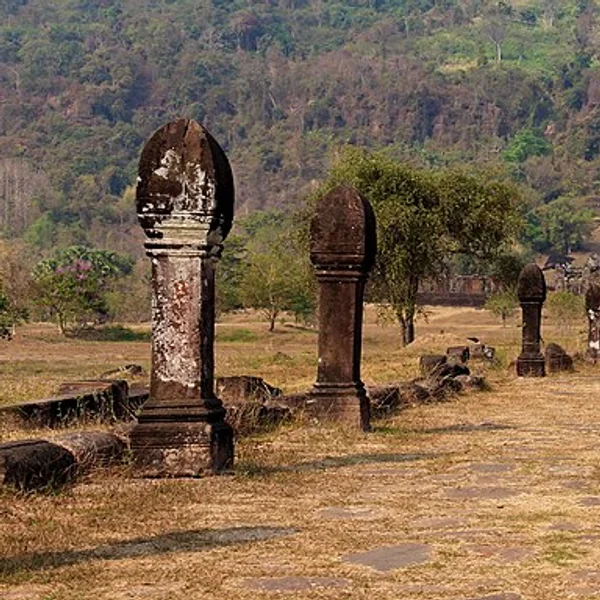
Processional gopuras of Preah Vihear temple on the Dangrek escarpment

Wikimedia Commons (CC BY-SA 4.0)

Country Record

Oldest Temple in Cambodia

TempleUNESCO

Preah Vihear

ប្រាសាទព្រះវិហារ890 CE – 1150 CE

A Khmer cliff-top temple dedicated to Shiva on the Dangrek escarpment, looking north over the Cambodian plain. Built mainly in the 9th–12th centuries and inscribed by UNESCO; long contested at the Thai–Cambodian border.

111
Interest 56

Location

Cambodia

14.39°N · 104.68°E · Asia

UNESCO

Temple of Preah Vihear (2008)

Setting

Cliff edge of the Dangrek escarpment

Main builders

Yasovarman I to Suryavarman I–II (9th–12th c.)

ICJ

Temple awarded to Cambodia, 1962

Preah Vihear shows how Khmer state temples used extreme landscape—not only barays and city grids—to stage divine kingship.”

Location

Overview

Preah Vihear occupies a knife-edge promontory of the Dangrek Mountains. A 800 m processional causeway of gopuras and pavements climbs to the sanctuary at the cliff edge—one of the most dramatic approaches in Khmer architecture. Construction spans Yasovarman I through Suryavarman I and II; style phases match Angkorian sandstone work, with pediments of Shiva myths and a commanding view that made the temple a frontier statement as much as a pilgrimage goal.

The International Court of Justice awarded the temple to Cambodia in 1962; the surrounding land dispute flared again in the 2000s around UNESCO inscription (2008). Conservation and access have therefore been political as well as technical. Archaeologically the site is clear: a linear temple-mountain adapted to a natural cliff rather than an artificial pyramid.

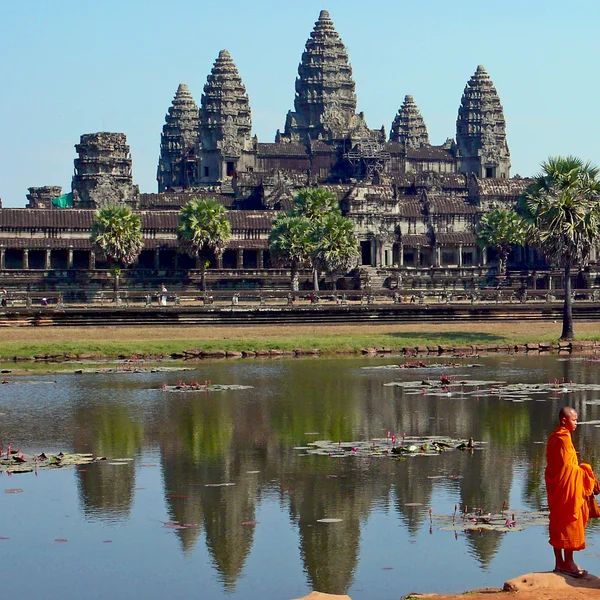
Pair with Angkor Wat and Wat Phou for Khmer sacred geography at the empire’s edges.
Why It Matters

Preah Vihear shows how Khmer state temples used extreme landscape—not only barays and city grids—to stage divine kingship. It is also a modern lesson: archaeology, UNESCO listing, and borders can collide over the same stones.

Evidence & Interpretation

Distinguishing what is well-established from what remains debated.

Well-Established Facts

1
  • Inscriptions and architectural style phases securely date the sanctuary within the Angkorian Shaiva tradition.

Scholarly Inferences

1
  • The linear causeway was designed to turn pilgrimage into a staged ascent toward the cliff sanctuary.

Debated Interpretations

1
  • Interpretation of the 1962 ICJ judgment’s implications for adjacent land (not just the temple footprint) remains geopolitically contested.

More Photos

Community Photos

Share your experience

Have you visited this site? Upload your photos to help others discover it.

How to cite this page

Atlas Anatolia. (890). Preah Vihear. Atlas Anatolia. https://atlasanatolia.com/site/preah-vihear

Content licensed CC BY-SA 4.0 — attribution required when reusing.

Sources

  • AngkorJacques, Claude (1999)
  • Temple of Preah VihearUNESCO (2008)Link

Frequently Asked Questions

Where is Preah Vihear located?

Preah Vihear is located in Cambodia.

How old is Preah Vihear?

Preah Vihear dates to approximately 890 CE – 1150 CE.

Which civilizations are associated with Preah Vihear?

Preah Vihear is associated with the Khmer.

Why is Preah Vihear important?

Preah Vihear shows how Khmer state temples used extreme landscape—not only barays and city grids—to stage divine kingship.

Is Preah Vihear a UNESCO World Heritage Site?

Yes — Preah Vihear is inscribed as a UNESCO World Heritage Site.