Overview
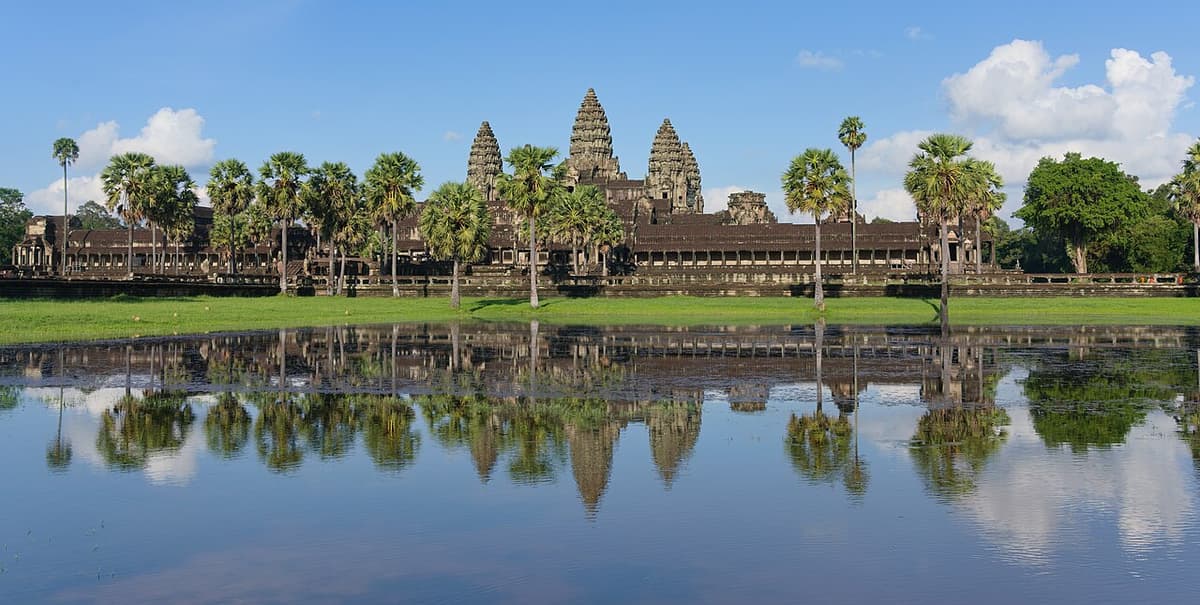
Angkor Thom ("Great City") lies immediately north of the earlier and more famous Angkor Wat within Cambodia's vast Angkor Archaeological Park, but the two monuments are architecturally, religiously, and chronologically distinct. Angkor Wat, built roughly fifty years earlier under King Suryavarman II, was conceived as a Hindu temple dedicated to Vishnu (later adapted to Buddhist use). Angkor Thom, by contrast, was built as a fortified royal capital city — the last and largest of several successive Khmer capitals at Angkor — explicitly as an expression of King Jayavarman VII's Mahayana Buddhist devotion following a turbulent period in which the Khmer capital had been sacked by the rival Cham kingdom in 1177.
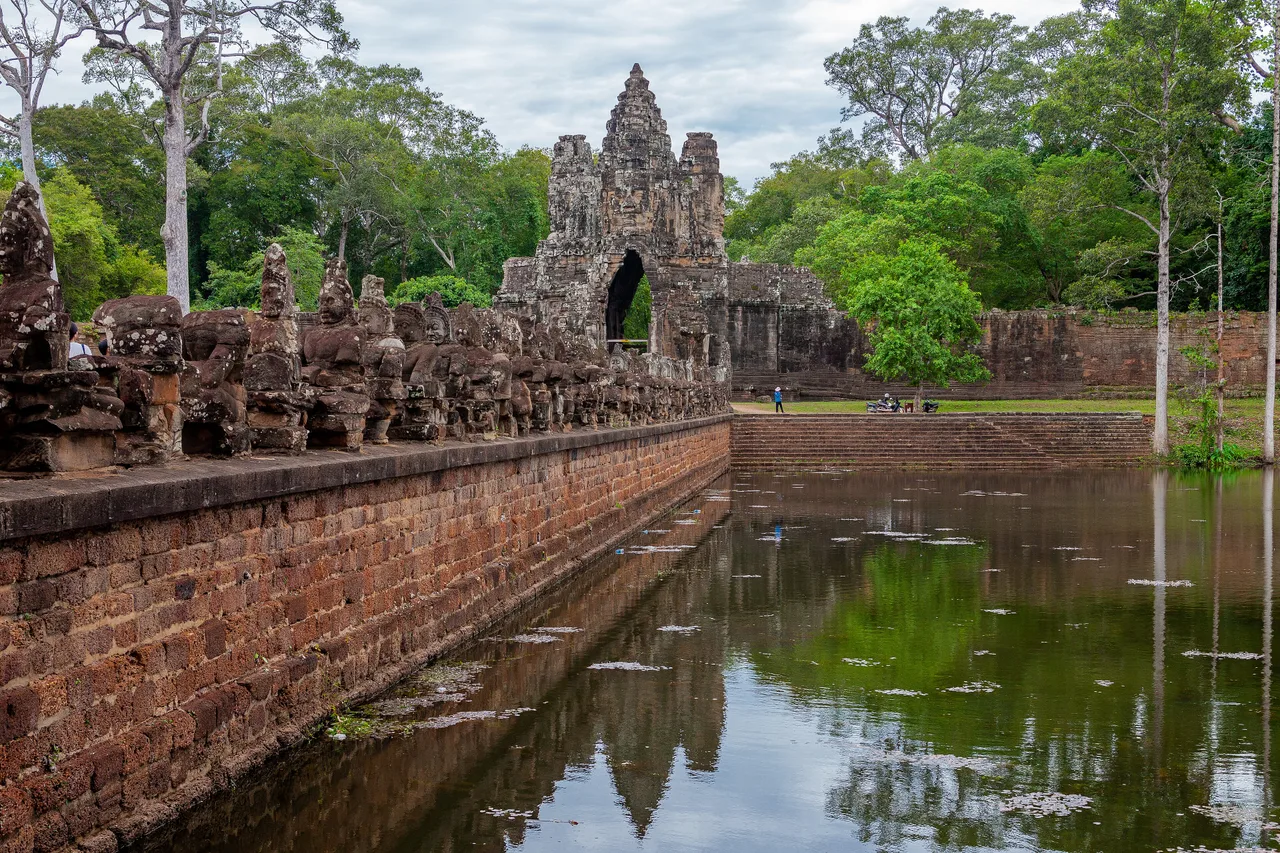
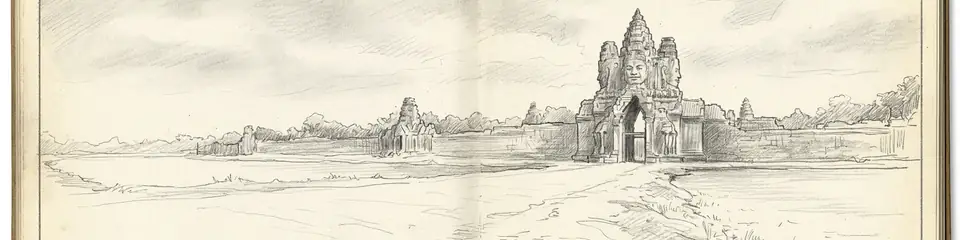
Jayavarman VII, who seized the throne around 1181 after driving out the Cham occupiers, responded with an extraordinary programme of monumental construction. Angkor Thom was laid out as a nearly perfect three-kilometre square, enclosed by laterite walls up to eight metres high and a wide moat, with five monumental gates — one for each cardinal direction plus an additional Victory Gate — each surmounted by four giant stone faces facing the cardinal points, echoing the design of the city's central temple.
That central temple, the Bayon, is Angkor Thom's defining monument. Fifty-four towers, arranged across the temple's upper terraces, are each carved with four enormous serene faces — 216 in total — widely interpreted by scholars as representing the bodhisattva of compassion, Avalokiteshvara, though many also see in their features an idealised portrait of Jayavarman VII himself, blending royal and divine identity in a manner consistent with Khmer god-king (devaraja) tradition. The temple's outer galleries are covered with extensive relief carvings depicting not only mythological and religious scenes but unusually detailed images of everyday Khmer life and historical military campaigns, including vivid depictions of naval battles against the Cham fleet — a rare and valuable visual record of 12th-century Southeast Asian daily life rather than purely religious iconography.
Surrounding the Bayon, Angkor Thom preserves an extensive royal and ceremonial precinct. The Terrace of the Elephants, a 300-metre reviewing platform decorated with carved elephant reliefs, served as a base for royal audiences and public ceremonies. The adjacent Terrace of the Leper King takes its name from a moss-covered statue once thought to depict a king afflicted with leprosy, though it more likely represents Yama, the Hindu-Buddhist god of death and judgment. Phimeanakas, an earlier 10th-century step-pyramid temple predating Jayavarman VII's reign, sits within the former royal palace compound, incorporated into the later city.
Angkor Thom remained the functioning capital of the Khmer Empire for roughly two and a half centuries after its construction, through periods of continued prosperity and gradual decline, until the broader Angkor region was largely abandoned as a political capital following repeated conflict with the Ayutthaya Kingdom, most significantly a major sacking in 1431 that is conventionally, if not entirely precisely, treated as marking the end of Angkor's role as the Khmer imperial centre. Angkor Thom is included within the Angkor Archaeological Park, inscribed as a UNESCO World Heritage Site in 1992.