
コンテンツへスキップ
Atlas Anatolia
ニュースIce Age teeth in Sulawesi push betel-nut use back as far as 25,000 yearsRoman mosaic and Eros head uncovered in the basilica at Pompeiopolis, Kastamonu
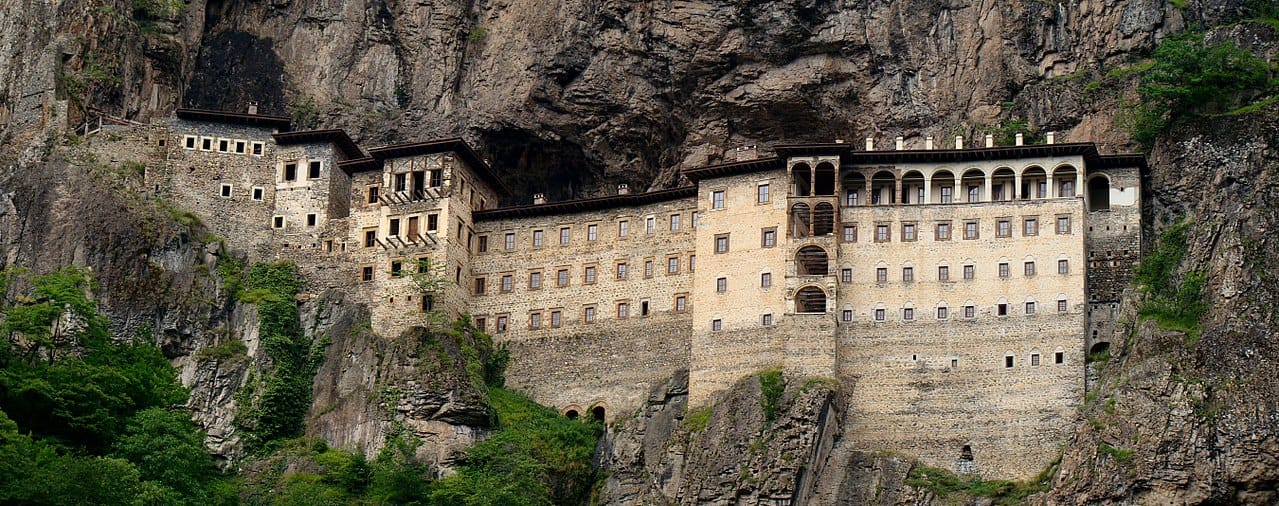
Sümela Monastery archaeological site

Wikimedia Commons (CC BY-SA)

聖域

Sümela Monastery

Seyfi Cem Baskin

Sümela Manastırı386 西暦 – 1923 西暦

A Byzantine Greek Orthodox monastery carved into a sheer cliff face at 1,200 meters altitude in the Pontic Alps. Founded in 386 CE, it contains remarkable frescoes spanning centuries.

312
関心 63

所在地

Trabzon · Black Sea · トルコ

40.69°N · 39.66°E · アジア

Date Range

386 CE – 1923 CE

Province

Trabzon

Foundation Date

386 CE

Architectural Type

Byzantine Greek Orthodox monastery carved into a sheer cliff face

Altitude

1,200 meters in the Pontic Alps

Notable Features

Remarkable frescoes spanning centuries

Location

Altındere Valley, Maçka, Trabzon Province, Türkiye

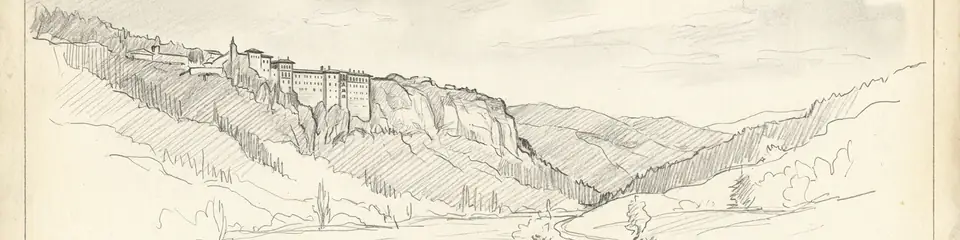
Graphite pencil sketch banner of Sümela Monastery

“Sümela Monastery is a monumental feat of human adaptation and perseverance, offering archaeologists a unique vertical settlement model.”

所在地

概要

Perched dramatically on a sheer cliff face at an altitude of approximately 1,200 meters within the densely forested Pontic Mountains (now the Altındere Valley National Park), the Sümela Monastery is a breathtaking feat of both devotion and engineering. The site is not a single building but a sprawling monastic complex, its principal structures—including a multi-story rock-cut core, chapels, student cells, a library, and a sacred spring—all ingeniously built into and onto the vertical rock. Access is via a steep, narrow path, with the buildings appearing to grow organically from the cliff, connected by precarious staircases and wooden balconies that overlook a deep, verdant gorge. The most visually striking feature is the main rock church, its exterior facade plastered and painted, which nestles within a large natural cave behind it.

Founded traditionally in 386 CE during the reign of Emperor Theodosius I, the monastery’s history is deeply intertwined with the Byzantine Empire and later the Empire of Trebizond. Its historical significance lies in its long, continuous function as a major center of Orthodox Christianity and pilgrimage for nearly sixteen centuries, dedicated to the Virgin Mary (Panagia). The monastery flourished particularly during the Empire of Trebizond (1204–1461), when it received imperial patronage and endowments, becoming one of the region's wealthiest and most important monastic institutions. It remained a functioning monastery long after the Ottoman conquest of the region, maintaining its religious and cultural role under imperial decrees of protection until its final abandonment in 1923 following the population exchange between Greece and Turkey.

"The monastery of the Mother of God at Melas, a most holy and ancient foundation, stands upon an inaccessible rock."
— Evliya Çelebi, c. 1640 CE

The key structures within the complex illustrate its multifaceted monastic life. The heart is the katholikon (main church) and its adjacent chapel, both carved directly into the cave rock. Their interiors are adorned with layer upon layer of remarkable frescoes, considered among the finest examples of post-Byzantine art. These vivid paintings depict biblical scenes, theological themes, and portraits of emperors and donors, with work spanning from the early Comnenian period to meticulous restorations in the 18th and 19th centuries. Other essential elements include the large aqueduct and water channels at the entrance, the multi-story monastic quarters clinging to the rock face, the library (which once housed important manuscripts, now relocated), and the sacred spring believed to have been discovered by the founding monk, Barnabas.

Culturally, Sümela stands as a powerful testament to the Pontic Greek civilization that thrived for millennia along the southern Black Sea coast. The monastery was the spiritual and cultural anchor of this distinct community, preserving artistic traditions, liturgical practices, and a deep connection to the rugged landscape it inhabits. Its architecture and art represent a unique synthesis of Byzantine, Georgian, and later Ottoman influences, reflecting the complex historical currents of the region. Today, as a protected archaeological site and museum, it serves as a monument to this rich heritage and continues to attract both scholarly interest and visitors drawn by its unparalleled setting and artistic legacy.

Sümela Monastery on the cliff face, Pontus
Sümela Monastery on the cliff face, Pontus | H. F. B. Lynch (Public domain)

重要性

Sümela Monastery is a monumental feat of human adaptation and perseverance, offering archaeologists a unique vertical settlement model. Its construction and expansion across centuries provide a physical timeline of Byzantine engineering, while the stratigraphy of its frescoes serves as a critical visual archive for tracing the evolution of post-iconoclastic Orthodox art and pigment technology in a single, continuous site. Historically, it stands as a powerful symbol of the Pontic Greek civilization, anchoring the region's Christian heritage for over a millennium until 1923. As cultural heritage, its breathtaking integration with the cliff face transcends its religious function, representing a universal dialogue between human creativity and the natural landscape, making its preservation vital for both historical memory and collective human achievement.

証拠と解釈

確立された事実と議論が続く事柄を区別する。

確立された事実

3
  • The monastery was founded in the 4th century CE, as attested by historical accounts and dedicatory inscriptions within the complex referencing Emperor Theodosius I.
  • The frescoes within the main rock-cut church and chapels date from the Byzantine period through the 18th century, showing stylistic evolution over time.
  • The dedicatory inscription above the entrance to the main rock-cut church, dated to the reign of Emperor Alexios III of Trebizond (1349-1390), confirms major imperial patronage and a significant expansion phase during the Empire of Trebizond.

学術的推論

1
  • Earlier, pre-Christian ritual use of the cave site is suggested by the site's remote, elevated nature and local tradition, though no material evidence has been conclusively identified.

議論のある解釈

2
  • The exact identity and timeline of the founding monks (traditionally said to be Barnabas and Sophronios) and the precise construction phases of the earliest core structures are subjects of scholarly discussion.
  • The function and original form of the large, vaulted structure known as the 'Aqueduct' or 'Bridge' at the entrance to the complex is debated, with interpretations ranging from a defensive gatehouse and water conduit to a guesthouse or administrative building.

発見と発掘調査

1930

Initial Documentation and Conservation

指揮 Turkish Ministry of Culture

First systematic documentation of the monastery's architecture and frescoes by Turkish authorities following the population exchange, focusing on preventing further deterioration.

1965

Structural Stabilization and Fresco Study

指揮 General Directorate of Antiquities and Museums

Major project to address rockfall and structural instability of the cliff-face complex. Included detailed photographic documentation and analysis of the fresco layers.

1993

Architectural Survey and Fresco Documentation

指揮 Turkish Ministry of Culture and the Middle East Technical University (METU)

A detailed architectural survey and photographic documentation of the frescoes was conducted, providing a crucial record of the site's condition prior to major modern restoration work.

2015

Comprehensive Restoration Project

指揮 Turkish Ministry of Culture and Tourism

Large-scale, multi-year restoration of the monastery complex, including consolidation of the rock face, restoration of frescoes, and archaeological surveys of the surrounding terraces and water systems.

コミュニティ写真

あなたの体験を共有する

この遺跡を訪れたことがありますか?写真をアップロードして魅力を共有しましょう。

このページの引用方法

Atlas Anatolia. (386). Sümela Monastery. Atlas Anatolia. https://atlasanatolia.com/ja/site/sumela

コンテンツはCC BY-SA 4.0ライセンスの下で提供されています — 再利用の際は出典表示が必要です。

World History Encyclopediaで全文を読む
World History Encyclopedia · CC BY-NC-SA

出典

よくある質問

Sümela Monasteryはどこにありますか?

Sümela MonasteryはTrabzon, Black Sea, Türkiyeに位置しています。

Sümela Monasteryの年代はいつ頃ですか?

Sümela Monasteryはおよそ386 西暦 – 1923 西暦のものとされています。

Sümela Monasteryはどの文明に関連していますか?

Sümela MonasteryはByzantine, Ottoman文明に関連しています。

Sümela Monasteryが重要な理由は何ですか?

Sümela Monastery is a monumental feat of human adaptation and perseverance, offering archaeologists a unique vertical settlement model.

Sümela Monasteryはユネスコ世界遺産ですか?

Sümela Monasteryは現在ユネスコ世界遺産には登録されていません。