コンテンツへスキップ
Atlas Anatolia
ニュースIce Age teeth in Sulawesi push betel-nut use back as far as 25,000 yearsRoman mosaic and Eros head uncovered in the basilica at Pompeiopolis, Kastamonu
Petra — Jordan

Wikimedia Commons (CC BY-SA)

Country Record

Oldest City in Jordan

都市UNESCO注目

Petra

Seyfi Cem Baskin

البتراء300 紀元前 – 700 西暦

Petra, the Nabataean capital from ~300 BCE to 700 CE, is famed for its rock-cut tombs and sophisticated water system, recognized as a UNESCO World Heritage Site and one of the New Seven Wonders.

322
関心 91

所在地

Ma'an Governorate · Southern Jordan · ヨルダン

30.33°N · 35.44°E · アジア

Built

circa 300 BCE – 700 CE

Civilization

Nabataean Kingdom, later Roman and Byzantine

Discovered

Known locally for centuries; reintroduced to Western world by Johann Ludwig Burckhardt in 1812

Status

UNESCO World Heritage Site (1985) and one of the New Seven Wonders of the World (2007)

Alternative Name

Raqmu (Nabataean name)

Key Structures

Al-Khazneh (the Treasury), Ad-Deir (the Monastery), the Siq, and 800+ carved monuments

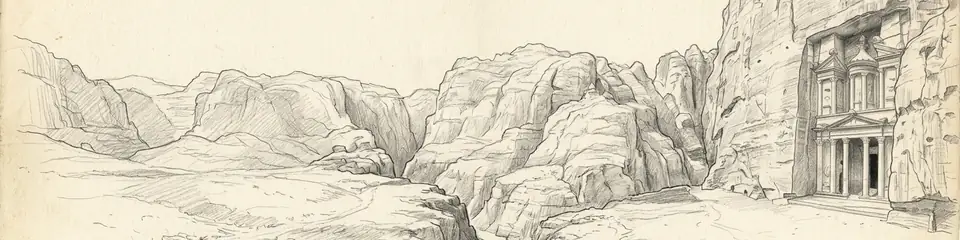
Graphite pencil sketch banner of Petra

“Petra embodies the crossroads of ancient civilizations, where Nabataean, Hellenistic, and Roman influences merged to create a unique architectural and cultural legacy.”

所在地

概要

Discovery

Petra was known to local Bedouins for centuries but remained hidden from the Western world until Swiss explorer Johann Ludwig Burckhardt rediscovered it in 1812. Disguised as a pilgrim, Burckhardt convinced his guide to lead him to the legendary 'lost city,' becoming the first European in over 500 years to document its monumental facades.

Significance

As the capital of the Nabataean Kingdom, Petra flourished between 300 BCE and 106 CE, controlling vital trade routes that connected Arabia, Egypt, and the Mediterranean. Its strategic position allowed the Nabataeans to amass wealth, which they channeled into carving elaborate tombs and temples directly into the rose-red sandstone cliffs. After Roman annexation in 106 CE, the city continued to prosper until a series of earthquakes and shifts in trade routes led to its gradual abandonment by the 8th century.
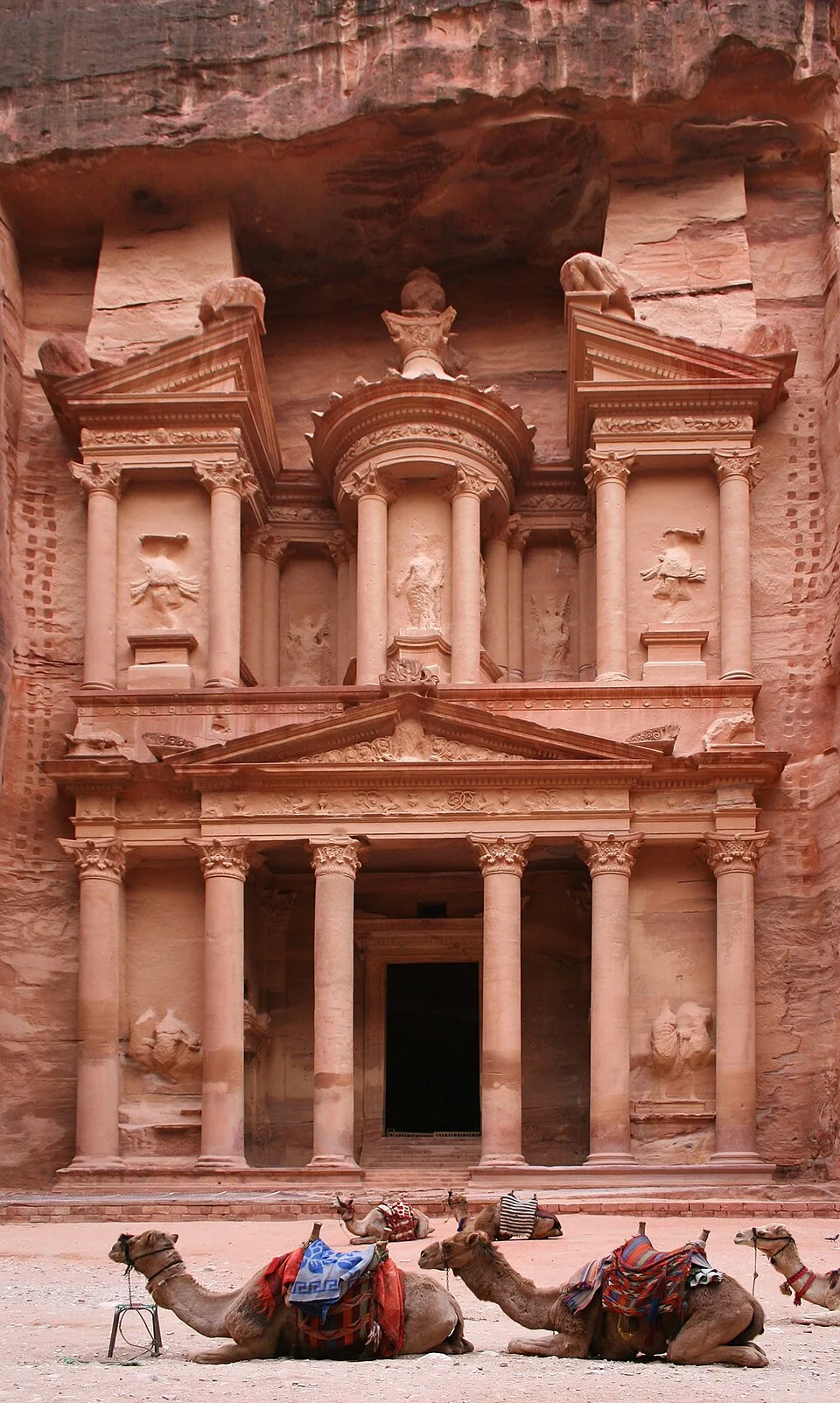
Al Khazneh Petra edit 2

*Al Khazneh Petra edit 2 | Al_Khazneh_Petra.jpg: Graham Racher from London, UK

derivative work: MrPanyGoff (CC BY-SA 2.0)*

"Match me such marvel save in Eastern clime, a rose-red city half as old as time."
— John William Burgon, "Petra," Newdigate Prize poem, 1845
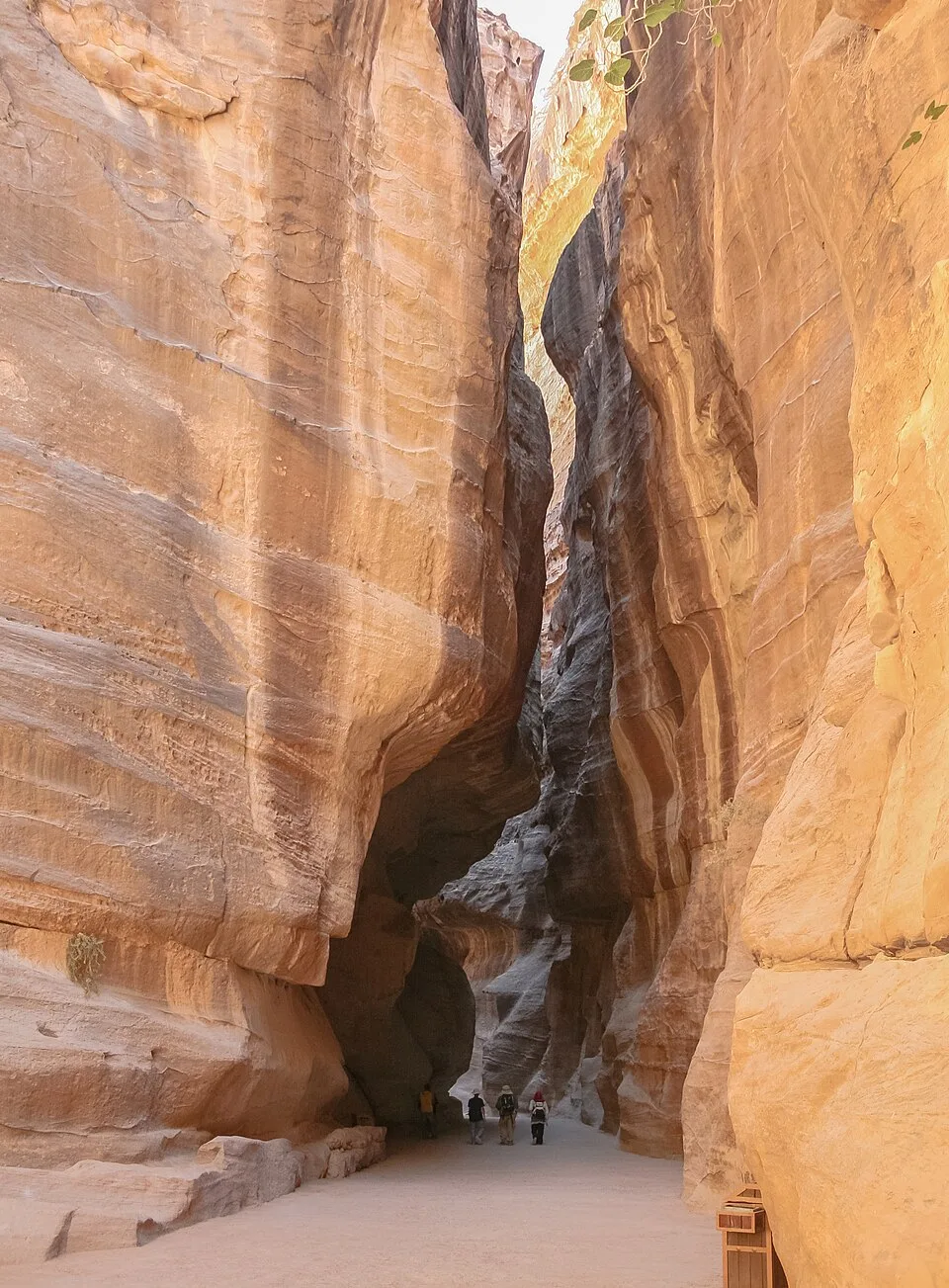
Al-Siq, Petra, Jordan5
Al-Siq, Petra, Jordan5 | Diego Delso (CC BY-SA 3.0)

Architecture and Water Management

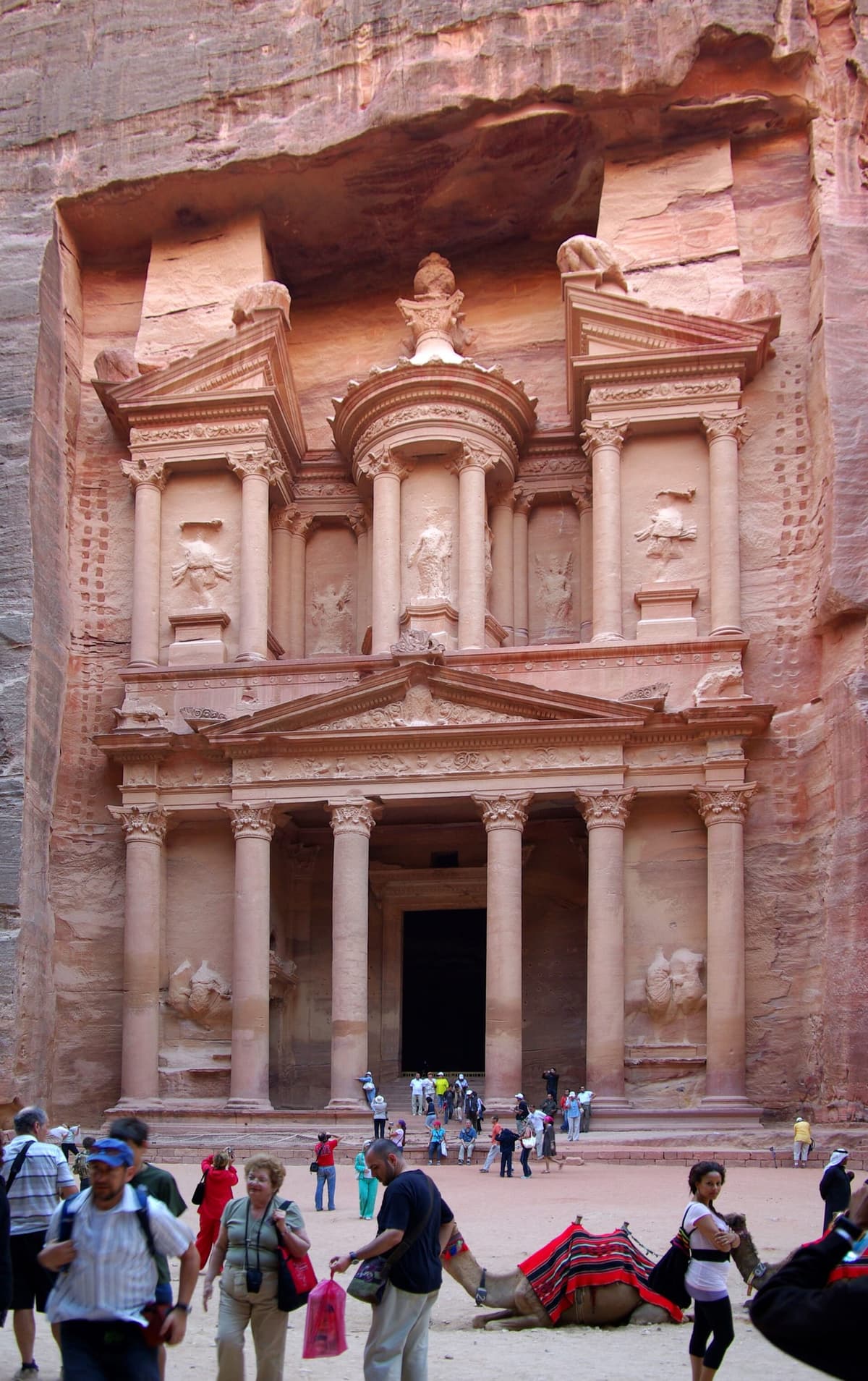
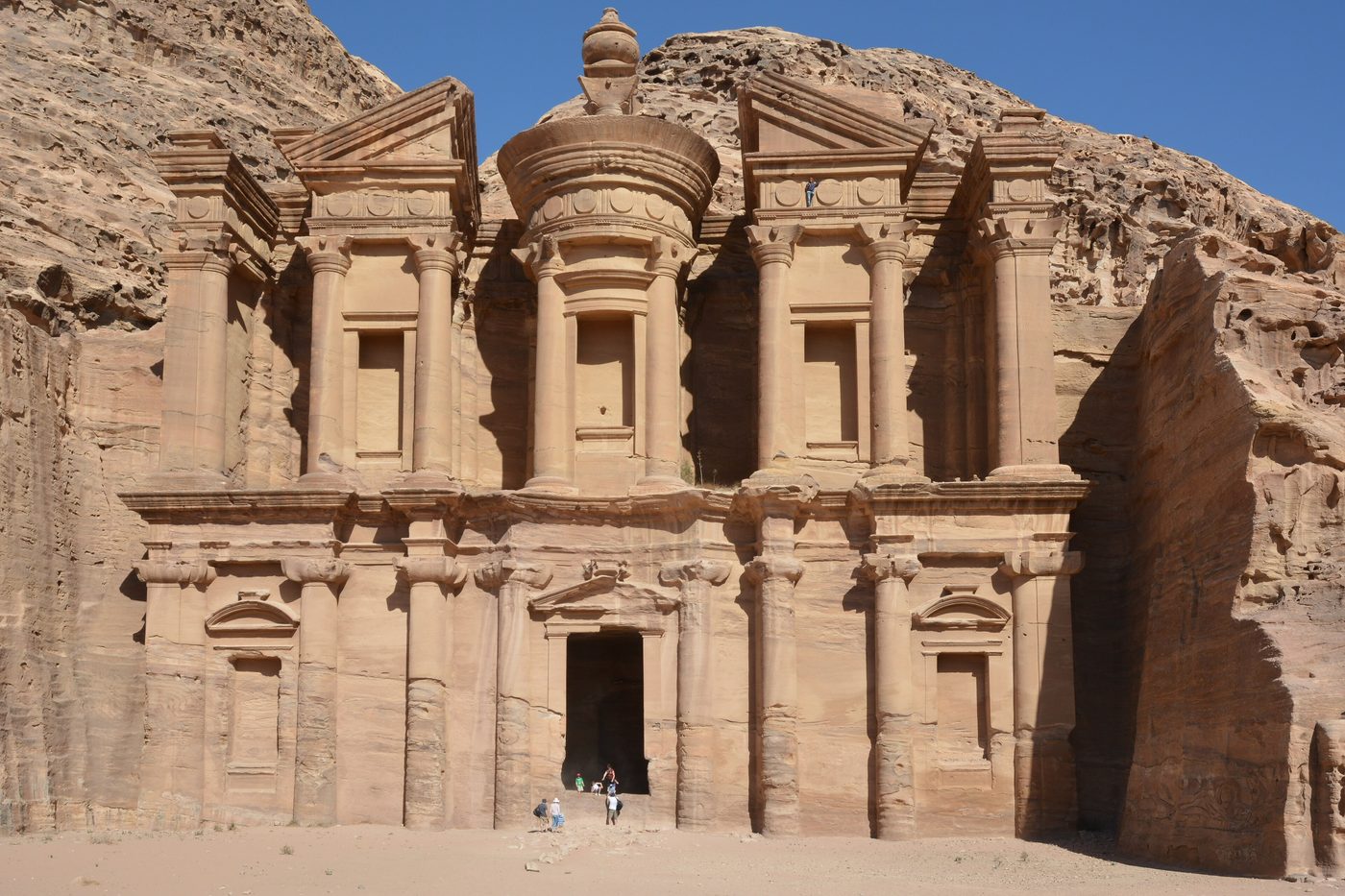
The iconic Al-Khazneh (the Treasury) and Ad-Deir (the Monastery) exemplify a unique fusion of Hellenistic, Roman, and indigenous Nabataean styles. Carved in the 1st century CE, these monuments likely served as tombs or religious structures. Equally remarkable is the hydraulic engineering system: dams, cisterns, and ceramic pipelines collected and distributed water, protecting the city from flash floods while sustaining a population estimated at 20,000–30,000.
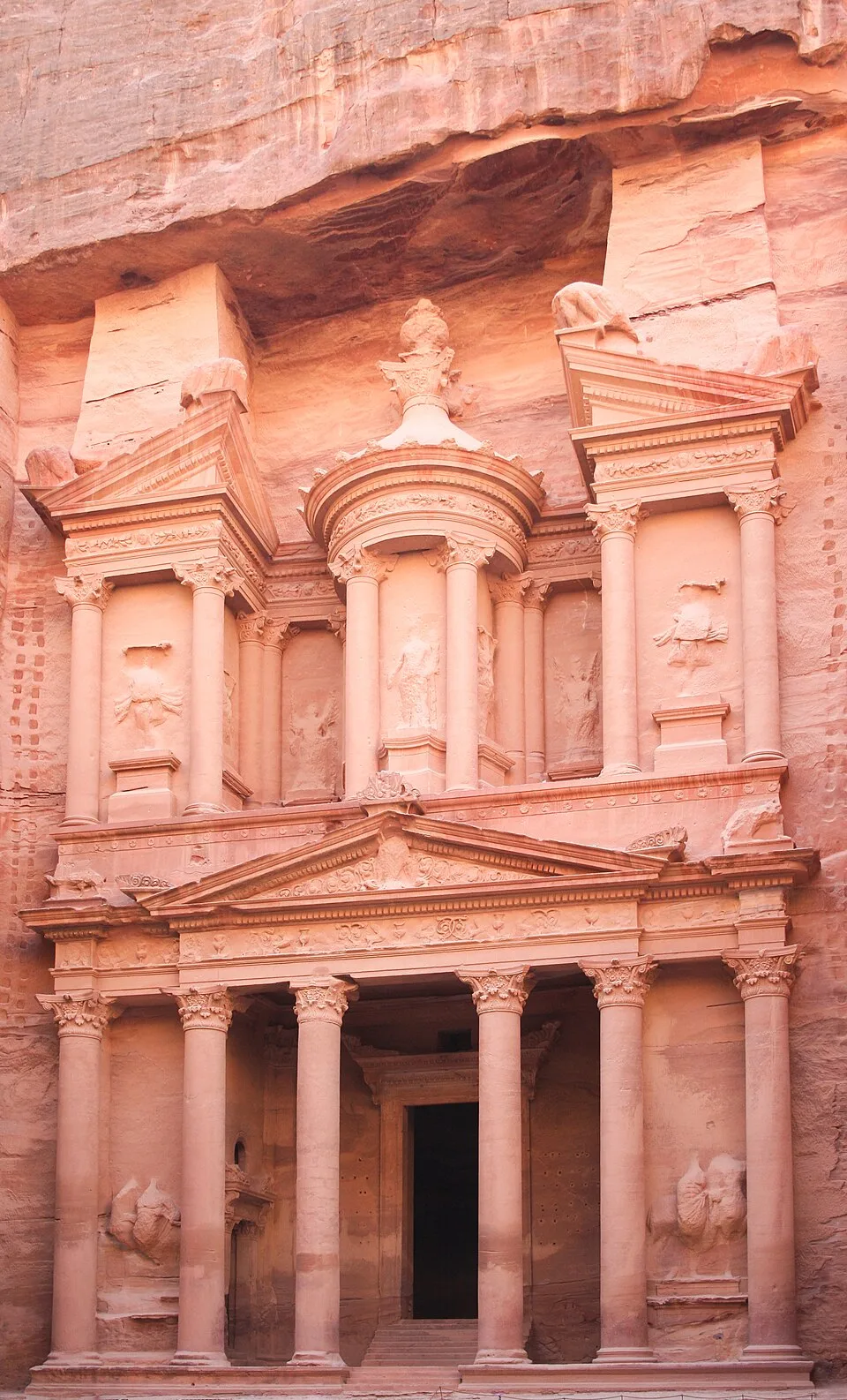
The Treasury, Petra, Jordan5
The Treasury, Petra, Jordan5 | Diego Delso (CC BY-SA 3.0)
"Nothing can exceed the desolate grandeur of this sepulchral landscape — rock upon rock, tomb upon tomb."
— Johann Ludwig Burckhardt, on rediscovering Petra, 1812 (paraphrase)

Society and Religion

The Nabataeans worshipped a pantheon of deities, with Dushara as the supreme god. Inscriptions and rock-cut shrines throughout Petra attest to religious practices that blended Arabian and Greco-Roman traditions. Women may have held significant economic roles, as suggested by tomb ownership inscriptions, though the exact nature of their status remains debated. Under Byzantine rule, parts of Petra were repurposed, with the Urn Tomb converted into a church.

Decline and Legacy

Destructive earthquakes in 363 and 551 CE, coupled with the rise of maritime trade routes, triggered Petra’s slow decline. By the 7th century, the city was largely deserted, remembered only in legend until its modern rediscovery. Today, Petra stands as a testament to the ingenuity of the Nabataeans and the intercultural exchanges that shaped the ancient Near East.
重要性

Petra embodies the crossroads of ancient civilizations, where Nabataean, Hellenistic, and Roman influences merged to create a unique architectural and cultural legacy. Its ingenious water system showcases early sustainable urban planning, while its role in the incense trade highlights the interconnected economies of the ancient world.

証拠と解釈

確立された事実と議論が続く事柄を区別する。

確立された事実

3
  • Petra's water management system included dams, cisterns, and ceramic pipelines that provided a stable water supply and prevented flooding.
  • Al-Khazneh was carved in the 1st century CE, likely as a royal tomb, and not a treasury as later folklore suggested.
  • The Nabataeans controlled the lucrative incense trade routes from southern Arabia to the Mediterranean, generating immense wealth.

学術的推論

2
  • Major earthquakes in 363 and 551 CE caused catastrophic structural damage, accelerating the city's abandonment.
  • The so-called 'Great Temple' complex likely served both religious and civic functions, though its exact purpose remains uncertain.

議論のある解釈

2
  • The function of the Monastery (Ad-Deir) is disputed, with interpretations ranging from a temple, a royal tomb, or a meeting hall for religious associations.
  • The degree of female agency in Nabataean society is contested, with some inscriptions suggesting women could own tombs and manage property.

発見と発掘調査

Modern conservation

指揮 Jordanian Department of Antiquities and UNESCO

Ongoing conservation and site management by the Jordanian Department of Antiquities and international partners, addressing tourism impact and structural stability.

1812

Rediscovery by Johann Ludwig Burckhardt

指揮 Johann Ludwig Burckhardt

Burckhardt's visit marks the beginning of modern Western awareness of Petra, although no formal excavations were conducted.

1929–1930

First systematic excavations

指揮 George Horsfield and Agnes Conway

George Horsfield and Agnes Conway conducted the first scientific archaeological work at Petra, focusing on the city center and tombs.

1958–1964

British School of Archaeology expeditions

指揮 Diana Kirkbride and Peter Parr

Diana Kirkbride and Peter Parr excavated key areas, including the Colonnaded Street and the Petra Church, uncovering important Byzantine-era mosaics.

1992–2002

Brown University excavations of the Great Temple

指揮 Martha Sharp Joukowsky

Martha Sharp Joukowsky led extensive excavations of the Great Temple complex, revealing its monumental architecture and diverse use over centuries.

コミュニティ写真

あなたの体験を共有する

この遺跡を訪れたことがありますか?写真をアップロードして魅力を共有しましょう。

関連記事

このページの引用方法

Atlas Anatolia. (300). Petra. Atlas Anatolia. https://atlasanatolia.com/ja/site/petra

コンテンツはCC BY-SA 4.0ライセンスの下で提供されています — 再利用の際は出典表示が必要です。

グラフ

関連する遺跡やストーリーへのつながり。

出典

  • Taylor, J. (2001), Petra and the Lost Kingdom of the Nabataeans — Jane Taylor (2001)
  • Joukowsky, M. S. (1998), "The Petra Great Temple: A Nabataean Architectural Miracle" — Martha S. Joukowsky (1998)
  • Orthodox, R. (2016), "The Water Supply System of Petra" — Robert Orthodox (2016)
  • UNESCO World Heritage entry – Petraリンク
  • McKenzie, J. (1990), The Architecture of Petra — Judith McKenzie (1990)
  • Schmid, S. G. (2007), "The International Aṣlaḥ Project: Excavations at Petra" — Stephan G. Schmid (2007)

よくある質問

Petraはどこにありますか?

PetraはMa'an Governorate, Southern Jordan, Jordanに位置しています。

Petraの年代はいつ頃ですか?

Petraはおよそ300 紀元前 – 700 西暦のものとされています。

Petraはどの文明に関連していますか?

PetraはNabataean, Roman, Byzantine文明に関連しています。

Petraが重要な理由は何ですか?

Petra embodies the crossroads of ancient civilizations, where Nabataean, Hellenistic, and Roman influences merged to create a unique architectural and cultural legacy.

Petraはユネスコ世界遺産ですか?

はい — Petraはユネスコ世界遺産に登録されています。