
コンテンツへスキップ
Atlas Anatolia
ニュースIce Age teeth in Sulawesi push betel-nut use back as far as 25,000 yearsRoman mosaic and Eros head uncovered in the basilica at Pompeiopolis, Kastamonu
Registan square with three madrasas in Samarkand

Wikimedia Commons (CC BY-SA 3.0)

遺産都市UNESCO注目

Samarkand

Seyfi Cem Baskin

Самарқанд700 紀元前 – 1700 西暦

Timur’s capital on the Zeravshan — crowned by the Registan’s three tiled madrasas — was the ceremonial and scholarly heart of a Silk Road empire linking Persia, India, and the steppe.

21
関心 81

所在地

ウズベキスタン

39.65°N · 66.98°E · アジア

Ancient name

Maracanda (Sogdian)

Timurid capital

Late 14th century under Timur

Registan

Three madrasas, 15th–17th c.

UNESCO

Historic Town of Samarkand (2001)

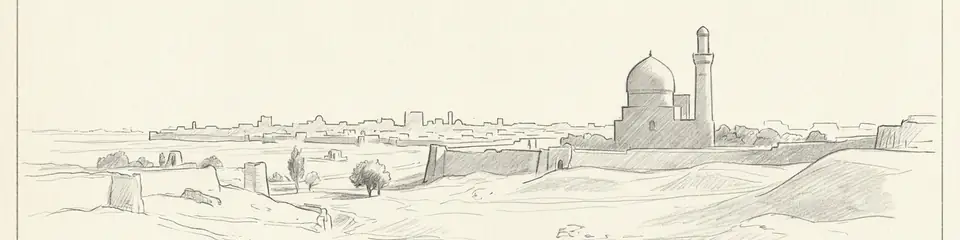
Graphite pencil sketch banner of Samarkand

“Samarkand concentrates Timurid political theology, astronomy, and tile architecture in one walkable historic centre.”

所在地

概要

Samarkand (ancient Maracanda) sits in the Zeravshan Valley of modern Uzbekistan. An Iron Age and Sogdian centre conquered by Alexander, it later flourished under Sogdian merchants before Mongol destruction in 1220. Timur (Tamerlane) made Samarkand his capital in the late 14th century; his grandson Ulugh Beg built a madrasa and observatory that made the city a scientific as well as dynastic stage. The Registan square — Ulugh Beg Madrasa (1417–21), Sher-Dor (1619–36), and Tilya-Kori (17th century) — forms the postcard ensemble of turquoise domes and pishtaq façades.

Beyond the Registan, the Bibi-Khanym Mosque, Gur-e-Amir mausoleum, and Shah-i-Zinda necropolis preserve Timurid brick and tile craft at imperial scale. UNESCO inscribed the Historic Town of Samarkand in 2001. Pair with Merv and Jiaohe for earlier Silk Road urbanisms further east and west.

重要性

Samarkand concentrates Timurid political theology, astronomy, and tile architecture in one walkable historic centre. It is essential for understanding how post-Mongol Central Asian empires staged legitimacy on the Silk Road.

証拠と解釈

確立された事実と議論が続く事柄を区別する。

確立された事実

2
  • Timurid building inscriptions, waqf documents, and standing madrasas securely date the Registan ensemble and Gur-e-Amir complex.
  • Archaeology at Afrasiyab (ancient Samarkand) documents Sogdian and earlier occupation beneath and beside the Timurid city.

学術的推論

1
  • Ulugh Beg’s observatory programme positioned Samarkand as a scientific capital rivaling contemporary Islamic and European courts.

コミュニティ写真

あなたの体験を共有する

この遺跡を訪れたことがありますか?写真をアップロードして魅力を共有しましょう。

このページの引用方法

Atlas Anatolia. (700). Samarkand. Atlas Anatolia. https://atlasanatolia.com/ja/site/samarkand

コンテンツはCC BY-SA 4.0ライセンスの下で提供されています — 再利用の際は出典表示が必要です。

出典

  • The Rise and Rule of Tamerlane — Manz, Beatrice Forbes (1989)
  • UNESCO — Samarkand – Crossroad of Culturesリンク

よくある質問

Samarkandはどこにありますか?

SamarkandはUzbekistanに位置しています。

Samarkandの年代はいつ頃ですか?

Samarkandはおよそ700 紀元前 – 1700 西暦のものとされています。

Samarkandはどの文明に関連していますか?

SamarkandはTimurid, Sogdian文明に関連しています。

Samarkandが重要な理由は何ですか?

Samarkand concentrates Timurid political theology, astronomy, and tile architecture in one walkable historic centre.

Samarkandはユネスコ世界遺産ですか?

はい — Samarkandはユネスコ世界遺産に登録されています。