
コンテンツへスキップ
Atlas Anatolia
ニュースIce Age teeth in Sulawesi push betel-nut use back as far as 25,000 yearsRoman mosaic and Eros head uncovered in the basilica at Pompeiopolis, Kastamonu
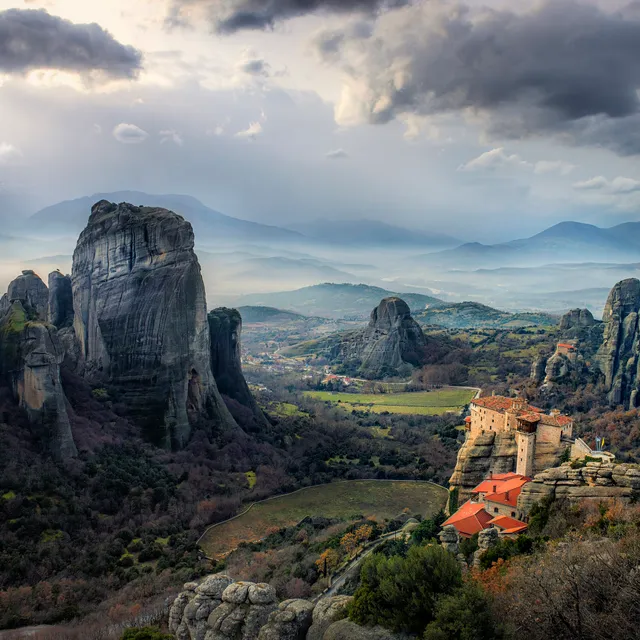
Byzantine monasteries perched on rock pillars at Meteora, Greece

Wikimedia Commons

聖域UNESCO

Meteora

Seyfi Cem Baskin

Μετέωρα1100 西暦 – 1900 西暦

A forest of sandstone pinnacles in Thessaly, Greece — crowned by Byzantine and post-Byzantine monasteries reached by stairs and bridges — among the most dramatic religious landscapes in Europe and a UNESCO site drawing millions of visitors and pilgrims.

21
関心 77

所在地

ギリシャ

39.72°N · 21.63°E · ヨーロッパ

Geology

Sandstone pinnacles formed by weathering of Thessaly plateau

Monasteries

6 active of 24 historical foundations

Great Meteoron

Founded c. 1340 by Athanasios of Meteora

UNESCO

World Heritage Site (1988)

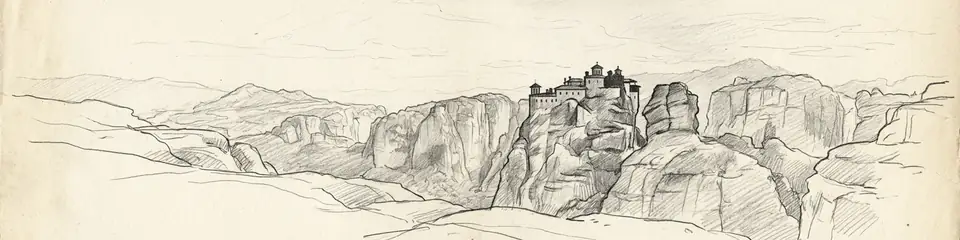
Graphite pencil sketch banner of Meteora

“Meteora is the extreme case of Byzantine monastic adaptation to inaccessible terrain — architecture as spiritual withdrawal elevated literally above the plain.”

所在地

概要

Meteora ("suspended in the air") names a group of immense sandstone pillars and cliffs in central Thessaly, Greece, near the town of Kalabaka (Kalambaka). Hermits occupied caves in the rocks from at least the 11th century; organized monastic communities developed in the 14th century as Athonite monks fled political instability. The Great Meteoron Monastery (Megalo Meteoro), founded by Athanasios of Meteora around 1340, set the model for later foundations.

At the peak of the monastic community in the 16th century, 24 monasteries clung to the pinnacles; six remain active today — Great Meteoron, Varlaam, Rousanou, St. Nicholas Anapausas, St. Stephen, and Holy Trinity — linked by steps, bridges, and (since the 20th century) roads. Fresco cycles inside the katholikon churches preserve post-Byzantine painting of high quality.

UNESCO inscribed Meteora in 1988. The site combines geological wonder with living Orthodox monasticism and appears frequently in travel media as one of Greece's most iconic landscapes outside Athens.
重要性

Meteora is the extreme case of Byzantine monastic adaptation to inaccessible terrain — architecture as spiritual withdrawal elevated literally above the plain. Its frescoes and manuscript traditions connect the Athonite world to mainland Greece during Ottoman rule.

証拠と解釈

確立された事実と議論が続く事柄を区別する。

確立された事実

2
  • Foundation charters, donor inscriptions, and fresco dates document 14th–16th-century monastic building phases.
  • Geological survey confirms pillar formation by erosion of the Thessaly basin sediments after tectonic uplift.

学術的推論

1
  • Hermit occupation before organized monasteries is attested in hagiography; archaeological evidence in caves is sparse but consistent.

コミュニティ写真

あなたの体験を共有する

この遺跡を訪れたことがありますか?写真をアップロードして魅力を共有しましょう。

関連記事

このページの引用方法

Atlas Anatolia. (1100). Meteora. Atlas Anatolia. https://atlasanatolia.com/ja/site/meteora

コンテンツはCC BY-SA 4.0ライセンスの下で提供されています — 再利用の際は出典表示が必要です。

グラフ

関連する遺跡やストーリーへのつながり。

出典

  • The Meteora Monasteries — Nichols, Richard (2000)
  • UNESCO — Meteoraリンク

よくある質問

Meteoraはどこにありますか?

MeteoraはGreeceに位置しています。

Meteoraの年代はいつ頃ですか?

Meteoraはおよそ1100 西暦 – 1900 西暦のものとされています。

Meteoraはどの文明に関連していますか?

MeteoraはGreek, Byzantine文明に関連しています。

Meteoraが重要な理由は何ですか?

Meteora is the extreme case of Byzantine monastic adaptation to inaccessible terrain — architecture as spiritual withdrawal elevated literally above the plain.

Meteoraはユネスコ世界遺産ですか?

はい — Meteoraはユネスコ世界遺産に登録されています。