コンテンツへスキップ
Atlas Anatolia
ニュースIce Age teeth in Sulawesi push betel-nut use back as far as 25,000 yearsRoman mosaic and Eros head uncovered in the basilica at Pompeiopolis, Kastamonu
Miletus archaeological site

Wikimedia Commons (CC BY-SA)

都市

Miletus

Seyfi Cem Baskin

Milet1500 紀元前 – 700 西暦

Birthplace of Western philosophy — home to Thales, Anaximander, and Anaximenes. One of the greatest Ionian cities, with a massive theatre, baths, and the ancient world's first grid-planned city layout.

312
関心 64

所在地

Aydın · Aegean · トルコ

37.53°N · 27.28°E · アジア

Date Range

1500 BCE – 700 CE

Province

Aydın

Location

Miletus, ancient Ionian city on the western coast of Anatolia (modern-day Balat, Turkey)

Historical Significance

Birthplace of Western philosophy (Thales, Anaximander, Anaximenes) and early scientific thought

Urban Planning

First known grid-planned city layout in the ancient world, designed by Hippodamus of Miletus

Major Structures

Massive Hellenistic theatre (15,000 capacity), Roman baths, Temple of Apollo Delphinius, and extensive harbor works

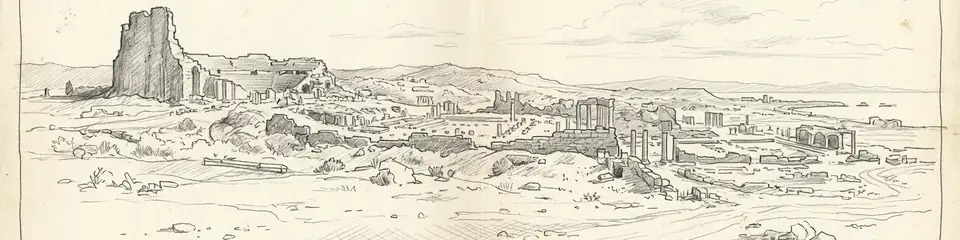
Graphite pencil sketch banner of Miletus

“Miletus matters profoundly as a primary archaeological site for studying the genesis of Western rational thought.”

所在地

概要

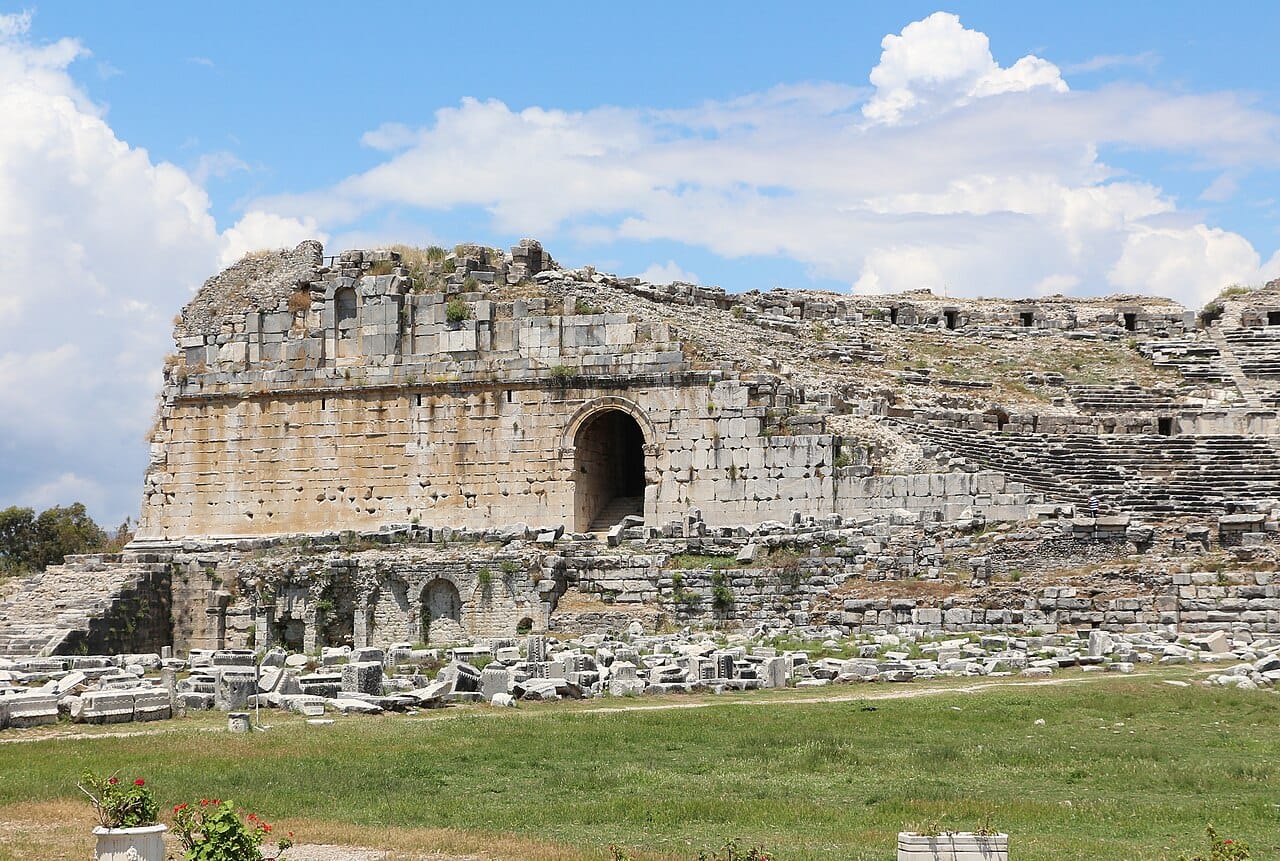
Nestled on the alluvial plains of the Maeander River, the archaeological site of Miletus presents a striking, if somber, landscape. Once a prominent peninsula on the Aegean coast, centuries of silt deposition have left its monumental ruins stranded several kilometers inland, surrounded by marshy terrain. The site is dominated by the remarkably well-preserved Hellenistic theatre, carved into a hillside, which could seat approximately 15,000 spectators and was later expanded under Roman rule. Beyond it, the sprawling remains reveal a city rigorously laid out on a grid plan, a revolutionary design attributed to the architect Hippodamus after the city's destruction in 494 BCE, making it a seminal model of urban planning for the ancient world.

Historically, Miletus was one of the most powerful and influential of the twelve Ionian cities. Its significance extends far beyond its political and commercial prowess, as it was the vibrant epicenter of the Ionian Enlightenment. In the 6th century BCE, it became the birthplace of Western philosophy and scientific inquiry with the Milesian School, founded by Thales, and continued by his pupils Anaximander and Anaximenes. These thinkers sought natural, rather than mythological, explanations for the cosmos, fundamentally shaping intellectual history. The city's maritime strength was legendary, founding numerous colonies across the Black Sea and the Mediterranean, before its pivotal role in the Ionian Revolt led to its sack by the Persians.

"Miletus, the greatest of Ionian cities, was founded by Neleus, a Pylian by birth."
— Herodotus, c. 440 BCE

Key structures at the site chronicle its long habitation from the Neolithic period through Byzantine times. The massive theatre remains the most iconic landmark. Before it lies the extensive Baths of Faustina, a grand complex built in the 2nd century CE and gifted by Emperor Marcus Aurelius' wife, featuring towering walls and elaborate vaults. The Sacred Way, a processional road flanked by stoas, leads from the city's southern harbor to the sanctuary of Apollo at Didyma. Other significant ruins include the sprawling Ionic-style Bouleuterion (council house), the Delphinion (a sanctuary to Apollo Delphinios), and the formidable city walls, whose scale testifies to Miletus' enduring importance.

Culturally, Miletus embodied the dynamic synthesis of Greek and Eastern influences characteristic of Ionia. Its wealth, derived from trade in wool, textiles, and maritime commerce, fostered a sophisticated urban culture. The city was a major center for the arts, particularly sculpture, with its own distinctive school. The grid plan of the rebuilt city, dividing public and private spaces with geometric precision, reflected a new, rational approach to civic life and social organization that would be exported across the Hellenistic world. As a bustling port and intellectual crossroads, Miletus served as a critical conduit for ideas, goods, and cultural exchange between the Greek world and the civilizations of Anatolia and the Near East.
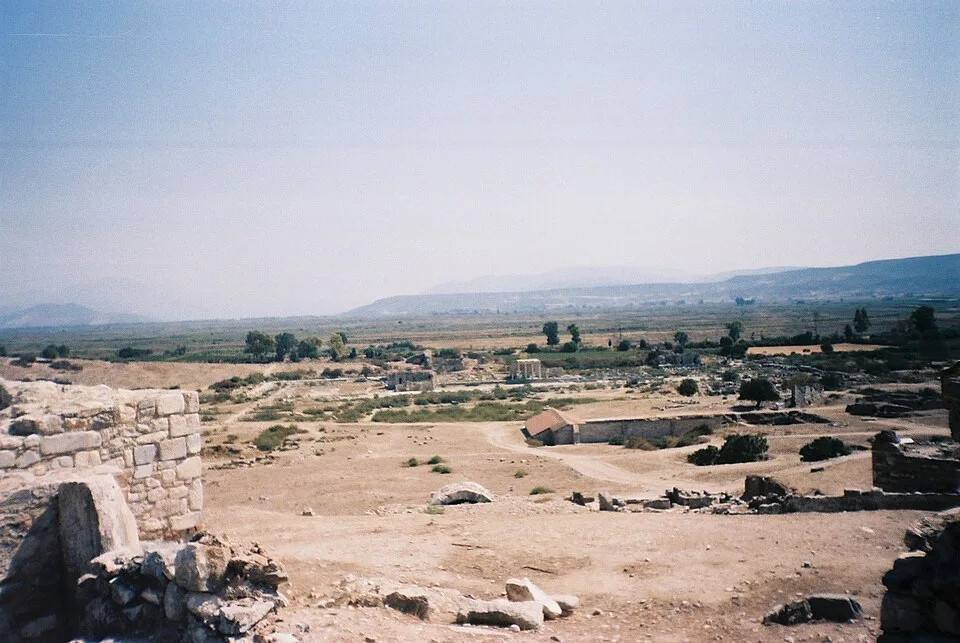
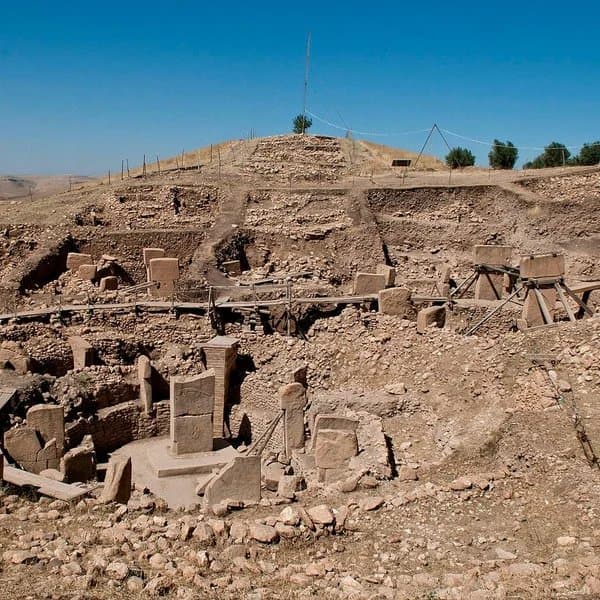
Miletus archaeological site (1)
Miletus archaeological site (1) | Radosław Botev (CC BY 3.0 pl)

重要性

Miletus matters profoundly as a primary archaeological site for studying the genesis of Western rational thought. Its excavation provides tangible evidence of the urban and intellectual environment that fostered the first philosophers, who sought naturalistic explanations for the cosmos. The meticulously planned grid layout of its streets, a model exported across the Mediterranean, offers a critical case study in ancient urbanism and the spread of Ionian Greek culture. Historically, its remains—from the massive theatre to the elaborate baths—chronicle the life of a major maritime power across Bronze Age, Greek, Roman, and Byzantine eras. As cultural heritage, Miletus stands as a monumental landmark where the foundations of science, philosophy, and systematic city planning were physically laid, bridging the ancient world and modern intellectual traditions.

証拠と解釈

確立された事実と議論が続く事柄を区別する。

確立された事実

3
  • The grid-planned urban layout (Hippodamian plan) is archaeologically confirmed through excavated street patterns and property boundaries
  • Miletus as the birthplace of Thales, Anaximander, and Anaximenes is attested by multiple ancient literary sources including Herodotus and Diogenes Laërtius
  • The monumental Hellenistic theatre was expanded to a capacity of approximately 25,000 under Roman Emperor Trajan (early 2nd century CE), as confirmed by dedicatory inscriptions and architectural analysis.

学術的推論

1
  • The city's extensive four harbors and naval power are inferred from harbor basin excavations, mole structures, and historical accounts of maritime trade

議論のある解釈

2
  • The exact philosophical teachings and scientific contributions of the Milesian philosophers are debated due to fragmentary preservation of their original works
  • The identification and precise function of the large Ionic stoa near the northern harbor as the 'Harbor Stoa' or 'Agora of the Competaliasts' is debated, with interpretations varying between a commercial, religious, or civic building.

発見と発掘調査

1899

Initial Systematic Excavations

指揮 Theodor Wiegand (German Archaeological Institute)

First major archaeological campaign led by Theodor Wiegand, uncovering the theatre, city walls, and main public buildings

1938

Temple of Athena Excavations

指揮 Carl Weickert (German Archaeological Institute)

Excavation of the Archaic temple of Athena, revealing early Ionic architecture and votive offerings

1955

Post-War Renewed Investigations

指揮 Gerhard Kleiner and successors (German Archaeological Institute)

Long-term excavation and restoration projects focusing on the agora, baths, and residential areas, continuing to present day

1973

Baths of Faustina Excavations

指揮 V. M. Strocka (German Archaeological Institute)

Systematic excavation of the large Roman bath complex, revealing its palaestra, frigidarium, and caldarium, and confirming its dedication to Empress Faustina the Younger.

コミュニティ写真

あなたの体験を共有する

この遺跡を訪れたことがありますか?写真をアップロードして魅力を共有しましょう。

関連記事

このページの引用方法

Atlas Anatolia. (1500). Miletus. Atlas Anatolia. https://atlasanatolia.com/ja/site/miletus

コンテンツはCC BY-SA 4.0ライセンスの下で提供されています — 再利用の際は出典表示が必要です。

グラフ

関連する遺跡やストーリーへのつながり。

World History Encyclopediaで全文を読む
World History Encyclopedia · CC BY-NC-SA

出典

よくある質問

Miletusはどこにありますか?

MiletusはAydın, Aegean, Türkiyeに位置しています。

Miletusの年代はいつ頃ですか?

Miletusはおよそ1500 紀元前 – 700 西暦のものとされています。

Miletusはどの文明に関連していますか?

MiletusはGreek, Roman, Byzantine, Ionian文明に関連しています。

Miletusが重要な理由は何ですか?

Miletus matters profoundly as a primary archaeological site for studying the genesis of Western rational thought.

Miletusはユネスコ世界遺産ですか?

Miletusは現在ユネスコ世界遺産には登録されていません。