
コンテンツへスキップ
Atlas Anatolia
ニュースIce Age teeth in Sulawesi push betel-nut use back as far as 25,000 yearsRoman mosaic and Eros head uncovered in the basilica at Pompeiopolis, Kastamonu
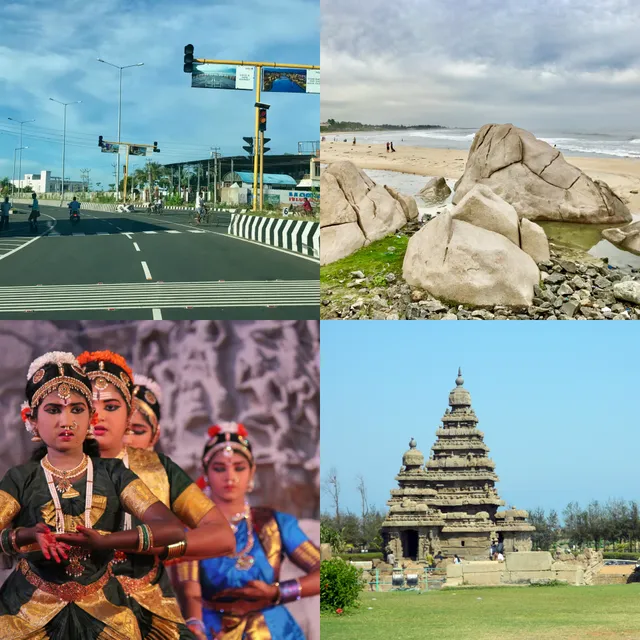
The Shore Temple at Mahabalipuram against the Bay of Bengal

Wikimedia Commons

複合体UNESCO

Mahabalipuram

Seyfi Cem Baskin

மாமல்லபுரம்600 西暦 – 800 西暦

The Pallava port city on Tamil Nadu's Coromandel Coast — famous for 7th–8th-century rock-cut rathas, cave temples, the Shore Temple, and the giant open-air relief of the Descent of the Ganges — one of India's most visited UNESCO sites and a cornerstone of early Dravidian sculpture.

21
関心 66

所在地

インド

12.62°N · 80.19°E · アジア

Dynasty

Pallava kings Mahendravarman I and Narasimhavarman I (7th century CE)

Shore Temple

Structural granite temple facing the sea, c. 8th century CE

Relief

Descent of the Ganges — among the largest open-air rock reliefs

UNESCO

Group of Monuments at Mahabalipuram (1984)

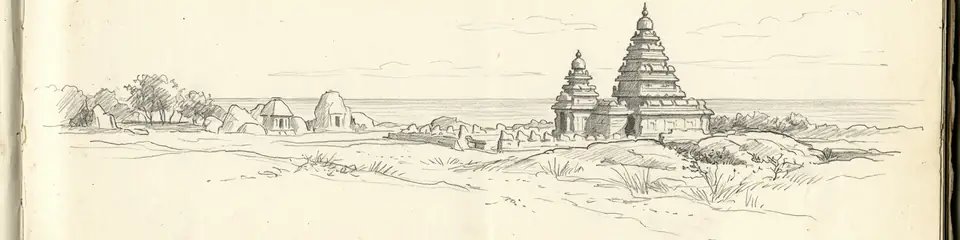
Graphite pencil sketch banner of Mahabalipuram

“Mahabalipuram documents the birth of monumental Dravidian temple form — from experimental monolithic rathas to the Shore Temple that influenced centuries of South Indian architecture.”

所在地

概要

Mahabalipuram (Mamallapuram) lies on the Bay of Bengal coast about 60 kilometres south of Chennai, Tamil Nadu. Under the Pallava kings Mahendravarman I (r. c. 600–630) and Narasimhavarman I (r. c. 630–668) — titled Mamalla ("great wrestler") — the site became a royal centre for rock-cut and structural temple architecture. The monuments are carved from local granite outcrops and include monolithic rathas (chariot-shaped shrines), mandapa cave temples, and the Shore Temple (c. 8th century) facing the sea.

The Descent of the Ganges (Arjuna's Penance) is one of the largest open-air bas-reliefs in the world, depicting Shiva, ascetics, elephants, and nagas on two huge boulders. Excavations after the 2004 tsunami revealed submerged structural remains offshore, suggesting a larger ancient port. The Archaeological Survey of India maintains the site; UNESCO inscribed the Group of Monuments in 1984.

Mahabalipuram remains an active stone-carving village and a mandatory stop on South India heritage circuits alongside Chennai, Kanchipuram, and Pondicherry.

重要性

Mahabalipuram documents the birth of monumental Dravidian temple form — from experimental monolithic rathas to the Shore Temple that influenced centuries of South Indian architecture. Its coastal reliefs and Pallava inscriptions are primary sources for early medieval trade, royal titles, and sculptural workshops in the Tamil country.

証拠と解釈

確立された事実と議論が続く事柄を区別する。

確立された事実

2
  • Pallava inscriptions and stylistic analysis date the rathas, mandapas, and Shore Temple to the 7th–8th centuries CE.
  • Submerged structural discoveries after 2004 confirm an extensive historic port zone beyond the visible shore temples.

議論のある解釈

1
  • The legend of "Seven Pagodas" swallowed by the sea is partially supported by offshore remains but the original count and destruction mechanism remain uncertain.

コミュニティ写真

あなたの体験を共有する

この遺跡を訪れたことがありますか?写真をアップロードして魅力を共有しましょう。

このページの引用方法

Atlas Anatolia. (600). Mahabalipuram. Atlas Anatolia. https://atlasanatolia.com/ja/site/mahabalipuram

コンテンツはCC BY-SA 4.0ライセンスの下で提供されています — 再利用の際は出典表示が必要です。

出典

  • Indian Temple Architecture: Form and Transformation — Hardy, Adam (1995)
  • UNESCO — Mahabalipuramリンク

よくある質問

Mahabalipuramはどこにありますか?

MahabalipuramはIndiaに位置しています。

Mahabalipuramの年代はいつ頃ですか?

Mahabalipuramはおよそ600 西暦 – 800 西暦のものとされています。

Mahabalipuramはどの文明に関連していますか?

MahabalipuramはPallava文明に関連しています。

Mahabalipuramが重要な理由は何ですか?

Mahabalipuram documents the birth of monumental Dravidian temple form — from experimental monolithic rathas to the Shore Temple that influenced centuries of South Indian architecture.

Mahabalipuramはユネスコ世界遺産ですか?

はい — Mahabalipuramはユネスコ世界遺産に登録されています。